Logistics Software Development Services
Logistics software that ships fewer surprises to your operations team.
Transportation management systems, warehouse management systems, route optimization, enterprise resource planning integration, and real-time tracking platforms. Built for 50K+ item operations. Every shipment, warehouse, and carrier visible in one dashboard.
Transportation Management SystemWarehouse Management SystemFleet TrackingRoute OptimizationDynamics Enterprise Resource PlanningEXIM ComplianceBarcode and RFID
Dispatch Control Board 24 active routes
TRK-0412Chicago → Detroit+12m
TRK-0401Atlanta → MiamiDelay
TRK-0415Phoenix → LAETA 19:00
94%
On-Time
0
Today
24
Routes
This is what a Redefine-built transportation management system looks like

What logistics operations command looks like
Real-time visibility across every route, warehouse, and carrier. No spreadsheets. No phone calls to find a shipment.
Before and after Redefine
Logistics operations run on decisions, not guesses.
Toggle between how most logistics teams operate today, and what your operations look like after a Redefine build.
Current state: manual and fragmented
Drivers called to confirm pickup status
No GPS integration. Dispatchers spend 40% of their day on the phone instead of optimizing routes.
Inventory counted manually every quarter
Stock discrepancies found 3 months after the fact. Warehouse team spends 2 days per quarter on manual counts.
Export documentation prepared in Excel
EXIM compliance done manually. Documents wrong or late cause shipments to be held at customs.
Key performance indicators reported 2 weeks after the period
Operations manager running weekly Excel consolidation. On-time delivery rate calculated manually from carrier emails.
Customer order status requested by phone
No customer portal. Customer service team handles 80+ shipment status requests per day via email and phone.
Drivers on WhatsApp for updates and issues
Proof of delivery on paper. Exception reporting by text. No structured data from the field coming into operations.
After Redefine: automated and visible
Real-time GPS with automated estimated time of arrival updates
Live position data pushed every 60 seconds. Dispatchers see the entire fleet without a single phone call.
Barcode and RFID scanning with live warehouse management system sync
50,000+ items tracked in real time. Discrepancies flagged immediately on scan, not 3 months later.
EXIM module generates export documents automatically
Statutory compliance handled by the enterprise resource planning system. Documents generated from shipment data. Zero manual preparation.
Live operations dashboard refreshing every minute
On-time delivery, fuel efficiency, and route deviation visible in real time. Management acts on data, not memory.
Customer self-service tracking portal
Customers track shipments independently. Customer service team handles exceptions, not status requests.
Driver mobile app with digital proof of delivery
Photo capture, signature, barcode scan. All structured data. All synced to the transportation management system within 30 seconds of delivery.

"I can tell you where a shipment was yesterday. I cannot tell you where it is right now."
The logistics control tower
Every shipment, vehicle, and warehouse on one live screen.
This is what a Redefine-built logistics platform shows your operations team in real time. Numbers, statuses, and route data are animating live below.
0
On-Time %
0
Active Routes
0K
Items Tracked
0
Alerts
What gets automated
- Real-time fleet GPS and estimated time of arrival recalculation
- Route optimization with time-window constraints
- Barcode and RFID warehouse scanning with warehouse management system sync
- Automatic EXIM document generation on dispatch
- Customer tracking portal with proactive SMS alerts
Integrations
Dynamics 365Google Maps Application Programming InterfaceFedEx and UPS Application Programming InterfaceTwilio SMSZebra and Honeywell
Operations Control Tower
All systems nominal
LIVE FLEET MAP · 24 ROUTES
Active Shipments
SHP-20481Chicago → Cleveland, OH2,400 kgIn Transit
SHP-20479Dallas TX → Houston TX840 kgLoading
SHP-20477Phoenix → Los Angeles1,250 kgCustoms
SHP-20476Seattle WA → Portland OR390 kgArrived
Six logistics capabilities
Built for the full supply chain. Not just one piece of it.
Transportation Management
TMS
End-to-end transport management for single and multi-carrier fleets
Order-to-delivery workflow automation. Carrier rate comparison and spot bidding. Load planning, route sequencing, and real-time deviation alerts. Customer portal with live tracking. Driver app with digital electronic proof of delivery.
Route OptimizerLoad PlanningElectronic Proof of Delivery
96%
On-Time
142
Today
3
Alerts
Route efficiency:
+18% versus manual
Warehouse Management
WMS
Barcode, RFID, and visual bin management. Receiving, put-away, picking, packing, and dispatch workflows. Batch management and traceability for regulated products.
Enterprise logistics softwareERP Integration
ERP
Dynamics 365 and Dynamics NAV implementation and customization. Finance, inventory, production, and EXIM compliance in one unified system.
Route Intelligence
-18%
average fuel and distance reduction
Artificial intelligence-assisted route optimization with time-window constraints, vehicle capacity rules, and traffic-aware scheduling.
Artificial intelligence for logistics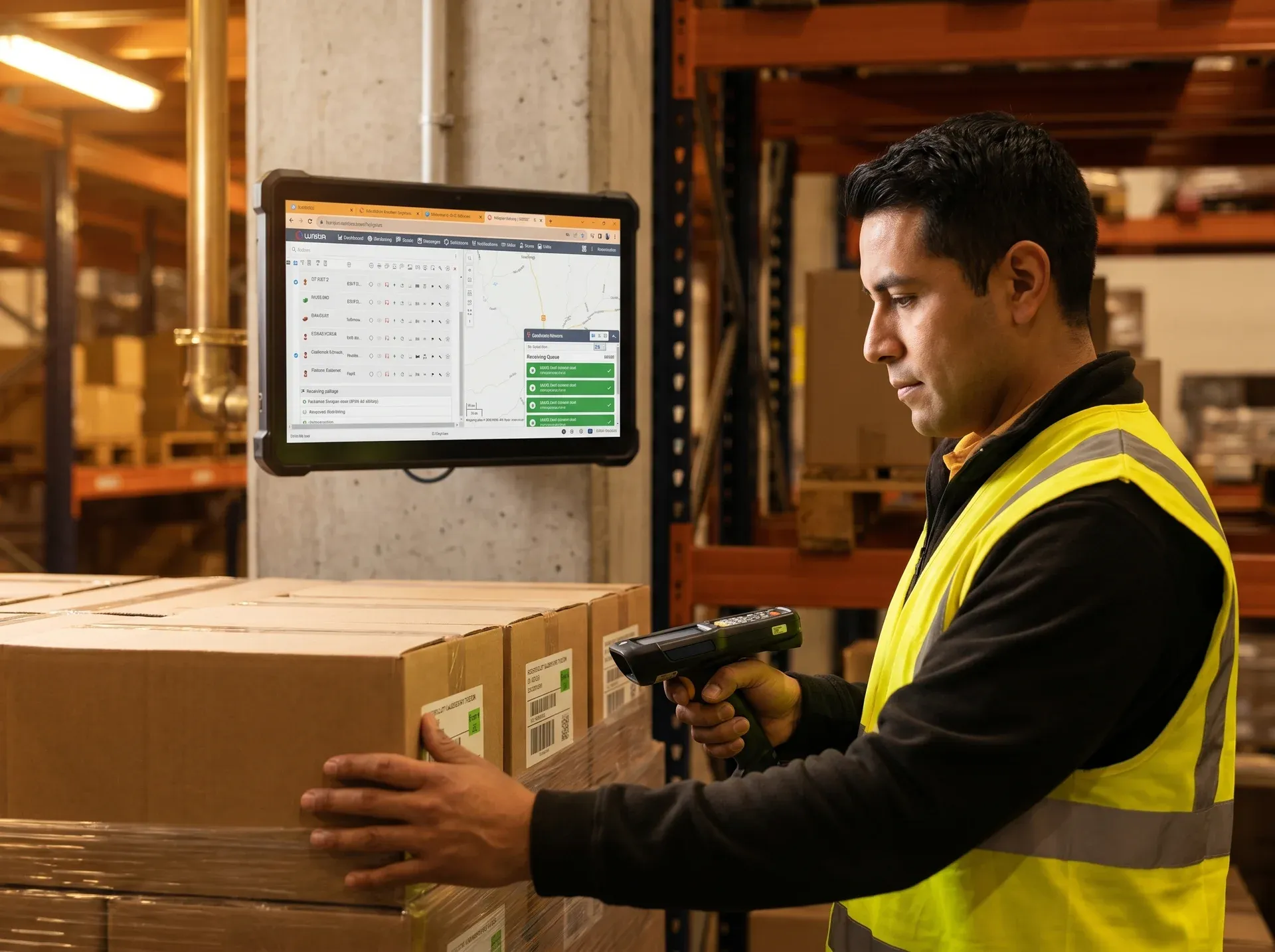
Client proof
50,000 items. EXIM compliance. 30% export operations. One enterprise resource planning system.

Verified client result
Client
Phoenix Flexibles
Global Flexible Packaging Manufacturer
Dynamics NAVEXIMWarehouse Management System
A global flexible packaging manufacturer requiring unified enterprise resource planning, EXIM compliance management, and barcode-driven warehouse operations across multiple verticals.
The Problem
The business relied on manual data entry using Excel for finance, inventory, and production tracking across multiple verticals. Limited visibility into resource utilization affected production planning and inventory control. Export documentation and international trade compliance were done manually, creating errors and delays. No barcode system for finished goods tracking.
Manual Excel workflows across 50K+ items. No barcode system. EXIM compliance done by hand. Zero integration between inventory and production.
The Result
0K+
items managed across multiple verticals with real-time enterprise resource planning visibility, barcode tracking, and automated EXIM documentation supporting a 30% export rate
- Dynamics NAV unified finance, inventory, and production
- Barcode system for finished goods with batch traceability
- EXIM module automates export documentation and statutory compliance
Why Redefine
Three claims. All with evidence.
Most logistics software agencies ship a platform and move on. These are the standards we apply on every project, before the first sprint review.
Every logistics platform we build has live GPS data feeding the transportation management system, live warehouse bin counts from barcode scans, and live key performance indicator dashboards that refresh without a manual export. Batch reporting delivered 2 days late is not a dashboard. We build systems where operations managers make decisions on today's data, not last week's.
96%
On-Time
142
Shipped
24
Active
3
Alerts
The inventory in your warehouse management system and the inventory in your enterprise resource planning system must agree. We design the integration between warehouse operations and enterprise resource planning finance as a day-one architecture requirement, not a later-sprint addition. We have implemented Dynamics NAV and Dynamics 365 for manufacturing, distribution, and logistics companies with 50,000+ item catalogs. The enterprise resource planning integration design document is Sprint 1 output.
Operations manuals, dispatcher training guides, driver app onboarding documentation, and warehouse scanning runbooks all delivered at handoff. Alongside the technical architecture docs and application programming interface references. Your operations team can train a new dispatcher without involving us. Your IT team can add a new vehicle type to the transportation management system without involving us. Dependency is a delivery failure, not an upsell opportunity.
Questions
What logistics operations teams ask before committing.
Platform choice, enterprise resource planning complexity, and integration scope are the real blockers for most operations managers. Here are direct answers.
Pricing approach
Scoped before work starts. No commitment to receive a proposal.
A logistics discovery sprint delivers a full architecture document, integration map, and enterprise resource planning design before any development begins.
Both, based on your operation's complexity. If your
workflows are fairly standard (single-mode transport, one
warehouse, domestic routes), we configure and customize an
existing platform. If your operation has unusual rate
structures, multi-modal routing logic, regulatory
requirements (EXIM, hazmat), or tight enterprise resource
planning coupling, we build custom. The architecture sprint
produces this recommendation in writing with the rationale,
before any development begins.
Dynamics 365 Business Central and Dynamics NAV are in our
core stack. We have implemented, upgraded, and customized
both for manufacturing and logistics operations. Integration
with transportation management systems and warehouse
management systems is done via the Business Central
application programming interface layer or AL extensions,
not through middleware that breaks on version upgrades. We
document every data flow direction, application programming
interface endpoint, and field mapping in the architecture
sprint. See related work under
enterprise logistics software development.
Discovery sprint: 2 weeks. Simple transportation management
system (single carrier, basic tracking, no enterprise
resource planning): 10 to 14 weeks. Mid-complexity
transportation management system with enterprise resource
planning integration, customer portal, and driver app: 16 to
24 weeks. Full warehouse management system with barcode
scanning, batch management, and enterprise resource planning
sync: 12 to 20 weeks. Combined transportation management
system and warehouse management system with EXIM compliance:
20 to 32 weeks. Every engagement begins with a week-by-week
sprint plan.
Yes. The driver mobile app is part of the transportation
management system scope, not a separate engagement. It
covers: dispatch notification, navigation via Google Maps,
barcode scanning for pickup and delivery, photo-based proof
of delivery, signature capture, and exception reporting. iOS
and Android. All data syncs to the transportation management
system within 30 seconds of capture. See
mobile app development for logistics
for details.
The EXIM module sits inside the enterprise resource planning
system and generates export documentation (shipping bills,
bills of lading, customs declarations) automatically from
shipment records. Statutory compliance rules are configured
per country-of-destination. When a shipment is dispatched,
the document set is generated and attached to the order
record. No separate spreadsheet workflow. No manual
form-filling. The Phoenix Flexibles case study above used
this approach to support a 30% export operation.
Right match?
Select what describes your logistics operation.
We are direct about fit. Operations that are not ready for custom software often benefit more from a process audit before any platform build begins.
Match score0 of 6 selected
Not sure? Tell us your operation and we will be straight with you about fit and realistic scope.
Operating more than 10 vehicles or 5,000+ stock-keeping units in a warehouse
Custom transportation management systems or warehouse management systems pay for themselves at this scale. Off-the-shelf tools start showing friction.
Dispatchers spending more than 30% of their time on the phone
Live GPS and real-time estimated time of arrival notifications eliminate the status call loop entirely.
Running export operations with manual EXIM documentation
Automated compliance document generation from enterprise resource planning shipment records eliminates customs errors.
Inventory data in enterprise resource planning does not match physical warehouse
Warehouse management systems with barcode scanning synced to Dynamics resolve inventory discrepancies in real time.
Probably not the right match if:
You need a basic shipment tracker plugin for an existing ecommerce store
Shopify and WooCommerce have pre-built carrier integrations that solve this faster.
Total project budget under $15,000
A proper transportation management system with enterprise resource planning integration and driver app requires real architecture time.
Start here
Tell us how your operation
Tell us how your operation
runs today.
We scope the platform to fix it.
No commitment. No pitch. A scoped proposal with architecture approach and line-item pricing arrives in 3 business days.
01
Submit your brief
Describe the operation: vehicle count, warehouse size, current tools, and the biggest friction point. 3 minutes.
02
Technical call within 48 hours
With a logistics architect. We ask about your enterprise resource planning, integration surface, and compliance requirements.
03
Scoped proposal in 3 days
Architecture approach, integration map, sprint plan, and line-item pricing.
04
Sprint 1 within 1 week of sign-off
Architecture sprint delivers data model and enterprise resource planning integration design before a dispatch screen is designed.
Technical call: 48 hours
Scoped proposal: 3 days
72+
logistics builds
100%
code ownership
Form
No commitment. No pitch. · Call within 48 hours · Proposal in 3 days