See every customer's full Shopify journey inside HubSpot
Redefine connects Shopify to HubSpot with real-time purchase sync, lifecycle tracking, and revenue attribution. Your CRM finally shows what customers actually buy, not just who they are.

What a Redefine Shopify HubSpot integration delivers
What your HubSpot CRM misses every day Shopify stays disconnected
Your CRM knows who your customers are. It has no idea what they buy. Toggle to see what changes after Redefine connects Shopify to HubSpot.
- Post-purchase workflows trigger on real Shopify eventsThank-you sequences, upsell flows, and review requests fire at the exact right moment
- Revenue attribution links marketing spend to actual Shopify ordersSee which HubSpot campaigns drive real revenue, not just leads
- Lifecycle stages auto-update on every Shopify purchaseHubSpot contact records reflect buyer status accurately without manual updates
- Product-level segmentation in HubSpot based on Shopify purchase historySegment by category purchased, average order value, purchase frequency, or last order date
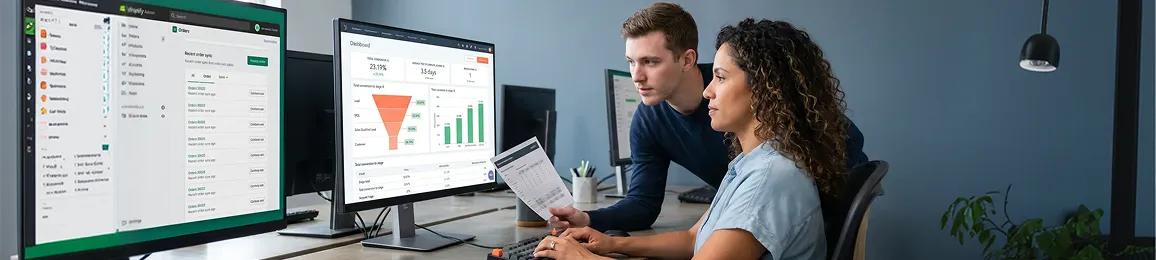
Every day without Shopify HubSpot sync costs you sales
When HubSpot doesn't know what customers buy, your email flows fire at the wrong time. Your segments miss. Your win-back campaigns chase the wrong people. That lost revenue compounds daily.
- Post-purchase workflows trigger on real Shopify eventsThank-you sequences, upsell flows, and review requests fire at the exact right moment
- Revenue attribution links marketing spend to actual Shopify ordersSee which HubSpot campaigns drive real revenue, not just leads
- Lifecycle stages auto-update on every Shopify purchaseHubSpot contact records reflect buyer status accurately without manual updates
- Product-level segmentation in HubSpot based on Shopify purchase historySegment by category purchased, average order value, purchase frequency, or last order date
What the Shopify HubSpot integration covers, from first sync to full CRM enrichment
Redefine scopes every integration to your exact Shopify data model and HubSpot setup. The rows below show what it covers. Each one is built to your requirements, not a template.
Shopify customers mapped to HubSpot contacts with full property sync
Every Shopify customer is created or updated as a HubSpot contact in real time. Name, email, phone, address, tags, and custom metafields sync to properties you define. New customers appear in HubSpot within seconds, so your team acts on fresh data.
Every Shopify purchase, abandoned cart, and fulfillment event recorded in the HubSpot contact timeline
Order placed, order fulfilled, cart abandoned, refund issued: every commerce event in Shopify fires a custom timeline event in HubSpot. Your sales and marketing team see the full customer story in one place without switching systems.
Shopify order revenue attributed to HubSpot deals, campaigns, and contact sources
Redefine connects Shopify order value to HubSpot deal records so your marketing team sees which campaigns drive real revenue, not just contacts. Lifetime value, average order value, and purchase frequency populate as HubSpot contact properties and update automatically on every new Shopify order.
HubSpot workflows trigger on Shopify purchase and behavioral events in real time
Order events from Shopify enroll contacts in HubSpot workflows the moment a purchase completes. Post-purchase, lifecycle, upsell, and win-back journeys start from real events, not scheduled imports. You reach buyers at the exact right moment.
Custom Shopify API integration with email platform: 29.3% email conversion rate
Custom server-side event tracking replaced an unreliable browser-only setup. It gave the team real-time data accuracy and behavioral segments that matched what customers actually did.
This headless Shopify store had no reliable marketing integration. Customer behavior, product data, and conversion events synced inconsistently. Tracking broke, personalization stalled, and email underperformed despite strong product demand.
Custom backend APIs connected the headless Shopify frontend and backend directly with the email platform using server-side tracking rather than browser-only events. Customer profiles, product catalog data, and transactional events were synced through REST APIs with custom events defined for key actions. The architecture remained decoupled from frontend changes, ensuring long-term stability as the commerce experience evolved.
Email became a reliable, measurable revenue channel. A 51.2% open rate, 1.5% click rate, and 0.015% spam complaints proved accurate Shopify data reached the right segment. The same server-side approach powers every Redefine HubSpot build.

Three reasons to build a custom Shopify HubSpot integration, not a native connector
Server-side event tracking means your HubSpot data is accurate even on headless and custom Shopify setups
Native HubSpot tracking relies on browser-side JavaScript. In headless Shopify architectures, that means events are missed when customers switch devices, use ad blockers, or navigate across framework boundaries. Redefine builds server-side API integrations that capture events at the Shopify backend before they reach the browser, so your HubSpot contact data is complete regardless of how your Shopify storefront is built.
Custom field mapping covers your Shopify metafields, product attributes, and HubSpot CRM properties, not just the standard fieldsds
Native connectors map first name, email, and order total. Redefine scopes the integration to your real data during a mapping session before we write any code. Product variant metafields, custom tags, multi-currency data, and B2B order properties all move to HubSpot too. Your CRM reflects your store's real data model, not a stripped-down version.
Dead-letter queues and monitoring mean failed sync events surface to your team: they are never silently dropped
Most native connector failures stay invisible until a campaign fires at the wrong segment. Redefine builds error handling, dead-letter queues, and health monitoring into every integration. We retry failed webhooks, capture them, and alert your team, so you are never the last to know.
Shopify HubSpot integration questions, answered
The native HubSpot Shopify connector is built for standard setups with default field mapping and browser-side event tracking. A custom API integration built by Redefine maps your specific Shopify data model to your exact HubSpot customer relationship management properties, uses server-side tracking for accuracy across headless and custom storefronts, handles errors with monitoring and alerting, and is maintained against API version changes. The result is more accurate, more complete, and more durable than a native connector.
A standard Shopify HubSpot integration covering customer sync, order events, lifecycle stage updates, and revenue attribution takes 2 to 4 weeks from scoping to go-live. Integrations with custom workflow triggers, headless architecture, multi-store setup, or extensive custom field mapping take 4 to 6 weeks. Redefine delivers a specific timeline after the scoping session.
Yes. Redefine has direct experience with headless Shopify and customer relationship management integration challenges. In headless setups, native browser-based tracking misses events when customers navigate across frontend framework boundaries. Redefine builds server-side API middleware that captures events from the Shopify backend before they reach the browser, ensuring HubSpot receives complete, accurate data regardless of your frontend architecture.
The data scope is defined during the integration scoping session based on your requirements. Standard sync covers customer properties, order events, cart abandonment, product views, lifecycle stage updates, lifetime value, average order value, and purchase frequency. Custom sync can include Shopify metafields, product variant attributes, customer tags, multi-currency data, business-to-business pricing tier, and any other Shopify data accessible via the API.
All Redefine integrations include health monitoring, error alerting, and dead-letter queue handling at delivery. Post-launch maintenance retainer options cover Shopify API version updates, HubSpot API changes, and performance optimization. Maintenance terms are agreed during the scoping session before the project begins.
Your HubSpot CRM should know everything your Shopify store does. Automatically.
Book a free 30-minute scoping call for your Shopify HubSpot integration. Redefine reviews your setup, maps the data you need to sync, and delivers a specific scope and timeline before you commit.t.
No commitment. No pitch.

Brief received
We'll review your workflow and send a scoped proposal within 3 business days.