The brand identity system your business builds on
Most brands ship with a logo someone made in a rush and a PDF no one reads twice. Redefine builds a brand identity system: logo, color palette, typography, brand voice, and usage rules. Your whole team applies it consistently from day one.
Every brand identity engagement includes
- Logo system with primary and secondary lockups
- Color palette with contrast ratios verified for accessibility
- Typography scale and usage rules your developers build directly from
- Brand guidelines covering voice, tone, and application across channels
- Full Figma source file at handoff. Yours to own, extend, and share.

A logo is not a brand. Here is the difference.
A designer builds a logo. Nobody writes down how, when, or where to use it.
Colors are picked by feel. No hex codes. No contrast test. No rules.
Your marketing team uses one font. Your website uses another. Your pitch deck uses a third.
The only logo file is a blurry JPEG. Nobody knows where the original lives.
New hires guess at brand tone. New vendors require a full briefing before they can produce anything.
A logo system with primary, secondary, and monochrome lockups. Clear rules for where each version appears.
A named color palette with hex, RGB, and CMYK values. Contrast ratios tested for WCAG compliance so your site passes accessibility checks.
A typography scale with approved pairings and size rules. One reference point for every designer, developer, and vendor.
Logo files in SVG, PNG, and PDF at every resolution. Stored in a shared folder with a naming convention anyone can follow.
A brand voice chapter with 10 written examples. Clear rules on what the brand says and what it never says, so anyone can write on-brand.

This is what a brand identity system changes
Click between the two states below. One is where most businesses start. The other is what they build everything on.
Logo
InconsistentJPEG only, blurry on retina
No clear-space rules
1 version, placed everywhere
Colors
UndocumentedNo hex value saved
Contrast ratio unknown
No secondary palette defined
Typography
No rulesMarketing team uses Arial
Website uses a different font
No size scale documented
Brand voice
UndefinedEvery person writes differently. No shared tone. Customers feel the inconsistency, even when they cannot describe it.
Brand guidelines
MissingNo written rules. Every vendor and new hire guesses at how to represent the brand. Most guesses are wrong.
Logo system
4 lockupsPrimary, horizontal lockup
Stacked, social and app icon
Monochrome, light and dark
Color palette
WCAG AAPrimary
#1d1d1f · Contrast 4.5:1
Accent
#923ef2 · Defined usage
Typography scale
Full systemDisplay: 48px · Bold
Heading: 32px · Semibold
Body: 17px · Regular
Brand voice
Documented10 written tone examples covering what the brand says and what it never says. Anyone on the team can write on-brand from day one.
Brand guidelines
Logo rules
Color system
Typography
Brand voice
Usage guidelines
Usage restrictions
Six deliverables. One brand your team uses every day.
Logo system
You receive primary, secondary, stacked, and monochrome logo variants. Each one exports at print and screen resolution. Clear-space and minimum-size rules tell every designer exactly how to place it.
- SVG, PNG, and PDF at every resolution
- Light and dark background variants
- Social, favicon, and app icon crops ready to use
Color system
Primary, secondary, and neutral palettes. Every color is named and documented with hex, RGB, and CMYK values. Contrast ratios are tested against WCAG 2.1 AA before handoff.
- Named color tokens your development team drops straight into code
- Rules for where each color appears and where it does not
- Print and screen profiles for consistent output across media
Typography scale
Heading, subheading, body, caption, and label styles. Font pairings selected for display and reading. Size, weight, line-height, and letter-spacing values documented for web and print.
- Licensed font recommendations with alternatives
- Web-safe fallback stack so development does not stall
- Every style loaded into the Figma file — no rebuilding required
Brand guidelines
A document every team member, vendor, and developer can follow. Correct usage is shown. Wrong usage is shown too — so mistakes are obvious before they reach customers.
- PDF for sharing with anyone outside your team
- Figma version for designers who work in the file
- Application examples for web, print, social, and email
Brand voice
Your brand voice chapter defines how the brand communicates across every channel. One new hire reads it and writes on-brand from their first day.
- Personality attributes with written examples
- Words the brand uses and words it never uses
- Tone guidance for web, email, social media, and support
Figma source file
The complete Figma file transfers to you at project close. Every color token, text style, and component is organized and named. You own it outright with no ongoing license required.
- Organized layers and named components ready for your team
- Brand color variables formatted for development handoff
- Yours permanently. No tool dependency. No renewal fees.
Brand identity pricing
Pricing is scoped before any work starts. You receive a line-by-line proposal within 3 business days. No hourly surprises. No scope creep billing.
Scope varies by project type: new brand from scratch, refresh of an existing identity, or logo-only. We confirm scope and investment in the proposal before Sprint 1. Every project starts with a briefing call at no cost.
From a mismatched identity to a brand collectors trust

Colonial Trading Co Ltd
Ecommerce · BigCommerce · Brand identityUnified brand system
0
Unified brand system
Logo, color, typography, voice, and guidelines built into one system every team member can follow
Channels aligned
0
Channels aligned
Digital, physical, ecommerce, and print all running from the same brand system for the first time
Primary audience reached
Collectors
Primary audience reached
Brand now speaks directly to heritage buyers and high-intent collectors with consistent professionalism
Colonial Trading Co Ltd is a specialist ecommerce business serving collectors and buyers of heritage items, where brand credibility is directly tied to purchase confidence.
The problem
The Colonial Trading brand did not match the quality of the inventory. Collectors are skeptical buyers. A mismatched brand signals risk, not reliability. Product categories were unclear and the existing identity actively undermined buyer confidence.
What we delivered
We redesigned the logo with heritage and craftsmanship as the starting brief. Brand guidelines were built to cover every channel consistently. The ecommerce experience was restructured to present high-value items with the clarity serious collectors expect.
Primary service
Brand identity design
Also delivered
Logo redesign, user interface design, BigCommerce storefront
Key outcome
The brand now communicates the heritage and quality that justifies the price point. Vendor briefings take minutes, not calls. New team members apply the brand correctly from day one.
Brand identity design your team can actually use
Most agencies hand over a PDF. Your team opens it once, then guesses anyway. We build brand identity systems that designers, developers, and new hires use from day one. No interpreting required.
Developer-ready, not just design-ready
Color tokens, type scales, and spacing values ship in code-ready formats. Your developers implement the brand system directly from the Figma file. No PDF translation needed.
Accessibility tested and passed before handoff
Every color combination is tested against WCAG 2.1 AA before the brand ships. Accessibility problems discovered after launch are expensive. We find them before you do.
Business strategy drives every design decision
We complete brand research and positioning before the first logo concept appears. Every design choice connects to your audience, your market, and your business goal.
Wrong-use examples prevent real mistakes
A guideline that only shows correct use leaves teams guessing where the line is. Our brand guides show exactly what goes wrong when rules break, so your team stops making those mistakes.
Tested in real ecommerce contexts before handoff
We check every brand system against product pages, checkout flows, email templates, and packaging. A brand that works in a presentation but fails in the cart is caught before it ships.
You own everything at project close. No conditions.
The Figma source file, all logo exports, and all documentation transfer to you at the end. No retainer. No renewal. No tool lock-in.
Brand identity design: the questions buyers ask before they start
A logo is a single mark. A brand identity is the full system: logo variants, color palette, typography, brand voice, and usage guidelines. Without the system, the logo is just a graphic. A complete identity tells every person on your team how to represent the brand. It makes the logo consistent everywhere it appears.
A logo-only project runs 2 to 3 weeks. A complete brand identity system runs 6 to 8 weeks. The exact timeline is confirmed in your proposal before Sprint 1 starts. You know the timeline before you commit.
Yes. A brand refresh updates specific parts of your identity without replacing everything. We might refine your logo, document your color palette properly, or add typography rules that are missing. A briefing call helps us understand what you have, what works, and what needs updating. We scope the refresh based on that conversation.
Both. New brands get a complete system built from scratch. Established brands often need to formalize an identity that has grown inconsistently over time. We have worked with ecommerce brands, B2B companies, and businesses preparing for a website redesign. If you have existing brand assets, we audit them on the briefing call before scoping anything.
You receive full ownership of everything: all logo lockups in SVG, PNG, and PDF; the Figma source file with every color token and text style; the brand guidelines PDF; and an organized file folder your whole team can navigate. No ongoing license. No tool subscription. The files are yours.
Tell us what you need. Get a scoped proposal in 3 days.
Describe your brand, what you currently have, and what you want it to communicate. We review your brief, call you within 48 hours, and return a scoped proposal within 3 business days.
Call within 48 hours
A senior brand designer reads your brief and calls to learn your business. We ask questions. You ask questions.
Scoped proposal in 3 days
A phase-by-phase breakdown of the work, the timeline, and the cost. Line by line.
Sprint 1 starts within 1 week of sign-off
Brand research and discovery begin the week you approve the proposal.
Your team spends 2 to 3 hours per week on this project. One discovery call. One concept review. One final approval. We handle research, design, iteration, and all documentation.
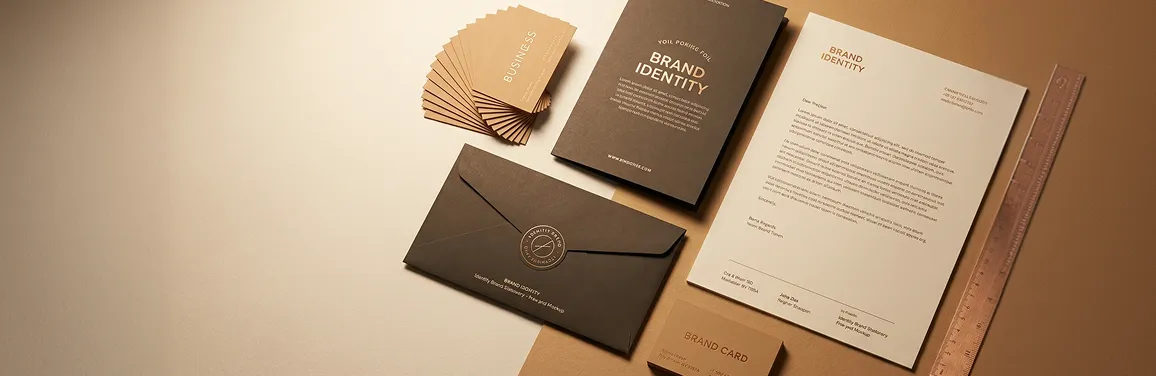
Your brand identity proposal starts with a brief.
Tell us what your brand looks like now and what you need it to do. We review your brief, scope the project line by line, and return a written proposal within 3 business days. No hourly billing. No vague estimates.
Get My Brand Identity Proposal