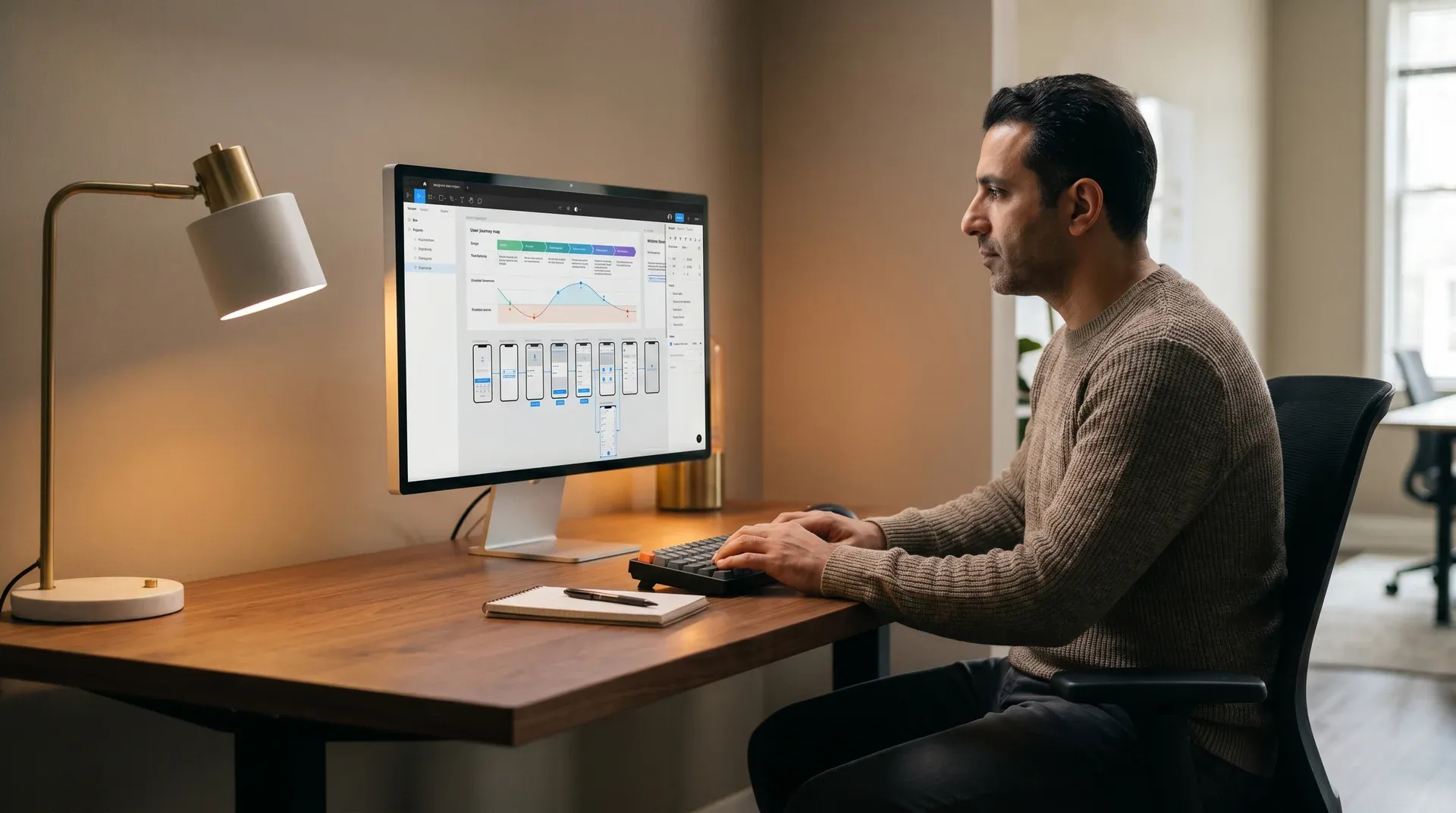
User interface and user experience design services
User experience design services that turn frustration into revenue
Every friction point in your interface costs you a conversion. Redefine delivers user experience research, wireframes, prototypes, and full Figma handoff, so your product earns its value instead of apologizing for it.
52+ UX and UI projects completed40+ products and platforms redesigned
What every user interface and user experience engagement includes
User research: interviews, surveys, heatmaps, session recordings
Information architecture and user flow documentation
Lo-fi wireframes through high-fidelity interactive prototypes
WCAG 2.1 AA accessibility built into the design system
Full Figma source file with component library at handoff

The cost of poor user experience
Bad user experience is not an inconvenience. It is a revenue leak.
88%
of users do not return after a bad experience
First impression is the last impression in digital products
$100
returned for every $1 invested in user experience
Forrester Research. Return on investment from user experience is measurable and substantial.
70%
of projects fail due to poor user adoption
Technology that users cannot navigate is technology they do not use.
What teams say before engaging Redefine
"Our conversion rate has been flat for six months. We keep adding features but users keep dropping off at the same point. We do not know what they actually want."
That is a user experience problem, not a product problem. Research-led design solves it.
Without user experience investment
- Users abandon before conversion, no one knows why
- Development builds the wrong thing. Rework costs double the initial sprint.
- Support tickets spike because navigation is unclear, not because the product is broken
- Accessibility issues create legal risk and exclude buyers who want to purchase
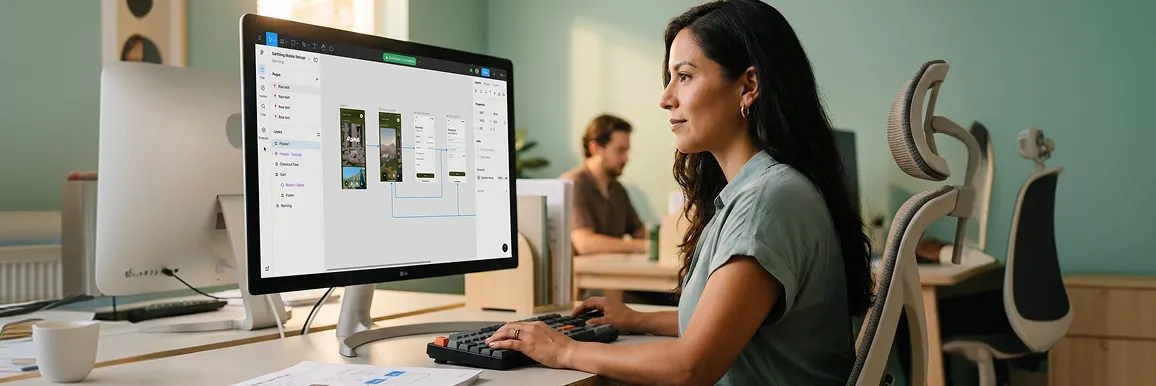
Rate your current user experience
Eight questions. Sixty seconds. Your user experience score.
The checklist runs automatically as you scroll. Select any statement that is true for your product today to take over. Your score and audit preview update on the right.
Users find what they need in 3 clicks or fewer
Navigation is structured around task completion, not your org chart
Your mobile experience is equal to or better than desktop
Mobile is not a scaled-down version. It is a primary experience.
Key pages load in under 2.5 seconds on mobile
Performance is a user experience requirement, not just a technical metric
Every page has one clear primary action for the user
Users should never wonder what to do next
Your site meets WCAG 2.1 AA accessibility standards
Accessible design reaches more users and reduces legal risk
You have completed user testing in the past 12 months
Design assumptions need real user validation, not internal consensus
You have a Figma design system developers build from
Component-based design prevents inconsistency across every release
Your checkout or signup takes fewer than 5 steps
Every additional step reduces completion rate by a measurable margin
Your user experience score0 / 8
Checklist items select automatically. Your audit preview appears here as your score updates.
Your user experience needs a full audit and redesign
User researchNot verified
Navigation architectureCritical risk
Accessibility complianceUnverified
Recommendation
A full user experience audit identifies the specific gaps costing you conversions. Most engagements surface 8 to 12 actionable findings within the first two weeks.
You have gaps worth addressing before competitors exploit them
Core navigationFunctional
Missing: user researchGap identified
Optimization opportunityMedium-high value
Recommendation
A targeted user experience sprint addresses your specific gaps without rebuilding what works. Typical engagement is 4 to 6 weeks and yields measurable conversion uplift.
Strong baseline. Optimization will compound your existing user experience investment.
FoundationStrong
Optimization upsideHigh return
Recommendation typeA/B + prototype testing
Recommendation
You have the right foundation. Prototype testing and A/B-informed iteration will squeeze the remaining conversion gain out of your current user experience.
What we deliver
User interface and user experience deliverables your developers can actually build from
0+
User research methods per project
Interviews, surveys, heatmaps, session recordings, and prototype testing. Design is grounded in behavior, not assumption.
0 rounds
Wireframe iteration included in scope
Lo-fi to hi-fi, with stakeholder review gates between rounds. Nothing goes to hi-fi until the lo-fi is approved.
AA
WCAG 2.1 accessibility compliance
Accessibility is designed in from the first wireframe. Not audited and fixed after the fact. Every color contrast, focus state, and ARIA label is specified.
0%
Component coverage in the Figma handoff
Every state, every variant, every interaction. Your development team builds from a system, not a PDF.
Weekly
Sprint reviews with your team minimum
No black-box design where work disappears for three weeks and returns with surprises. You see every deliverable as it develops.
Before dev
Prototype testing confirms flows work
Interactive prototypes are tested with real users before development begins. Bugs found in Figma cost almost nothing. Bugs found in production cost weeks.
See user experience case studiesClient result
Research-led user experience design that scaled a brand to $30M in annual revenue
Revenue outcome
$0M
Annual revenue post-redesign
From user experience-led BigCommerce platform redesign
User experience driver
In-depth
User research before any pixel was drawn
User experience research and structured design guidelines shaped every decision
Personalization
Custom
Monogram user experience feature built into product flow
Personalization capability increased average order value

Peekawhoo
Ecommerce · BigCommercePeekawhoo is a personalization-first ecommerce brand offering customizable products, building its reputation on a superior product experience.
The problem
The existing platform limited personalization capabilities and created inventory and customer experience friction. User experience needed a complete rethink to support the brand's growth ambitions and product-customization positioning.
What we delivered
A custom BigCommerce store designed from in-depth user experience research and structured design guidelines. A custom monogram personalization feature was designed and built into the product flow, with backend operations and inventory management streamlined alongside the frontend redesign.
Primary service
User Experience and User Interface Design
Platform
BigCommerce
Revenue outcome
$30M annually
Key driver
Research-led user experience + personalization
How we differ
What research-led user experience delivers versus typical agency output
Most user interface and user experience agencies skip the research and go straight to wireframes. Here is what that costs you.
Redefine user interface and user experience approach
User research before wireframes. Always.
Every design decision traces back to a user finding or behavior
Prototype testing with real users before development
Validated flows ship to dev. Unvalidated assumptions go back to Figma.
WCAG 2.1 AA accessibility in every component
Specified at design time, tested at quality assurance. No post-launch remediation.
Full Figma source file at close, yours to keep
No tool lock-in. Your developers and your future designers can extend it.
Scope and timeline agreed in writing before Sprint 1
No mid-project surprises. Changes are repriced in writing before actioning.
Weekly sprint reviews. You see every deliverable as it develops.
No black-box design. Feedback loops are short. Misalignment is caught early.
Typical user interface and user experience agency
Wireframes based on stakeholder preferences
Design reflects internal opinions, not external user behavior
No prototype testing before handoff to development
Assumptions ship to production. Rework costs arrive in Sprint 3.
Accessibility is an afterthought or not included
Post-launch accessibility remediation costs 50 to 100 times more than designing it in
Figma files retained or subscription-locked
You pay again to extend your own design system
Hourly billing adds uncertainty mid-project
Scope creep arrives on the invoice, not in the brief where it belongs
Biweekly or monthly updates, no sprint visibility
Feedback arrives late. Misalignment compounds for weeks before surfacing.
Common questions
Questions buyers ask about user interface and user experience design services
User experience design defines the structure, flow, and logic of how a user moves through a product. User interface design defines how it looks: typography, color, component styles, interaction states, and visual hierarchy. They are sequential, not parallel. User experience research and architecture come first. User interface is built on top of that foundation. Doing user interface before user experience produces beautiful interfaces that users cannot navigate.
A focused user interface and user experience engagement for a single product area, such as a checkout flow or onboarding, runs 4 to 6 weeks. A full product redesign with research, information architecture, wireframes, prototypes, and high-fidelity handoff runs 8 to 14 weeks depending on scope. Timeline is agreed in the proposal before Sprint 1. We do not start user interface design until user experience wireframes are reviewed and approved.
We conduct the research as part of the engagement. Methods are scoped in the brief: user interviews, usability testing, heatmap and session recording analysis, survey design, or synthesizing research your team has already collected. If you have prior research, we review it and identify gaps. If you have none, we start from scratch. Research findings are documented and handed off alongside design files.
At close you receive: the full Figma source file with every component, variant, and interaction state; the design system documentation covering color tokens, typography, spacing, and component usage; user research synthesis documents; user flow diagrams; and a recorded walkthrough session for your development team. Everything is yours to keep with no subscription or access dependency.
Pricing is scoped before any work begins. Submit a brief and receive a line-by-line proposal covering each phase within 3 business days. No hourly billing mid-project. No scope creep charges without written agreement. For more detail on how we structure investment ranges for user interface and user experience projects, see our design pricing page.
Is this right for you?
We design for some products, not every product
Good fit
- Ecommerce brands seeing drop-off at the same point in every funnel
- Software as a service products with onboarding drop-off or low feature adoption
- Teams that need accessibility compliance and do not have it today
- Product teams who want research-backed design, not preference-based design
- Development teams that need a complete Figma system to build from
Not a fit
- Teams that need a logo or a simple banner redesigned this week
- Projects where "the chief executive decides on design" and is not available for reviews
- Teams looking for template-based design with no research or iteration
- Briefs where the design outcome is fully specified before research has happened
Not sure? Tell us your situation and we will be straight with you. Submit your brief →
Submit your brief
No commitment. No pitch.
Describe your product, the experience gap you are trying to close, and what a successful user experience project looks like to your team. We scope it line by line and return a proposal within 3 business days.
Call within 48 hours
A senior user experience team member reviews your brief and calls to clarify scope
Scoped proposal in 3 days
Phase-by-phase breakdown with timeline and investment: yours to keep either way
Sprint 1 within 1 week of sign-off
Research kicks off the week you sign. No queue, no delay.
Your team's time investment across a full design engagement is typically 3 to 4 hours per week: one sprint review, async feedback on design deliverables, and a final handoff sign-off. We handle everything else.
Form
Call within 48 hours · proposal in 3 days · Sprint 1 within 1 week of sign-off
Response within 48 hours
Proposal in 3 days
52+ projects delivered
Full Figma ownership at close