Amazon brand store management services that turn store visitors into buyers
Your Sponsored Brands ads send real traffic to your brand store. If that store has no architecture, no brand story, and no navigation, that traffic leaves without buying. We fix that. Multi-page design, quarterly optimization, and a store that works harder than any of your ads.
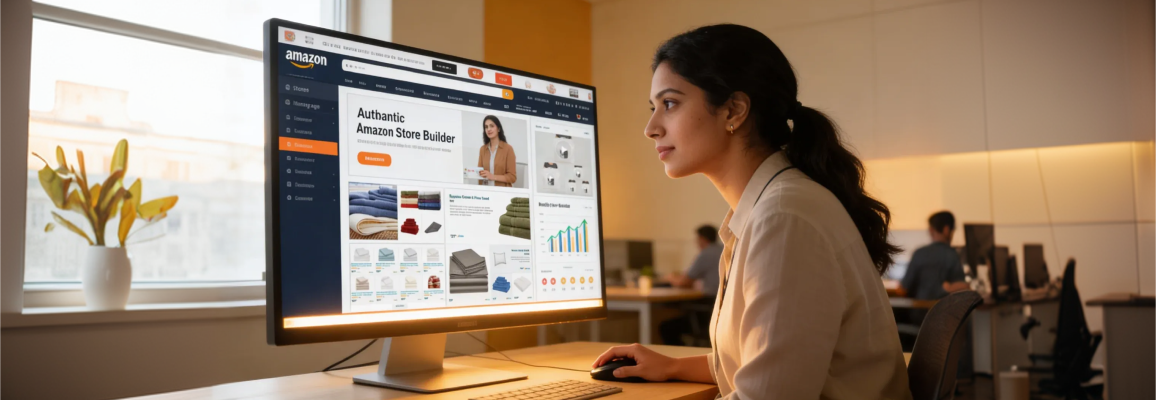
30+ brand stores under management — a workstream subset. 60+ Amazon Brand Stores launched portfolio-wide. See storefront program totals
Every visit to a default Amazon Brand Store is money left on the table
A single-page product list looks the same as 90 percent of brand stores in your category. Buyers who arrive from your paid ads see no story, no navigation, no reason to stay. They leave. You paid for that click.
- Products stacked with no priority or hierarchy
- Nothing to tell buyers why your brand is different from the one they just left
- Buyer clicks your ad, lands on a wall of products, and bounces back to search
- Navigation guides each buyer to the product category they actually came for
- Brand story and lifestyle imagery build trust before they decide to add to cart
- Seasonal tiles match your current ad creative so the message stays consistent from ad to store

Every brand needs a different store. Tell us where yours stands.
Three situations. Three different approaches to architecture, design, and optimization. Pick the one that fits your brand right now.
Build a multi-page store before your first Sponsored Brands campaign goes live
Running Sponsored Brands without a brand store sends your ad traffic to competitor listings. Your first task is a published, multi-page store that gives those ads a real destination. We build it before you spend a dollar on paid traffic.
We map every page, navigation label, and module type before any design work touches the screen
Every page is designed in Figma and your team reviews and approves before anything gets built in Amazon
We test every page on desktop and mobile, configure your Sponsored Brands ad URLs, and submit for Amazon review
Redesign a store that gets traffic but fails to convert it into sales
Visitors land on your store. They see a product list. They leave. That is not a traffic problem. It is a navigation problem. Buyers cannot find what they came for or understand why to keep browsing.
We review your current page structure, visitor flow, and pages-per-session data from Amazon Store Insights
New navigation and page layout built around your catalog structure and the specific way your buyers shop
A 30-day report after launch compares pages per session and attributed sales to your numbers before the redesign
Keep your store in sync with your ads every quarter
Seasonal brands run different campaigns at different times of year. A brand store showing Christmas content in March signals that the brand is not actively managed. Quarterly refreshes keep your store current. Every campaign has a matching store experience.
Hero modules, featured products, and campaign tiles updated before each key selling window opens
Your Sponsored Brands creative and store landing page update together so the message stays consistent from ad to store
We hold the source files, manage the publishing calendar, and deliver before your campaign launch date
Five clear stages. You know where your store stands at every point.
Each stage has a defined output. You approve before we move forward. Nothing publishes without your sign-off.
Store audit and brand review
We review your existing store, your top competitors' stores, your brand guidelines, and your best-selling ASINs. The audit produces a written brief: which pages your store needs, which products go where, and what your store needs to do differently from what it does now.
Audit document: competitor store comparison, brand guidelines review, ASIN priority ranking, recommended page structure
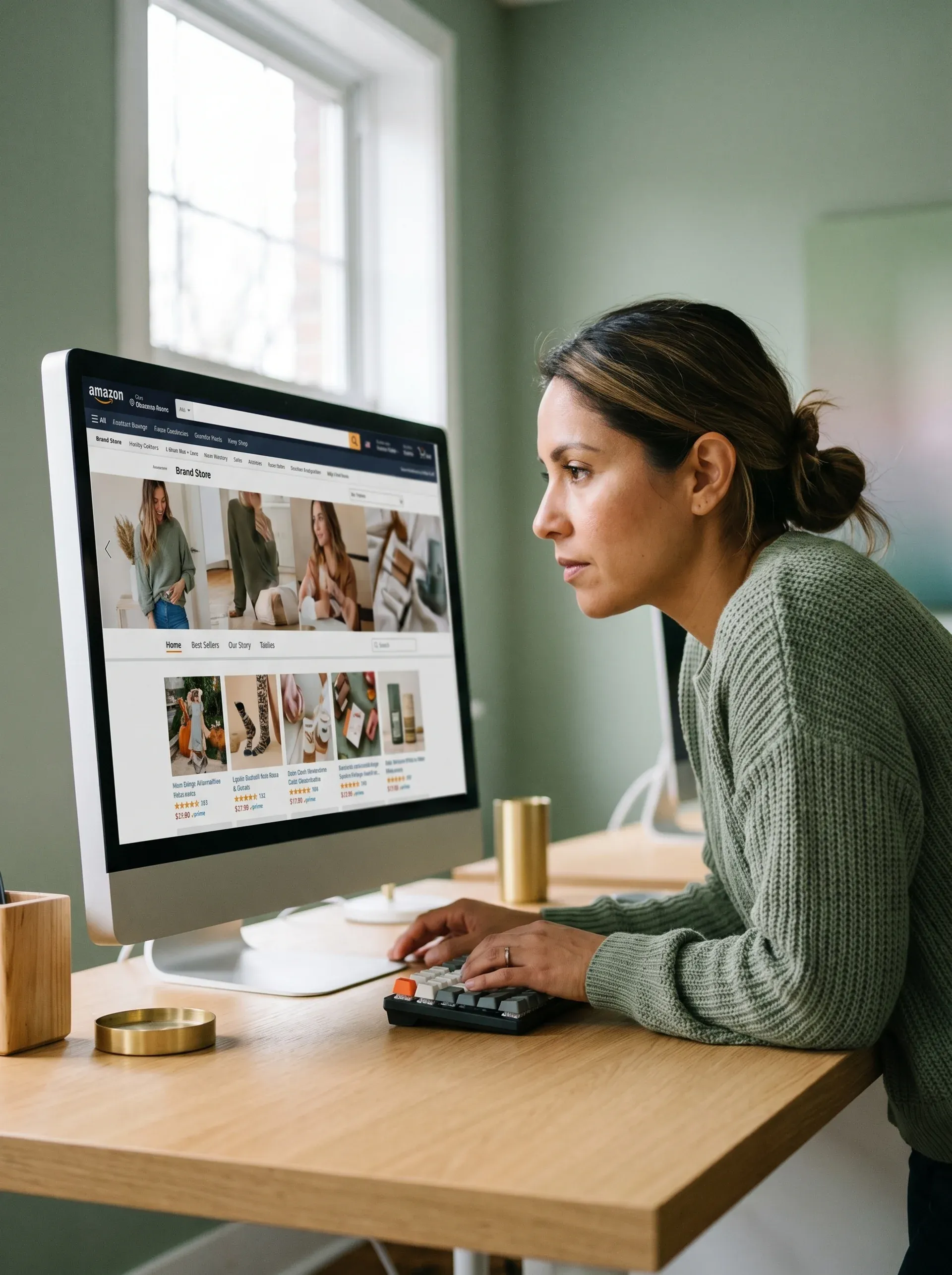
Six things included in every brand store project
- Audit document: a written brief that tells you what your store needs and why, with competitor comparisons
- Figma source file for every page. Yours to keep, edit, and hand to any designer later.
- All image assets sized exactly to Amazon Store Builder specs, so nothing gets rejected on upload
- 30-day performance report showing visitors, pages per session, and attributed sales before and after
- Two revision rounds before anything is published. Your team reviews and approves in Figma.
One redesign. Two channels. A new product line with a store that could actually sell it.

A growing consumer brand selling home and kitchen products on both Shopify and Amazon. They wanted to expand into a new product line without rebuilding their entire digital presence.
Their Amazon brand store was a product list with no structure and no brand story. Branding on Shopify and Amazon looked nothing alike. Buyers moving between channels saw two different brands. When the new product line was ready, there was no way to merchandise it in context. The A+ Content did not match the brand's visual identity on any channel.
We rebuilt the Amazon storefront from the page structure down. Every page was designed to match the Shopify brand system the team had developed. A+ Content was rebuilt to match. Buyers arriving on Amazon now see the same brand they see on the direct-to-consumer site. The new product line launched with its own curated sub-page, not a product dump. We added a Klaviyo email foundation and social proof integration to the post-purchase experience.
Shopify and Amazon now look like the same company. The new product line launched across both channels at the same time, with consistent design, consistent messaging, and a store built to show the full catalog.
The new product line launched with its own sub-page in the redesigned store. Buyers could discover the range, understand the use case, and add to cart without leaving the brand experience.
Buyers arriving from Amazon ads and buyers arriving from email or social now see the same brand. The trust built on one channel transfers to the other.
Here is what we do that most Amazon store agencies skip
Related storefront services
Pricing information
Everything is scoped before work starts. You get a line-by-line proposal. No commitment required to see the numbers.
The questions sellers ask us before they commit
Yes. Brand Stores require active Brand Registry enrollment. That is the first step. If your trademark application is not yet filed, you need to do that before store design begins. If it is in progress, we can scope the store design work now and have it ready to publish the day Brand Registry is approved. Most Brand Registry applications are approved within 2 to 4 weeks of trademark confirmation. We can also assist with the Brand Registry application as part of your project scope.
Most brands we work with publish between 4 and 7 sub-pages. The store audit determines the right number for your catalog. The key factors are how many distinct product lines you sell, whether those lines need separate browsing paths, and whether you run Sponsored Brands ads that need their own landing pages. A single-page store almost always underperforms for any brand with more than 10 active ASINs. Amazon allows up to 30 pages total, but more pages do not mean better results. Structure matters more than quantity.
No. The store audit tells us exactly which image types each module needs. We write an image brief for every hero, lifestyle module, and product tile before you brief any photographer. If you have an existing image library, we review it during onboarding. We identify what works, what needs a new crop, and what needs new photography entirely. Amazon Brand Store hero banners require a minimum 3000px wide source image. Anything smaller renders blurry on desktop and gets flagged in Amazon's review process.
For a standard build with existing brand assets, the timeline from signed proposal to a live store is 3 to 4 weeks. Week 1: audit and page architecture. Week 2: Figma design for all pages. Week 3: your review, revisions, and build in Amazon Store Builder. Amazon's review process adds 1 to 3 business days after submission. If new photography is needed, add 1 to 2 weeks for the shoot and delivery. Refreshes on an existing store move faster: typically 5 to 7 business days from brief to publish.
Yes. Amazon Store Builder is drag-and-drop. Your team can swap product tiles, update images, and add new ASINs with no development needed. The Figma source files we deliver also let your team adjust module designs before uploading new images. Where brands typically ask for our help is seasonal campaign refreshes. Those require significant visual redesign, not just new products. That is what the quarterly refresh service covers. We can scope it separately after your first store goes live.
Tell us what your brand store needs. We will scope the project.
You do not need to know the number of pages or the exact scope. Describe your current store and what is not working. We will work out the rest and send a proposal within 3 business days.
Proposal coming your way
We have your brief. Expect a call within 48 hours and a scoped proposal in 3 business days.
Call within 48 hours
Proposal in 3 days
No commitment required
30+ brand stores under management
Your brand store. Designed to convert. Managed every quarter.
You get a multi-page store, Figma source files, a 30-day performance review, and quarterly refreshes. A scoped proposal in 3 days. No pitch needed to see the numbers.