Your team ships features. We keep the application secure, fast, and healthy. Every month. Under a fixed SLA.
Proactive monitoring, security patching, and bug triage — all under one fixed monthly retainer. You get a contracted response time for every issue. We handle every maintenance task. You never wonder what your app is doing without you.
Three numbers every engineering leader needs to see before skipping a maintenance plan.
Dependency vulnerabilities accumulate silently. Most teams find out during a breach or a compliance audit — not before. By then, the damage is done.
A single 4-hour outage can cost more than a full year of maintenance coverage. You're not buying maintenance. You're buying insurance against a much bigger number.
Page load times creep up. Database queries slow down. Cache configurations drift. Users notice before your team does — and they don't send feedback, they leave.
See exactly what's covered. Track every patch, ticket, and SLA in real time.
Everything your application needs to stay healthy — included in one fixed monthly retainer.
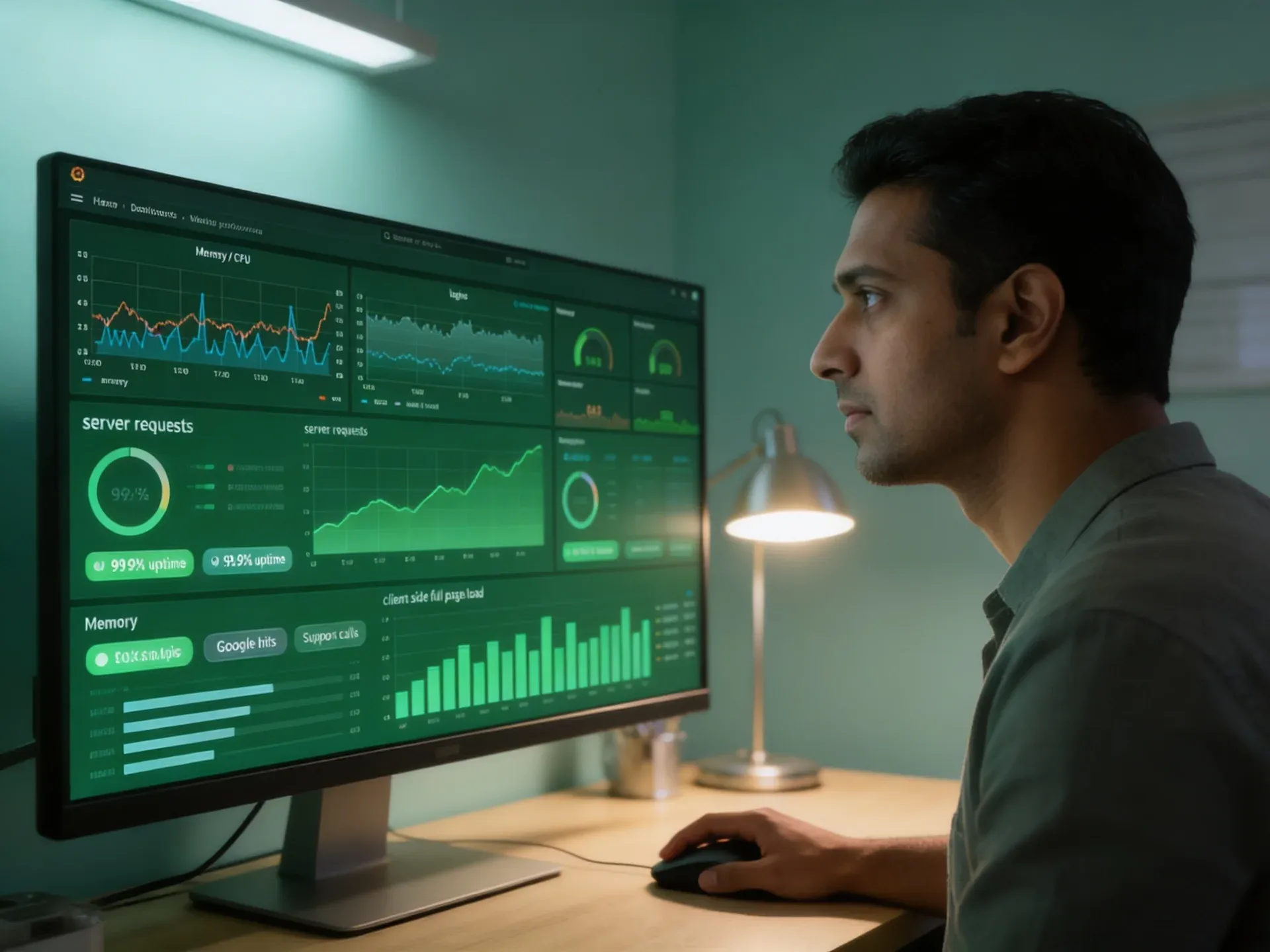
We see problems before your users do. Here's how.
We monitor uptime, error rates, response times, and database performance 24/7. Alert thresholds trigger at the first sign of degradation — not when the app is already down. Your team gets a notification when response time doubles. Not when customers start calling.
- Uptime and availability monitoring
- Error rate and exception tracking
- Database query performance baseline
Security patching. Every dependency, every month. Nothing slips through.
Every dependency in your application has a vulnerability window. We run automated CVE scans monthly and apply patches during scheduled maintenance windows — with no application downtime. A critical vulnerability published to the CVE database gets patched within 24 hours.
- Monthly CVE scan and patch report
- Zero-downtime patch deployment
- 24-hour critical vulnerability response

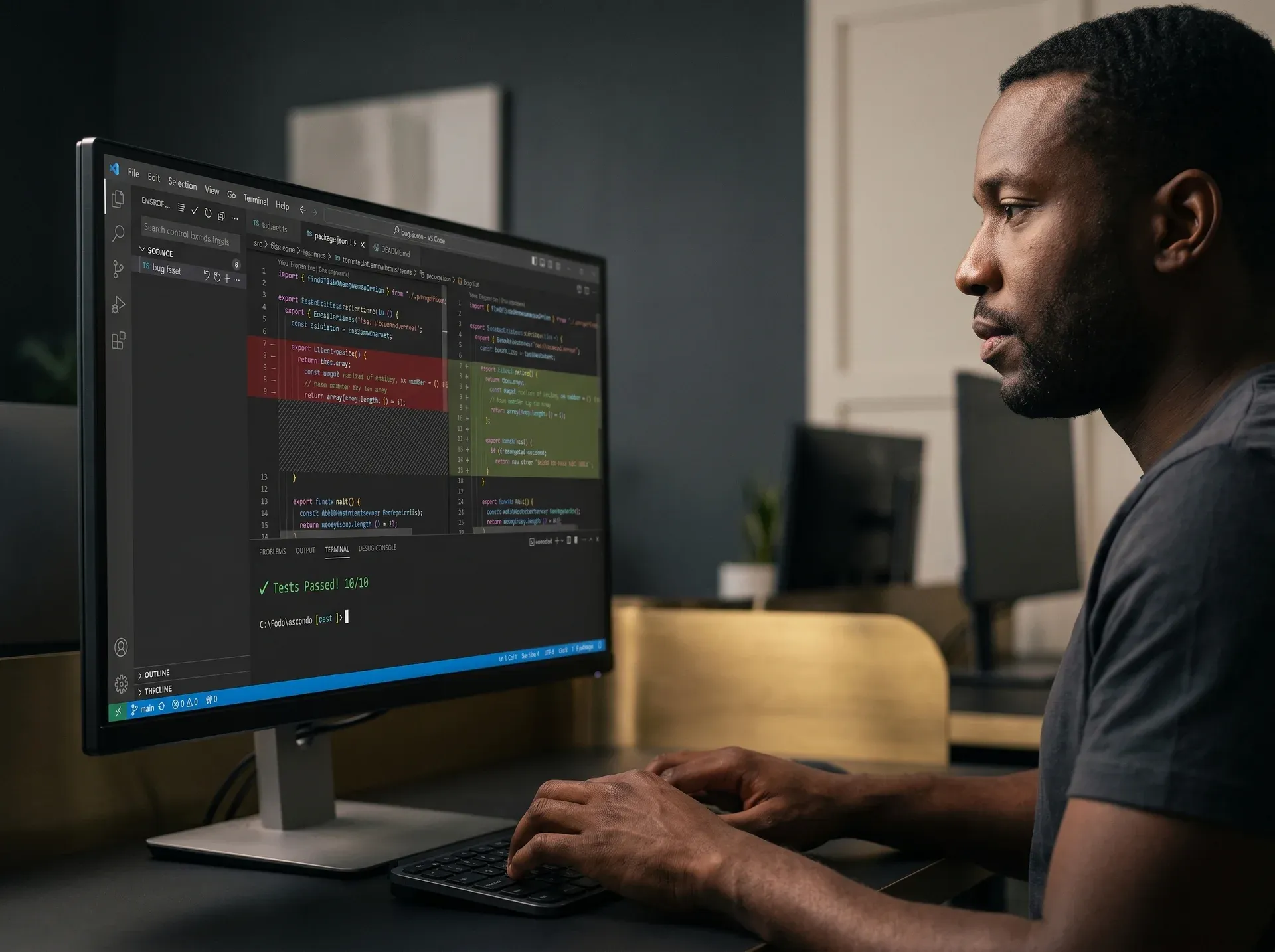
Bug triage and resolution. Contracted response time on every priority tier.
Every bug gets triaged and tracked. Your SLA defines exactly how fast we respond — based on severity. All resolutions are logged in your monthly report.
12 months of application maintenance. Here's the before, during, and after.

Three reasons clients stop calling us for emergencies within 90 days.
Most maintenance vendors write "best effort" agreements that hold no one accountable.
Our SLA specifies exact response windows by priority tier, confirmed before work starts. Miss a critical response SLA? The following month is credited — automatically.
Our onboarding process includes a technical audit, dependency review, infrastructure assessment, and full architecture documentation.
Most applications reach full coverage within 2 weeks. No stack restrictions. No exclusions for legacy code.
Most maintenance relationships run invisibly — until something breaks.
Every client receives a monthly report on the 1st: SLA summary, patch log, bug resolution list, performance trends, and the next 30 days of scheduled work. You always know exactly what your retainer covers.
What CTOs and engineering leads ask before starting a maintenance plan.
Application maintenance includes security patching, dependency updates, performance monitoring, bug triage and resolution, infrastructure and uptime monitoring, scheduled compatibility updates, and monthly maintenance reports. We agree on scope and SLA terms before any work begins.
Application maintenance is priced as a fixed monthly retainer based on your application's size, number of services, and traffic levels. The retainer covers a defined number of maintenance hours, all proactive monitoring, security patching, and a contracted SLA for bug response and resolution. One invoice per month. No variable hourly billing. Get a retainer estimate for your application on the pricing page.
Critical bugs affecting availability or data integrity get a 2-hour initial response and a 24-hour resolution target. High-priority bugs affecting core functionality get 4-hour response and 48-hour resolution. Standard bugs are triaged within 1 business day. Every SLA is documented in writing before work starts.
Yes. We take on applications built by any team or agency. Onboarding includes a technical audit of the codebase, a dependency review, an infrastructure assessment, and full architecture documentation. Most applications reach full coverage within 2 weeks. Learn what the onboarding technical audit covers.
Reactive bug fixing means your team reports a problem and we fix it. Proactive maintenance means we find and resolve issues before your users do. This includes automated monitoring alerts, dependency vulnerability scans, performance baseline tracking, and scheduled patching windows. Most proactive maintenance clients report 60 to 80 percent fewer user-reported issues within 90 days.
Get a scoped maintenance plan and SLA in 48 hours. Tell us about your application below.
See the plan first. Commit after. No pitch.
Answer a few questions → technical audit within 48 hours → plan and SLA scoped in 3 days → coverage live within 1 week
We'll complete a technical audit and send a scoped maintenance plan with SLA terms within 48 hours. Watch your inbox.