Your ERP knows the plan.
Your shop floor runs on Excel.
We fix that.
We build the software layer your ERP is missing. MES platforms, IoT machine connectivity, OEE dashboards, and ERP integrations for SAP, Oracle, and Dynamics 365. Your shop floor data and your ERP talk to each other from day one.
Most manufacturers run their shop floor on Excel. Every day without real-time data costs hours of output and weeks of trust with customers.
- Production data in spreadsheets already 24 hours out of date
- ERP that reports wrong inventory counts but cannot tell you why
- Machine downtime found hours after it started. Shift lost.
- Production orders that do not match what the shop floor actually built
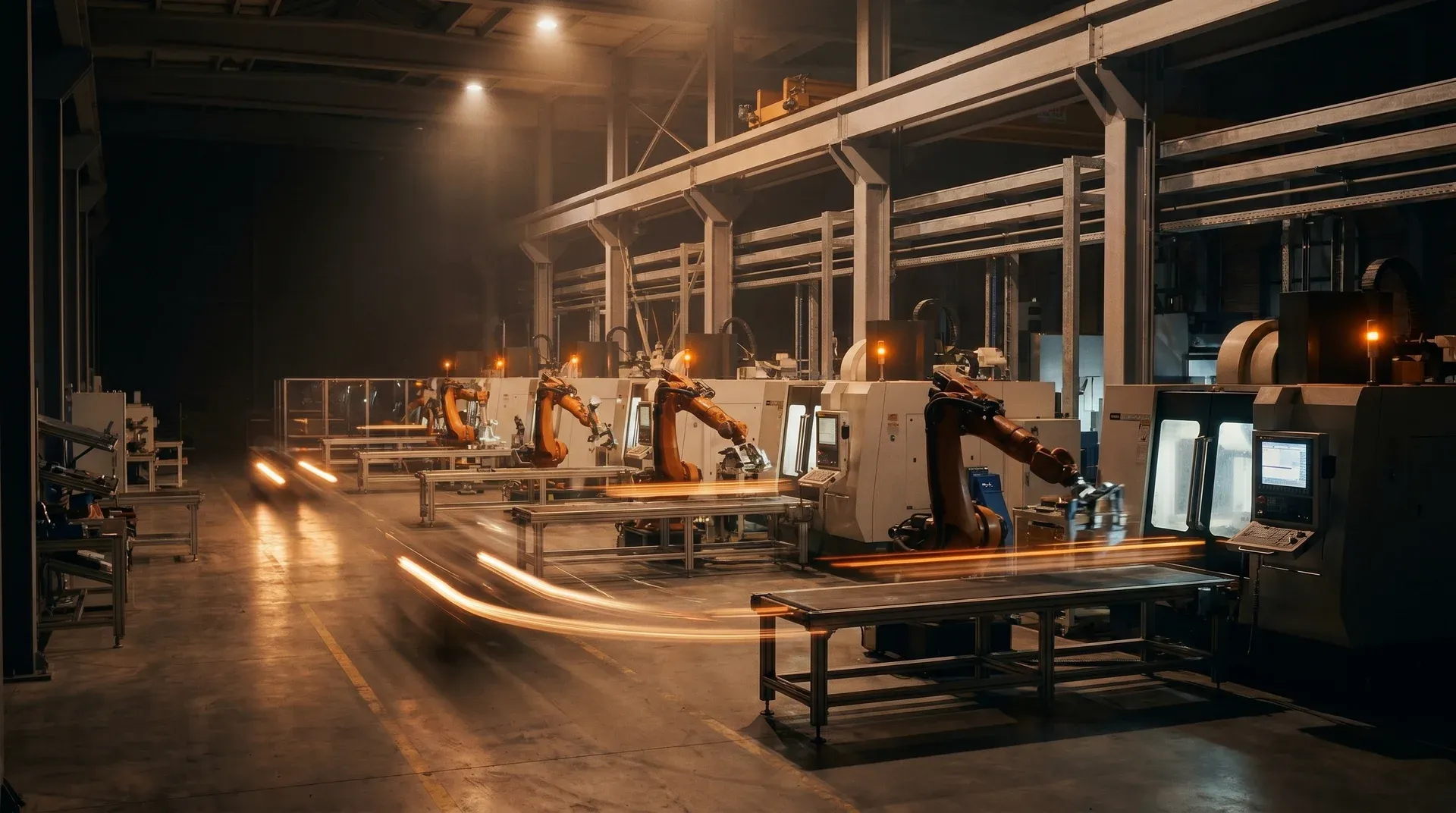
This is what your factory floor looks like when your ERP, machines, and operators share the same data.
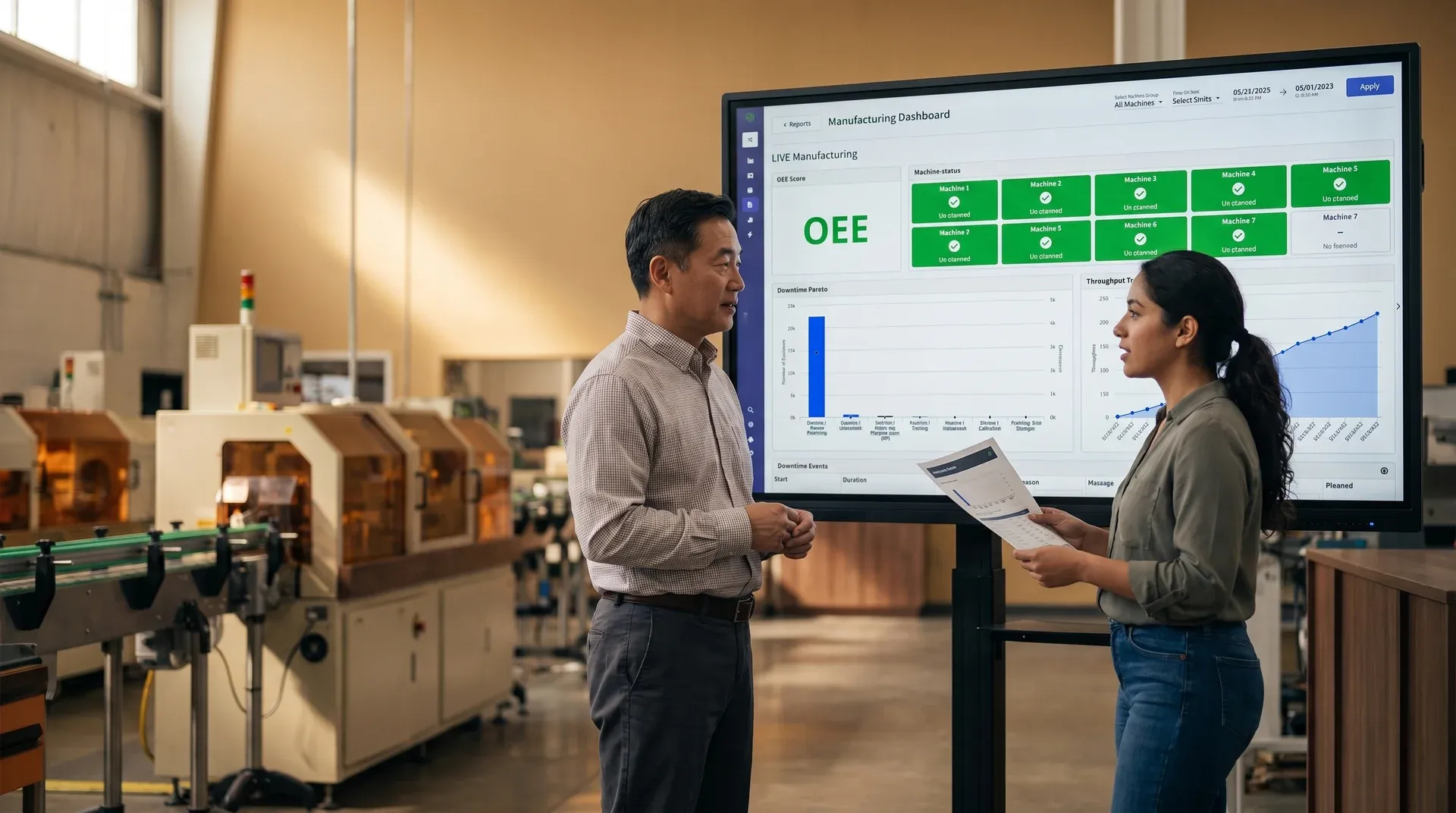
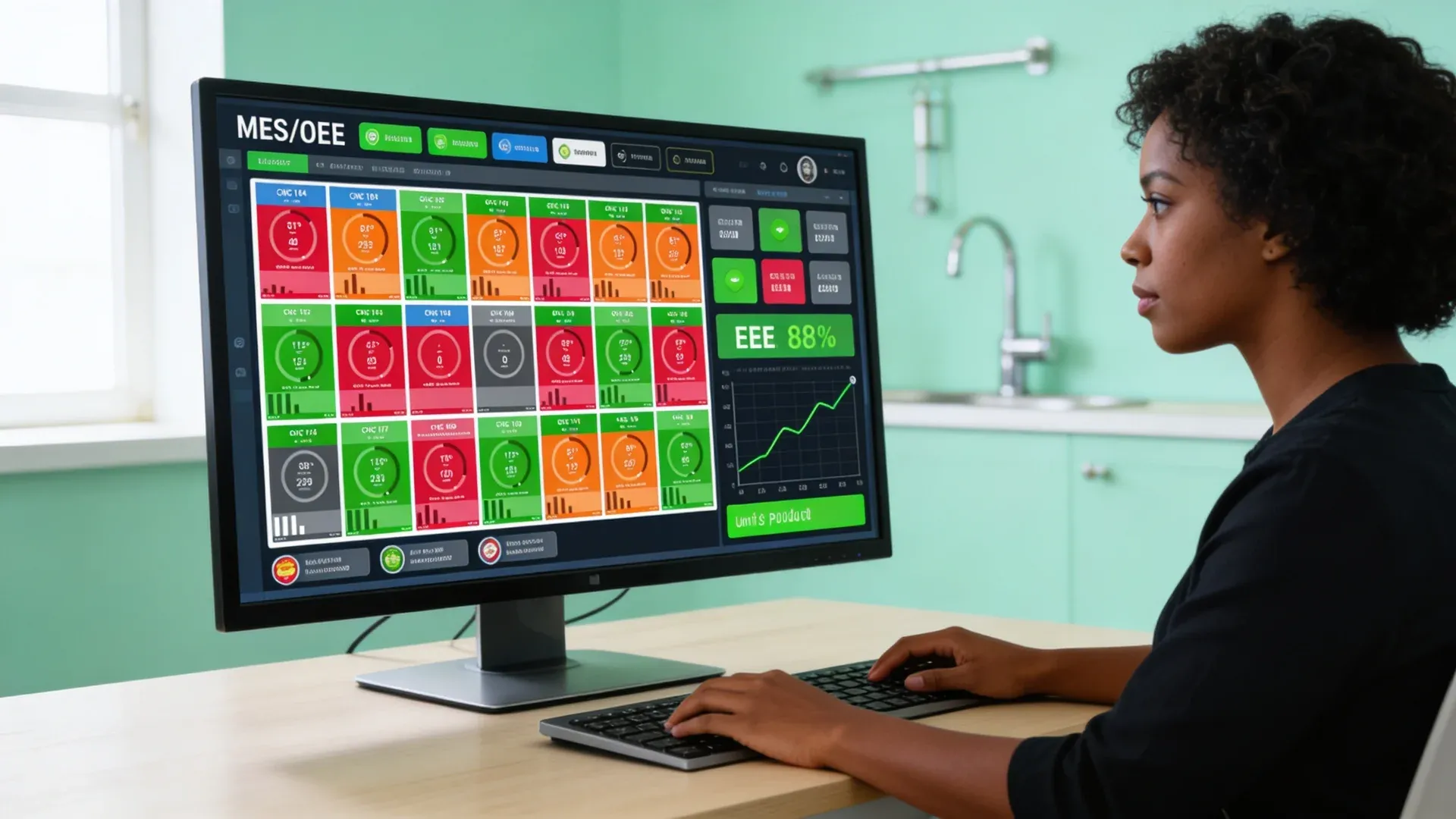
Every metric below comes from the exact platform we build. Live OEE pulls from machine sensors. Throughput data syncs to your ERP every 8 seconds. Alerts reach the supervisor in under 90 seconds. This is a real-time manufacturing operations center, not a mockup.
Four systems. One platform. Your ERP, machines, and shop floor finally on the same page.

We map your ERP data model before writing a single custom object. SAP connects via BAPI calls and OData endpoints. Oracle connects via REST APIs and database connectors. Dynamics 365 connects via Power Automate and direct API. This prevents the most expensive manufacturing integration failure: building custom software against the wrong ERP data model. Most teams discover the mismatch after three months of rework.
Machines that support OPC-UA connect directly. Sensors that use MQTT publish to a broker we configure and manage. All production events write to a time-series database (InfluxDB or TimescaleDB) at 50ms resolution. Your operators stop recording machine stops on paper. Your supervisors get alerts within 90 seconds of a line going down. We size the architecture around your actual machine count before provisioning any infrastructure.
A custom MES bridges the gap between your ERP's production orders and what is actually happening on the shop floor. Operators use touchscreen interfaces to start jobs, confirm units, and log defects. Every unit produced is recorded against the bill of materials. The ERP updates automatically after each run. No manual data entry. No shift-end paperwork.
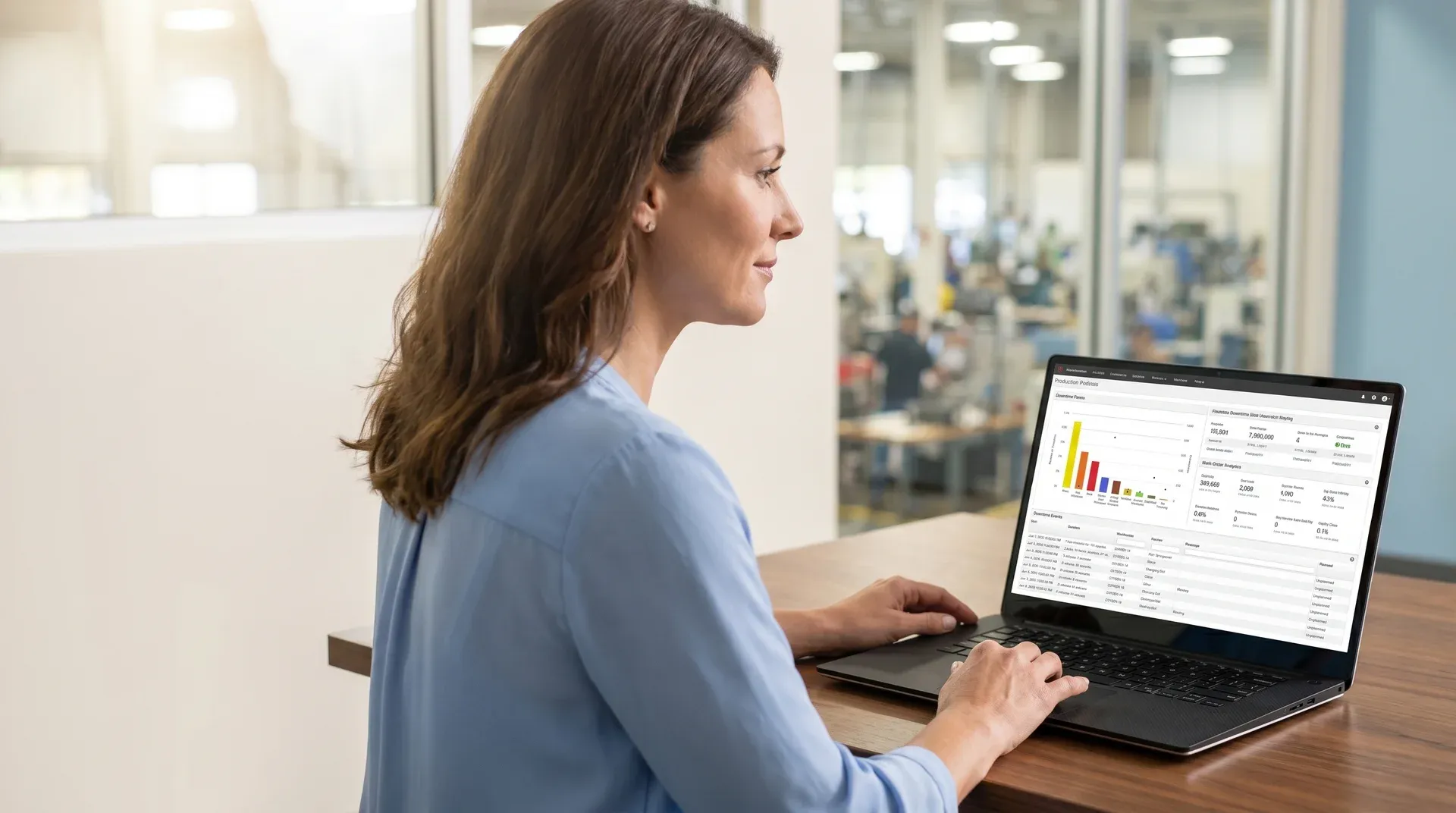
We build OEE dashboards that calculate Availability, Performance, and Quality per line, per shift, and per plant. Data comes from machine sensors or operator inputs. Shift handover reports are automatic. Downtime Pareto charts show you which stops are costing the most time. World-class OEE is 85%. Most manufacturers we work with start below 60%. The dashboard shows you exactly what is pulling it down.
Phoenix Flexibles replaced Excel across finance, inventory, and production. Their ERP now runs the business.
Phoenix Flexibles built a fast-growing packaging business on Excel. Every department had its own spreadsheet. None of them talked to each other. Inventory counts were wrong because production consumed materials that finance never recorded. Export documentation went through email and paper. Every international shipment was a compliance risk.
- Finance, inventory, and production data living in separate, unconnected spreadsheets
- Inaccurate inventory numbers led to failed production planning and missed orders
- Manual export documentation created compliance exposure on every international shipment
We implemented Microsoft Dynamics NAV as the central ERP for finance and inventory. We connected production to capture raw material consumption at the unit and batch level, live. We installed an EXIM module for export-import documentation and statutory compliance. We automated sales and quotation workflows. From the first go-live day, the business ran on one system instead of dozens of spreadsheets.
Three things our manufacturing developers do that general software companies cannot do on a shop floor.
What plant managers and engineering leads ask us before starting a project.
We build ERP integrations, Manufacturing Execution Systems (MES), IoT sensor pipelines, OEE dashboards, warehouse management systems, and production planning applications. We connect custom software to SAP, Oracle, Dynamics 365, and any ERP your shop floor already runs. The live dashboard above shows what the finished platform looks like.
Yes. SAP connects via BAPI calls and OData services. Oracle connects via REST APIs and database connectors. Dynamics 365 connects via Power Automate and direct API. We map the ERP data model in discovery before writing a single custom object. This keeps the integration from conflicting with your existing system structure.
Machines that support OPC-UA connect directly. Lightweight sensors use MQTT. All data writes to a time-series database (InfluxDB or TimescaleDB) at high frequency. We size the architecture for your machine count and sensor load before provisioning infrastructure. If you need real-time alerts, we build for sub-90-second latency. If you need batch reporting, we configure accordingly.
Your ERP manages the plan: production orders, bills of materials, and inventory targets. It does not manage what is happening on the shop floor right now. An MES captures the actual: what operators built, what materials were used, and when each line stopped. Without an MES, your ERP is planning against data that is always behind.
A standard ERP integration connecting a custom MES or analytics application to SAP or Oracle takes 12 to 16 weeks. Timeline depends on the number of integration points, data volume, and whether your ERP is on-premises or cloud. We scope before we quote.
Your project details go directly to our manufacturing engineering team.