ShipStation integration that ships every order at the right rate. First try.
We connect your cart, ERP, WMS, and ShipStation so rates, labels, and tracking sync without your team touching them. No more pasting tracking numbers. No more wrong service levels. No more WISMO tickets.
120+ integrations live · 40+ ecommerce brands shipping today
Connected Carriers · Region: North America
Carriers
42
Rate-shop
11%
Avg label
0.8s
Hero · Distribution center morning shift
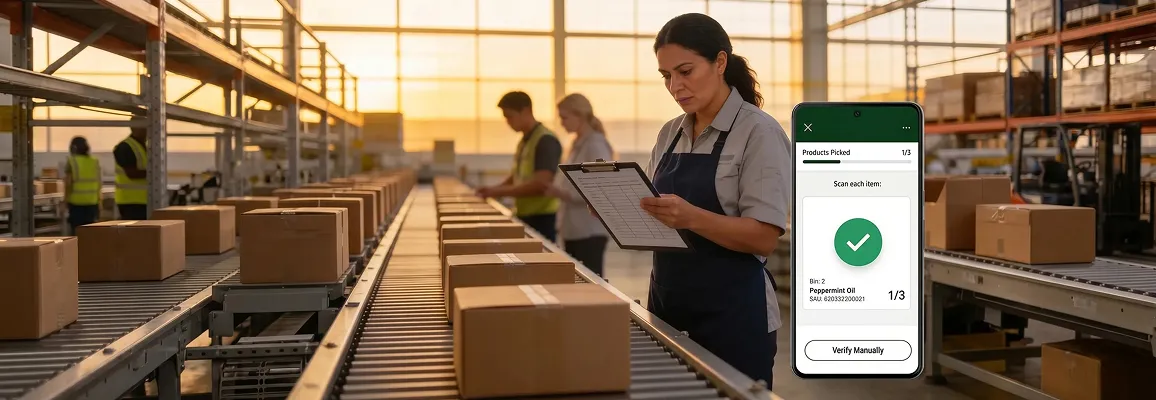
Stop hand-flying every package.
You bought ShipStation to kill manual work. Someone still copies tracking numbers, picks rates by eye, and calls support when international labels reject. Here is what changes.
A bench full of swivel chair work.
Someone pastes orders from cart into ShipStation by hand. Two screens. Three apps.
Someone picks the cheapest rate by eye. SLAs break. Refunds eat margin.
Someone retypes tracking numbers into the cart. Customers email 'where is it?'
Someone guesses at international forms. Customs rejects the package. It stalls.
Carrier invoices never reconcile against the ERP. Finance closes the month late.

A bench that runs while you sleep.
Orders push from cart and ERP to ShipStation the second checkout closes.
Rules pick the right rate for the right SLA. Margin holds. No eyeball math.
Tracking writes back to the order. Customer emails drop. CSAT climbs.
Customs data pulls from PIM and ERP. Forms validate before the label prints.
Carrier billing reconciles to the ERP nightly. Finance closes on day one.
What our ShipStation ecommerce integration wires in.
Most shipping failures live in the seams between cart, ERP, WMS, PIM, and your carriers. We wire every seam with the right object map, the right event triggers, and the right fallback logic.
Ecommerce Carts
Orders push the second checkout closes. Tracking writes back when the carrier confirms scan.
ERP & Finance
Carrier invoice reconciliation, COGS attribution, and inventory commitment land in the ERP. No re-entry.
WMS & 3PL
Pick lists, packing manifests, and bin assignments flow from WMS into ShipStation before the label prints.
Live shipment feed · last 60 seconds (sample)
Click any node. See what fires.
This is the actual pipe we wire on a typical engagement. Five stages. Real events. Real fallbacks. Pin a node to read the detail. Auto-advance stops the moment you click.
Auto-advancing · click any node to pin
Stage 01 · Order
Checkout closes. The pipe wakes up.
A webhook from your cart fires the second the customer pays. The ERP gets the financial record. ShipStation gets the shippable view. Both write to the same order ID so nothing drifts.
- Object map: cart.order → erp.salesorder → shipstation.order
- Idempotency key on the order ID prevents duplicate inserts.
- Failed pushes retry with exponential backoff to a dead-letter queue.
Inbound · webhook
✓ acceptedOrder
#48207
Customer
M. Avila
Items
3 SKUs · 2.4 lb
SLA promised
2-day
200 OK · 142ms · id: ss_ord_84992
Five capabilities, one ShipStation API integration.
Each capability ships in a scoped sprint. No half-built features. No 'we will come back to it later' pieces.

Bento · Ops lead at carrier console
Ops keeps the keys.
We hand over a rule editor your team owns. No vendor lock-in. No agency dependency to swap a carrier.
Order sync engine & ShipStation connector
Webhook-driven push from cart and ERP to ShipStation with idempotency, retries, and dead-letter recovery. No duplicates. No silent failures.
- · Bi-directional sync · cart ↔ ShipStation ↔ ERP
- · Idempotency keys on every payload
- · Failed messages route to dead-letter queue with replay UI
- · Custom field mapping per store
Rate-shop rules engine
Pick the right service for every order. Margins hold. SLAs hold. Finance can audit why a carrier was chosen on any line.
Sample rule
If value > $200 and SLA = 2-day → require signature, prefer UPS 2-Day, fallback FedEx
Label & customs automation
Labels, packing slips, and CN22/CN23 customs forms generate without a person clicking. Return labels included by default.
- · HS codes pull from PIM
- · DDP vs DAP routing by destination
- · Branded tracking page on your domain
Tracking write-back & exception handling
Every carrier scan lands on the order in seconds. Exceptions open a support ticket before the customer knows something went wrong.
Carrier invoice reconciliation & ERP write-back
Carrier invoices reconcile against shipped orders every night. Disputed charges flag automatically. COGS posts to the right GL. No manual journals.
Carrier statement match
98.4% matchedScoped brief to first labels in 14 days.
Most engagements ship Sprint 1 in two weeks. Here is what each phase involves on your side and ours.
Discovery checklist
Cart inventory
Shopify Plus · 1 store
ERP
NetSuite
WMS
ShipHero · LA + NJ
Daily volume
~1,400 orders
Carriers in use
UPS, USPS, DHL
International %
22%
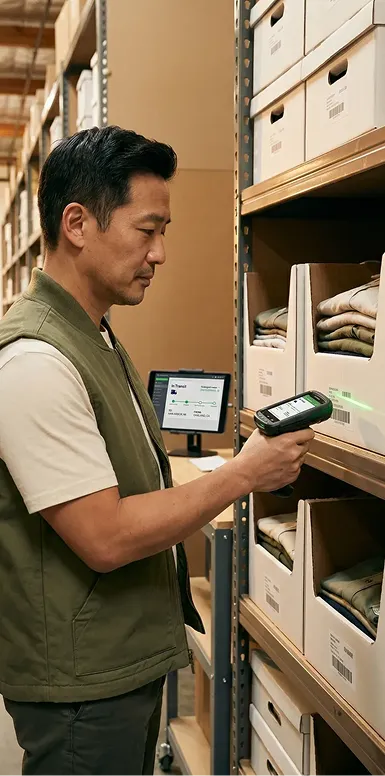
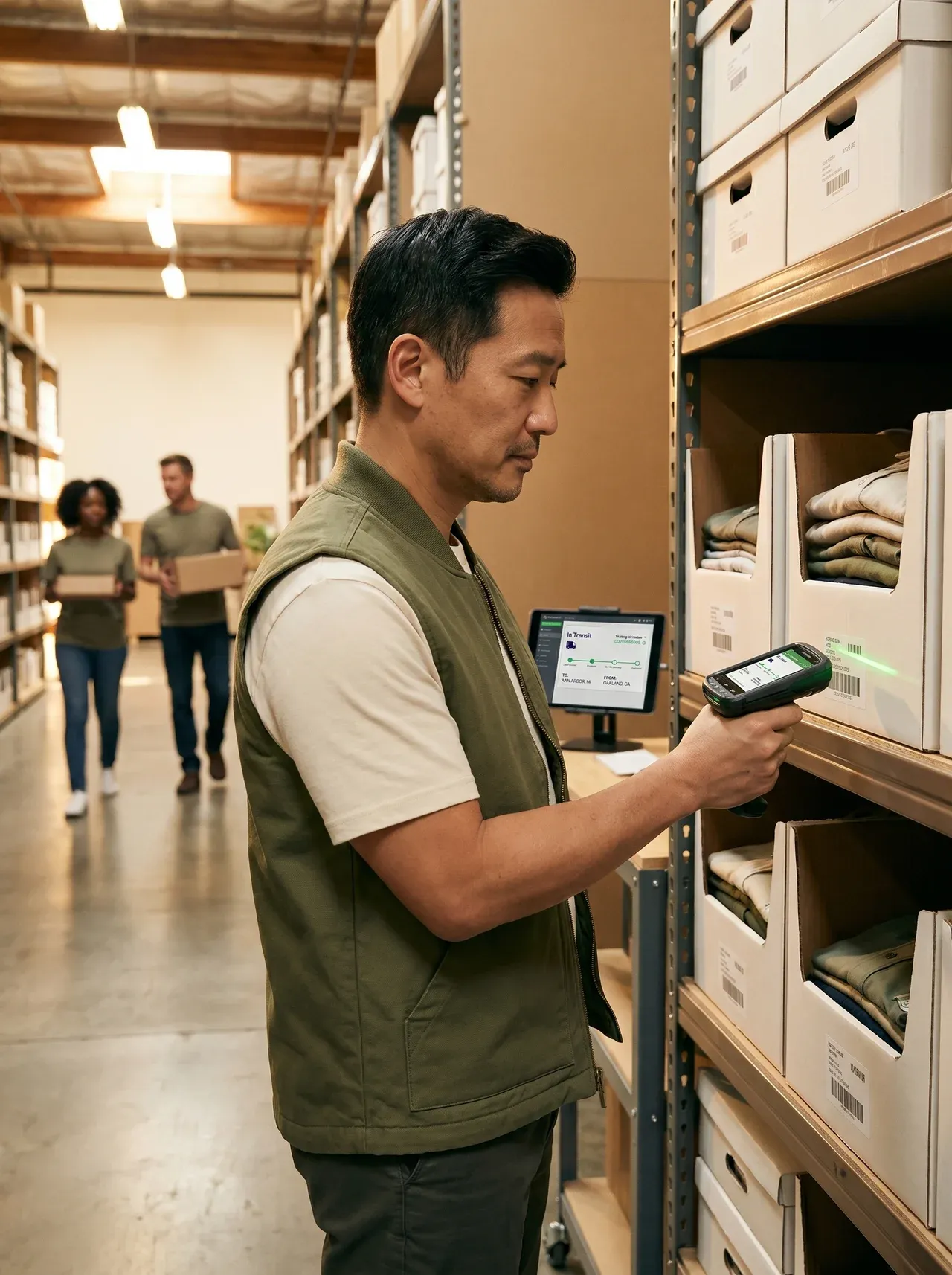
How JWE got fulfillment off spreadsheets.
JWE Inc
JWE sells uniforms across Shopify, Uniform Market, and a 3PL warehouse network. Orders, inventory, and customer data lived in three places and never agreed.
Problem
Fragmented processes and manual workflows. Orders, inventory, and customer data sat in Shopify, Uniform Market, and the 3PL system without talking to each other. Inventory miscounts. Late shipments. Overhead climbing faster than revenue.
Solution
We configured a Dynamics 365 Business Central environment to match JWE's operations. We built two-way integrations between Shopify, Uniform Market, and the 3PL warehouse. We wired ShipStation-grade fulfillment automation across the pipe so order, inventory, and shipping data write to one ledger.
Result
100%
order data sync
0 manual
manual reconciliations per week
3
channels, one ledger
"[REPLACE WITH A REAL CUSTOMER QUOTE]" JWE Inc engagement summary, Redefine project notes
ShipStation integration services built for fulfillment ops, not slide decks.
Most partners ship a beautiful integration in staging and disappear. We instrument the pipe, run hypercare, and hand ops the keys.
Claim 01
Your ops team owns the rule editor on day one.
Carrier swaps, SLA changes, and rate-shop tweaks happen in a UI your team uses. No ticket to us. No waiting on a deploy. The typical partner keeps the keys so they can bill more change requests.
Claim 02
Every rate-shop decision has an audit trail.
Finance can answer 'why did UPS get this order, not USPS?' on any line, any month. The typical partner optimizes for the rate sheet they negotiated. Not your margin.
Claim 03
Cutover ships in 14 days, not 14 weeks.
A typical partner quotes 90+ days because their team builds from scratch each time. We ship a hardened accelerator tested across dozens of brands. Then we configure the pieces unique to you.
Sibling · carriers
FedEx Integration services →
Sibling · carriers
UPS Integration services →
Sibling · platforms
Shopify integration services →
Adjacent cluster · use case
Ecommerce ERP integration services →
Adjacent cluster · workflow
Order-to-fulfillment integration services Coming Soon
High-conversion CTA
Integration assessment audit →
The honest answers, on record.
Do we have to be on ShipStation today to start?
Can you keep our negotiated carrier rates?
What if our ERP is custom or older than D365 / NetSuite?
How much engineering time will our team owe?
What happens if a carrier API goes down during peak?
Will you walk away after cutover?
See your ShipStation pipe in 3 days.
Tell us what your team handles manually that ShipStation should automate. We will reply with a scoped proposal, phased timeline, and line-by-line pricing. No commitment. No pitch.
Reply
Within 48 hours
Proposal
In 3 business days
Proof
120+ integrations live
Code
You own it
Submit your brief → call within 48 hours → scoped proposal in 3 days → Sprint 1 within 1 week of sign-off. No commitment. No pitch.
Brief received. We will review your setup and send a scoped proposal within 3 business days. Check your inbox.