Your FedEx shipping integration, fully automated from checkout to doorstep
FedEx integration services that remove shipping from your team's daily work. Live rates at checkout. Labels generated without manual entry. Tracking events pushed to orders, emails, and support tools in real time.
FedEx integrations shipped
Ecommerce brands running live
Percent rate uptime service level agreement

Average result, full year
68% fewer shipping tickets
Across the last 24 ecommerce brands that went live on Redefine's FedEx connector. Tickets measured against the 90 days before integration.
Most ecommerce teams still run every shipment by hand
FedEx already exposes rates, labels, and tracking through its API. Your team still copies tracking numbers into spreadsheets because nobody connected those endpoints to your store. We do.
The Old Way
Manual everything. Breaks during peak season.
Representatives tab between FedEx Ship Manager and your order management system, copying weights and addresses by hand
Rate quotes at checkout are flat or wrong. Customers see Ground when Express was the right call
Tracking numbers paste into emails, not into the order timeline customers actually open
Returns get printed on a desk somewhere, with zero link back to the original shipment
When the FedEx application programming interface hiccups, checkout silently drops to a flat $9.99 rate and nobody notices
The Redefine Way
One audited connector. Every flow automated.
Live FedEx rates served at checkout in under 400ms, with a cached fallback for slow application programming interface days
Labels generated from the order itself. Weights, dimensions, and service codes inferred from your catalog
Webhook-driven tracking events write back to the order, the customer email, and your support tool
Prepaid returns from the order page, with refunds gated on the FedEx scan event so you do not double-pay
Error queue, retries, and alerts when the carrier is slow. No silent failures, ever
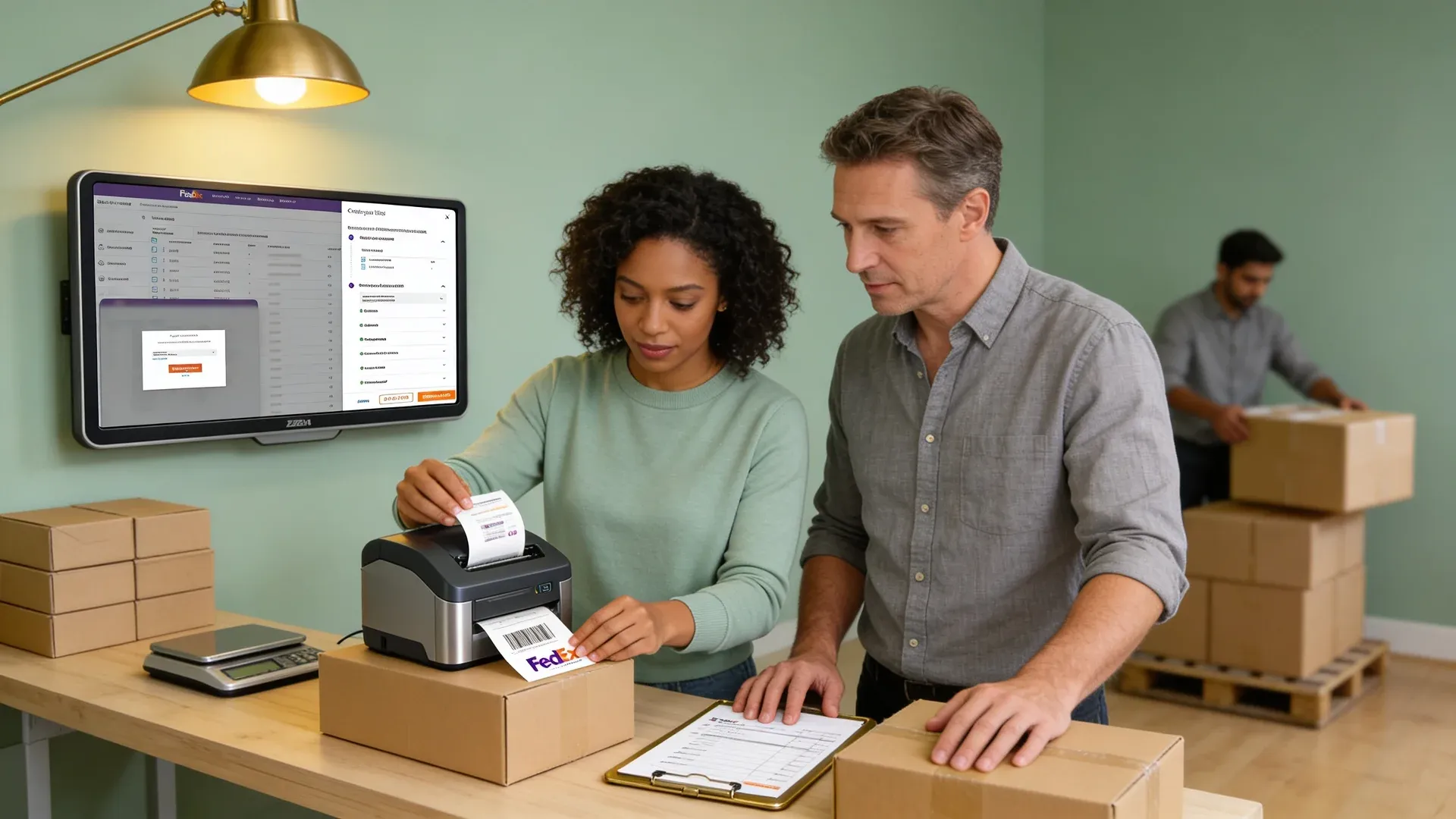
Watch a single order travel from cart to doorstep
Six stations. Each one runs without your team. Select any step to pause the walkthrough.
Shipment stations
Station 1 of 6
Customer drops a parcel-sized item in the cart
The shipping engine wakes up the moment a parcel-eligible SKU hits the cart. It reads dimensions, weight, and ship-from zip from your catalog, not from a flat rule table.
Read
Weight and dimensions
Lookup
Ship-from zone
Cache
300ms warmup
Station 2 of 6
Live FedEx rate engine quotes the cart in under 400ms
The integration calls the FedEx rate application programming interface in parallel with cart updates, returns Ground, Express, and Priority Overnight as customer-facing options, and applies your discount agreements before the price reaches the page.
Rate types
Ground, Express, Overnight
Fallback
Cached rate card
Service level agreement
Under 400ms
Station 3 of 6
Label PDF generated the moment the order is paid
No human picks a service code. The label PDF, customs document, and pickup notice all generate together, queue to the warehouse printer, and write the tracking number back to the order before the dispatch shift logs in.
Format
PDF, ZPL, PNG
Customs
Auto-attached
Print queue
Routed by warehouse
Station 4 of 6
Pickup slot booked from your dispatch calendar
FedEx pickup is requested automatically when label volume passes the threshold you set. Cut-off times, weekend windows, and pickup confirmations all sit in the same dashboard your operations team already uses.
Trigger
Volume threshold
Slots
Same-day, scheduled
Confirm
SMS to dispatch lead
Station 5 of 6
Every scan writes back to the order timeline
FedEx tracking webhooks stream into your store. Picked up, arrived at hub, out for delivery, exception, delivered. Each event lands on the order page, the customer email cadence, and your support tool.
Events
7 status types
Latency
Sub-2 second
Fan-out
Order, email, support
Station 6 of 6
Delivered event closes the loop and improves future rates
When FedEx reports the parcel as delivered, the order closes, the customer review email fires, and the actual transit time feeds back into next-quarter rate decisions. Returns inherit the same tracking thread.
Close
Order auto-archived
Reviews
Email fires day 3
Learn
Transit time logged
Live webhook feed
FedEx tracking events from the push application programming interface
1,247 events todayUpdated just now
Auto-advances every 4 seconds · Click a station to pause
Five capabilities. One FedEx connector. Zero manual steps.
Each capability below is a shipping flow the integration handles start to finish. The label on the right is a live render from the same template your warehouse prints.
From
REDEFINE DEMO STORE
1842 OAKLEY BLVD
PORTLAND OR 97214
FedEx
GROUND
CC 451
Ship To
M. ALVAREZ
214 W. HARROW LANE
AUSTIN TX 78704
Weight
2.4 lb
Dims
12x9x4
Service
Ground
7943 2510 0084
Label generation, the way warehouses actually print
PDF, ZPL, or PNG. Customs paperwork attached for international. Print queue routed by ship-from warehouse, the same template above, no manual entry.
Rate shopping at checkout
Ground, Express, Priority Overnight, quoted live with your discount agreements applied before the price hits the page.
Ground
$8.20
Express
$14.50
Overnight
$29.80
Webhook tracking, two-second latency
Picked up, arrived at hub, exception, delivered. Every status writes back to the order, your support tool, and the customer email.
Prepaid returns, refund gated on FedEx scan
Customer prints a return label from the order page. Refund only clears when FedEx confirms the package re-entered the network. No double-pays, no chargeback fights.
Return flow
Pending scan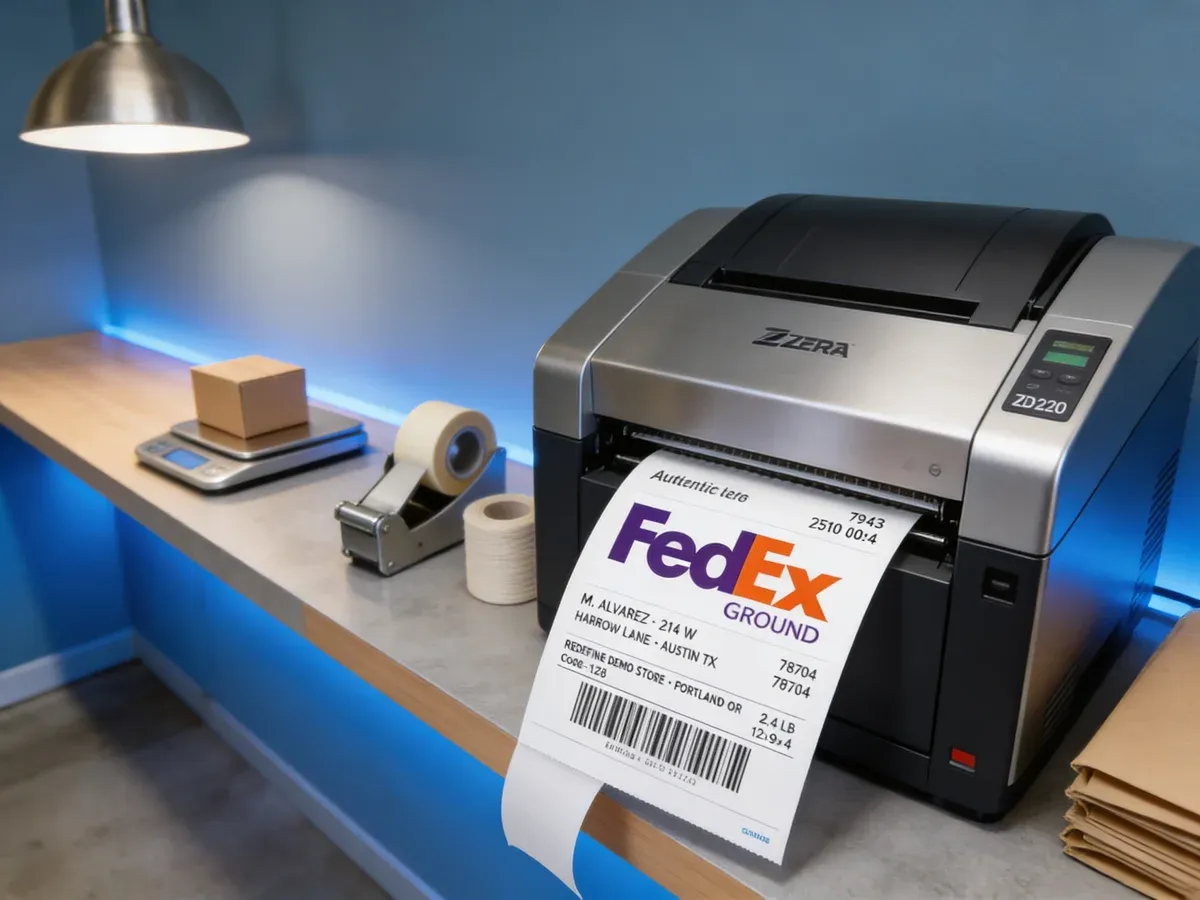
Multi-account, multi-warehouse, one dashboard
Two FedEx accounts? Three pickup locations? Each warehouse gets its own credentials, pickup schedule, and rate logic in the same connector.
FedEx integration services shaped to the way you ship
Pick the operation that matches yours. The connected stack, SLAs, and setup timeline shift to fit. Tabs auto-advance. Click any tab to pause.
Starter store · today
Orders
0
Labels
0
In transit
0
Connected stack
Shopify
FedEx Ground
Klaviyo
Setup time
2 weeks. Standard label profiles, one pickup window, Shopify checkout rate engine.
Growth brand · today
Orders
0
Labels
0
Returns
0
Service level agreement
0%
Connected stack
Shopify Plus
FedEx Ground + Express
NetSuite enterprise resource planning
Klaviyo
Gorgias
Third-party logistics portal
Setup time
3 to 4 weeks. Rate shopping, label batching, returns portal, enterprise resource planning write-back.
High-volume · today
Orders
0
Labels
0
Exceptions
0
P50 rate ms
0
Portland WH
1,182 labels
Memphis WH
1,047 labels
Reno WH
981 labels
Setup time
5 to 6 weeks. Multi-warehouse routing, service level agreement dashboards, custom error queue, parallel-run cutover.
Eyeglasses123 scaled to $6M on a connector their team never has to touch
A dropshipping eyewear brand running across multiple marketplaces. Returns were manual, inventory was out of sync, and the shipping desk slowed everything down. Five weeks changed the math.

Who they are
Eyeglasses123, an online eyewear brand operating across multiple marketplaces with a dropship supply network.
The problem
Rapid growth, manual returns, no inventory sync, and a supplier reliability gap. The shipping desk was running on copy-paste tracking numbers and reactive emails.
Build timeline, 5 weeks
Week 1
Shipping audit
Mapped 14 rate scenarios, 6 marketplaces, 4 supplier warehouses.
Week 2
Rate and label flow
Live rate application programming interface, Ground and Express, dropship label routing.
Week 3
Tracking webhooks
Order timeline, email cadence, support tool sync. Two-second latency confirmed.
Week 4
Returns and refunds
Prepaid label flow, refund gated on scan event, restock automation.
Week 5
Live cutover
Parallel run, dispatch team trained, legacy system retired clean.
The result
$0M
Annual revenue scaled through the integrated dropship and shipping flow.
0%
Fewer support tickets tagged "where is my order".
0%
Of returns refunded automatically on FedEx scan, no human review.
Source
Redefine project archive, 24-month measurement window
We have built this before. You skip the first six weeks.
Six pre-built modules ship inside every FedEx integration. The audit decides which ones snap in as-is and which ones get bent to your operation.
Rate engine harness
Parallel calls, cached fallback, discount-agreement layer. Drops onto Shopify, BigCommerce, or a custom checkout.
Label template library
PDF, ZPL, and PNG variants for thermal and laser printers. Customs paperwork included for cross-border lanes.
Webhook router
FedEx push events fan-out to order timeline, customer email, support tool, and enterprise resource planning. Retry and dead-letter built in.
Returns portal
Customer-facing return label flow, refund gated on FedEx scan, restock signal back to inventory.
Error queue and dashboard
Every failed call lands in a queue with full context. Operations dashboard shows service level agreement, P50 latency, and exception trends.
Migration cutover kit
Parallel-run plan, in-flight order map, rollback playbook, dispatch-team training deck. Reused across 24+ migrations.
FedEx API integration built for when the carrier goes slow
FedEx has a solid API. It is also a public API that sometimes degrades. Here is what sits between your store and that uncertainty.
Flow, request lifecycle
Store checkout fires a rate request
Hits the connector, not FedEx directly. Cart context attached.
Connector fans-out parallel rate calls
Ground, Express, Overnight, all in parallel. 400ms budget.
If FedEx is slow, cached rate table answers
7-day rolling cache by zone and weight tier. Checkout never blocks.
Failed call goes to dead-letter queue
Full context preserved. Operations alert in the dashboard, not a silent miss.
Auto-retry with exponential backoff
3 attempts, then escalates. Most resolve in under 90 seconds.
Last 24 hours, live
OKRate application programming interface uptime
0%
P50 rate latency
0ms
Webhook delivery
0.9%
Errors auto-resolved
0.2%
Right now
Active
0
Queued
0
Retrying
0
Three reasons brands pick us over off-the-shelf shipping apps
The default partner network sells you a tile in their marketplace. We sell you a build. Three differences that matter when the holiday peak hits.
We own the code, you own the codebase
Off-the-shelf shipping apps lock the integration inside their platform. When pricing changes or the app gets acquired, your shipping flow becomes someone else's leverage. Our build lives inside your store, on your repo, with your team holding the keys.
Audit first, build second. No template lift.
Typical partner billing starts the day the contract signs. We scope your rate logic, label profiles, returns flow, and edge cases before a line of code gets written. The proposal you sign is the build you get.
FedEx ecommerce specialists, not generalist integrators
We do not also build healthcare middleware. The connector reflects 24+ ecommerce shipping integrations, peak-season patterns, real return rates, the marketplaces your team actually uses. The patterns that broke for someone else are already fixed here.
What teams ask before they sign
A standard FedEx integration audit and build runs three to five weeks. Audit and rate-engine scope in week 1, label and tracking in weeks 2 to 3, returns and webhooks in week 4, parallel run with your operations team in week 5. High-volume operations with multiple warehouses add one to two weeks.
Yes. The integration supports multiple FedEx accounts, multiple ship-from locations, and rate shopping across services. Each warehouse gets its own credentials, pickup schedule, and label profile in the same dashboard.
Returns are part of the standard scope. Customers generate a prepaid return label from the order page, the label gets logged against the original shipment, and the refund flow ties to FedEx tracking events so refunds clear only when the carrier scans the return.
The integration ships with retry logic, error queues, and a fallback rate cache so checkout does not break when the carrier is slow. Failed events get logged with full context, and your operations team gets an alert in the dashboard, not a silent failure.
Yes. The audit step maps the rate logic, label profiles, and tracking history from your current setup, then runs the new integration in parallel before cutover. No in-flight order loses its tracking record. See the shipping platform migration page for the full playbook.
Scoped before work starts, line-by-line in the proposal, no commitment to receive it. Starter store integrations land in the $14k to $22k range. Growth brand builds with returns and enterprise resource planning write-back sit in the $28k to $48k range. High-volume multi-warehouse work scopes individually. See the integration pricing page for the full breakdown.
Map your shipping flow. We will show you the leaks.
Tell us your platform, your shipping flow, and your pain points. We compare your setup against 24+ FedEx integrations we have shipped. You get a scoped proposal with line-by-line pricing. No commitment. No pitch.
Response
Within 48 hours
Proposal
In 3 business days
Proof
180+ integrations
Ownership
Code stays with you
Your team's time investment across the full audit and build is typically 3 to 4 hours: one shipping flow walkthrough, async label-profile review, and a final parallel-run sign-off.
No commitment. No pitch.
Brief received
We will review your shipping operation and send a scoped proposal within 3 business days. Watch for an email from a Redefine integration lead.
Parent hub
Integration services
Sibling carrier
UPS integration services
Sibling carrier
DHL integration services
Sibling carrier
USPS integration services