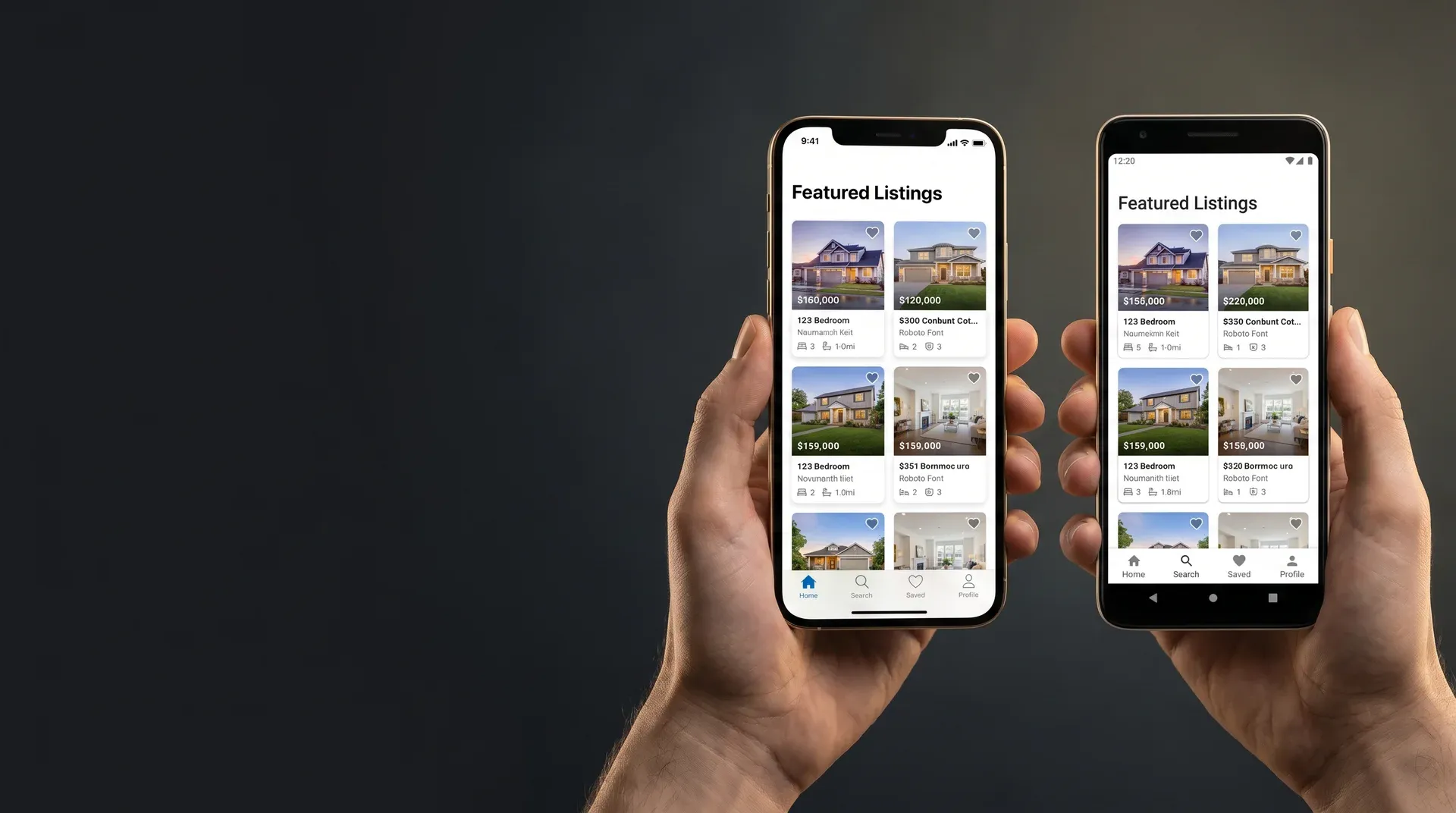
React Native App Development: One Team, iOS and Android at Once
Stop paying two mobile teams for the same result. Ship to the App Store and Google Play at the same time, from a single TypeScript codebase. We build React Native apps with native UI components, Expo EAS deployment, and 85% or higher test coverage on every delivery. Your users on iOS and Android get the same features, the same day.
Building iOS and Android separately doubles your team, your timeline, and your maintenance bill. Not your shipping speed.

Here is the dollar cost of running separate iOS and Android teams right now — as you read this.
Math: two mid-senior mobile engineers at $150K each vs. one React Native engineer. Watch the gap grow.
Counter starts on scroll. Resets on reload. Numbers illustrate annual salary spread per minute.
Native performance on both platforms. One team. One codebase. Both app stores shipping at once.

Real native UI on iOS and Android from one shared TypeScript codebase
React Native renders actual native components, not a web view. iOS users get UIKit. Android users get Material Design. Both platforms feel exactly as users expect. App ratings stay high because the UI behaves natively on every device. Accessibility, gestures, and animations all run on the native thread.
Expo EAS submits to the App Store and Google Play simultaneously from one command
Expo EAS Build manages code signing, certificates, and store submission for iOS and Android together. No Mac required for Android. No Windows needed for iOS. Push your code and both builds compile in the cloud. Within 10 minutes, both stores have a binary ready for review or internal distribution.
Quality assurance and test automation services →Push fixes and updates to users in minutes without waiting for app store review
Expo Updates sends JavaScript changes directly to users' devices. No new binary. No store review. Bug fixes and content updates go live in minutes. For teams that ship product updates every week, this removes the 1 to 3 day review bottleneck from your release cycle. Native code changes still need a full binary submission, but most feature work does not.
Tab.Navigator
HomeScreen
SearchScreen
ModalStack
PropertyDetail
Opens PropertyDetail directly
Deep link working
Navigation, deep links, and tab bars feel native on iOS and Android out of the box
React Navigation drives every screen transition with native gestures and animations. Both platforms feel fast and familiar. Deep links open the exact right screen from push notifications, marketing emails, or web URLs. This means your campaigns can link directly into the app, not just to the home screen. We configure universal links for iOS and app links for Android on every build we ship.
Mobile app development services →Homes and Lands needed a single mobile app on both platforms. We shipped iOS and Android on the same day.
Homes and Lands needed a high-performance mobile app on iOS and Android. It had to display property listings, handle secure user accounts, and load fast enough for buyers browsing from the field.
- iOS and Android launched the same day — not weeks apart
- User behavior analytics built in from day one
- Performance tuned for field use — fast load times in low-signal areas

Real estate apps live or die on search speed, map integration, and push notifications for price drops. They also need offline access for buyers in areas with weak cell signal. React Native handles all of these natively on both platforms. The cross-platform build does not compromise any of them.
Mobile app development services →- Marketplace and listing apps — where buyers and sellers need the same experience on every phone
- SaaS companion apps — extend your web platform to mobile without a second engineering team
- E-commerce and retail apps — product browsing, checkout, and push notifications that convert
- Communication and messaging apps — real-time chat and notifications with native performance
- Content and media apps — video, audio, and feeds that scroll and play like a native app
Three claims most React Native app development agencies cannot back up. We can.
Expo EAS Build compiles both binaries in parallel. It submits to the App Store and Google Play at the same time. The only scheduling constraint is Apple's review queue, typically 1 to 3 days. Your engineering team is never the bottleneck. Both platforms always ship the same version, same features, same release cycle. Platform fragmentation in your user base stops the day you launch with us.
iOS app development services →Cordova and Ionic render your UI inside a WebView. React Native renders real native components. The difference is visible to users: 60fps gesture animations, native scroll physics, hardware keyboard support, screen reader accessibility, and haptic feedback. These require real native components — not a WebView. We use React Native with Expo and have never shipped a WebView-based app for production use.
Android app development services →iOS certificates, provisioning profiles, Android keystores, and build machines are full-time infrastructure work. You spend that time before you ship a single feature. Expo EAS handles all of it in the cloud. Push your code and the build triggers automatically. Within 10 minutes both binaries are ready for store submission or internal testing. We set up EAS build profiles, update channels, and rollback procedures on every engagement.
What CTOs, founders, and product leads ask us before starting a build.
React Native lets one team build an app that runs on both iOS and Android from a shared codebase. You get native UI components, not a web view wrapper. One team. One codebase. Both app stores at the same time. Building native iOS and Android separately doubles your team size, your timeline, and your maintenance bill for every feature you ship.
For almost every application category, yes. React Native uses the same native UI components as Swift and Kotlin apps. The new React Native architecture removes the bridge bottleneck from older versions. Performance-critical code runs in native modules. Most users cannot tell the difference between a well-built React Native app and a native one. Learn more in our mobile app development services overview.
A production-ready React Native app with authentication, a data feed, push notifications, and app store deployment takes 12 to 20 weeks. A simpler MVP with 3 to 5 screens takes 6 to 10 weeks. Timeline depends on backend complexity, integrations, and the number of custom native modules. We scope before we commit to a number.
We default to Expo managed workflow. Expo EAS Build handles code signing, certificates, and store submissions without native build infrastructure. For apps that need deep native modules Expo does not support, we use bare React Native with the Expo modules layer. The decision is based on your feature requirements, not our preferences.
React Native engagements run between $50,000 and $250,000. Simpler apps with 5 to 8 screens and an existing backend land closer to $50,000. Complex platforms with custom native modules, third-party integrations, and Expo EAS infrastructure land toward the higher end. We scope before we quote. See our React Native pricing guide for the full breakdown.
Tell us about your mobile app project.
We respond within two business days. No commitment. No pitch.
We will review your project and send a detailed proposal within 3 business days. Expect a 30-minute call to walk through scope, timeline, and questions.