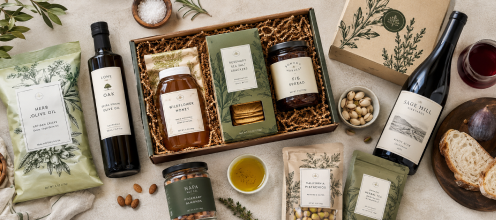
Your food or beverage brand deserves a Shopify store built for how direct-to-consumer food actually sells
Redefine builds Shopify stores for food and beverage brands with subscription billing, product personalization, ingredient transparency user experience, bundle builders, and direct-to-consumer checkout flows designed for high-repeat categories.
What food and beverage brands unlock with a purpose-built Shopify store
That convert one-time buyers into recurring revenue, with flexible cadences, easy pause/skip, and bundle discounts built for food repurchase patterns.
Flows for custom labels, gift messages, flavor selections, roast preferences, and dietary requirement filtering, all built into your product page user experience.
User experience for ingredient transparency, allergen labeling, nutritional information, alcohol age gates, and regulatory statement placement, built by default, not added as an afterthought.
Purchase architecture, including reorder buttons, curated bundles, loyalty points, and post-purchase upsells that match how high-frequency food buyers actually restock.
A generic Shopify store and a food-first Shopify store are not the same thing
Drag the handle below to move between a typical food brand Shopify store and what a purpose-built food ecommerce experience looks like. Every difference you see is a conversion decision.
Drag left or right to compare
Food brand store: food-first build Replace with: styled food brand product page, subscription options visible, personalization module, warm artisan lighting · 1200×440
Subscription options visible on the product page, not hidden in a separate menu or an app widget that looks like it was added later.
Product personalization (custom labels, gift messages, flavor selection) embedded in the purchase flow, not a separate form customers have to find.
Ingredient transparency, allergen callouts, and sourcing story built into the product page layout, required for food compliance and highly effective for conversion.
What a food brand Shopify store looks like when it's built around subscription and repeat purchase metrics
This is the kind of dashboard your operations team sees when your Shopify store is built to support direct-to-consumer food brand growth. Every metric below is visible, tracked, and actionable from day one.
Six Shopify capabilities every food and beverage brand needs, built for your product category
Food and beverage ecommerce requires Shopify features that generic agencies haven't scoped. Expand any capability below to see what Redefine builds and why it matters for your brand's revenue.
Redefine integrates Shopify with subscription platforms (Recharge, Skio, Loop, or custom Stripe Billing) and builds the subscription user experience directly into your product pages. Buyers see subscribe-and-save pricing, cadence selection, and bundle discounts in the natural purchase flow, not in a pop-up or a separate page. Pause, skip, and swap flows are built for the mobile experience food brand subscribers actually use.
- Subscribe-and-save pricing visible on the product page
- Flexible cadence: weekly, bi-weekly, monthly
- Smart retries on failed subscription payments
- Customer portal for self-service management
Redefine builds product personalization modules directly into your Shopify product pages, not as a clunky app widget bolted on afterward. Custom label text, logo or photo upload, roast date preferences, flavor combinations, dietary requirement flags, and gift message fields are all native to the product page user experience. Average order value increases 24% when personalization is embedded in the purchase flow.
- Custom label text, logo upload, photo personalization
- Flavor and variety selection in the product page
- Gift message and preferred delivery date
- Personalization data flows to fulfillment operations automatically
Food and beverage brands have regulatory requirements that generic Shopify agencies frequently miss or handle incorrectly. Redefine builds compliance user experience into your Shopify store by default: ingredient lists and allergen callouts positioned for readability, alcohol age verification gates compliant with platform requirements, nutritional information panels that match your product packaging, and TTB or FDA regulatory statements placed correctly on product and checkout pages.
- Ingredient and allergen panels in product layout
- Alcohol age verification gate (21+ US / 18+ EU and AU)
- Nutritional facts panel matching packaging
- Regulatory statement placement on product pages
Redefine builds Shopify bundle builders and gift configurators for food and beverage brands: mix-and-match variety packs, curated gift sets with packaging selection, multi-product sampler builders, and pre-built bundle deals with volume discount pricing. Bundle revenue represents 30 to 40% of total store gross merchandise value for food brands that have implemented it correctly. The key is making bundle selection feel as simple as buying a single product.
- Mix-and-match variety pack builder
- Gift set configurator with packaging options
- Volume discount pricing for bundle SKUs
- Bundle inventory management via Shopify variants
Food and beverage direct-to-consumer checkout has requirements that standard Shopify checkout doesn't address. Redefine builds one-click reorder flows, express payment methods (Apple Pay, Google Pay), preferred delivery date selection for perishable products, shipping blackout date logic for holidays, and post-purchase upsell flows scoped to food repurchase patterns. 68% of food buyers reorder within 90 days, so your checkout should make that as frictionless as possible.
- One-click reorder from account and order confirmation
- Preferred delivery date for perishables
- Holiday blackout and shipping cutoff calendar
- Post-purchase upsell for food complementary products
Food brands have a natural editorial asset: recipes, usage ideas, and lifestyle photography that generic Shopify stores don't use effectively. Redefine builds recipe and content modules directly into product pages, collection pages, and a dedicated content section that links back to purchasable products. The result is content that drives search traffic, increases time on site, and converts at a higher rate because the "shop this recipe" call to action is always visible and always one click from checkout.
- Recipe cards embedded in product pages with add-to-cart
- Lifestyle lookbook with shoppable product tags
- Search-engine-optimized recipe and editorial content architecture
- "Shop this recipe" bundles linked from content pages
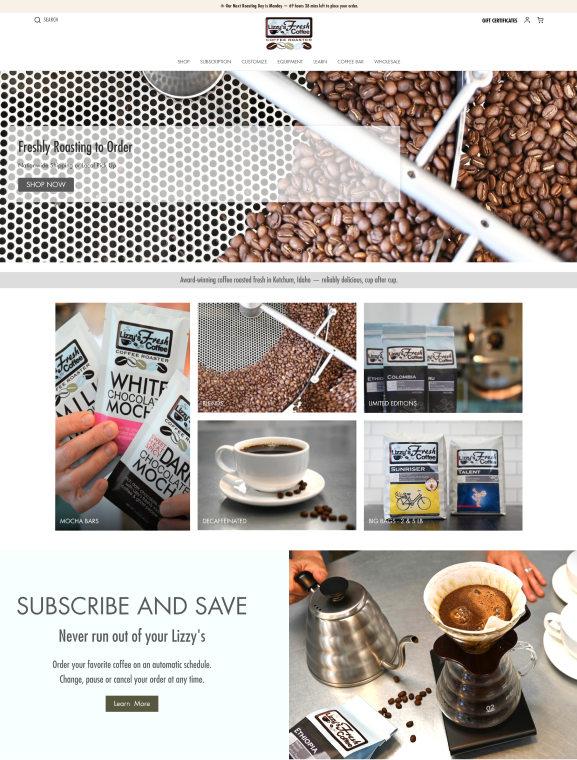
Food brand ecommerce rebuild: 35% more pageviews, product personalization live, payment issues resolved
Increase in pageviews after the ecommerce rebuild, with notable improvements in search rankings
Custom label text, logo upload, preferred roasting dates, and gift message now live in the purchase flow
Payment gateway issues resolved: no more checkout failures, dropped transactions, or processing errors
Artisan coffee brand requiring a complete ecommerce rebuild to resolve payment gateway failures, restore store performance, and launch the personalization capability their product range warranted.
The existing websites experienced payment gateway failures, limited data storage, slow performance, and poor user experience. These constraints prevented customer engagement, blocked personalization capabilities (custom labels, custom roast orders), and stopped the brand from launching new initiatives or scaling its digital presence. A coffee brand known for quality was being undermined by a store that couldn't handle its own checkout.
A complete website rebuild delivered a responsive experience across all devices. Advanced personalization was implemented: customers can now add custom text, upload logos, set preferred roasting dates, and select packaging options directly in the purchase flow. Infrastructure upgrades resolved storage and performance constraints. Payment gateway issues were eliminated. Search engine optimization and usability improvements drove the 35% pageview increase.
What a food and beverage Shopify build includes with Redefine that it doesn't with a general agency
General Shopify agencies can build a product page. Food brand ecommerce requires subscription billing, personalization, compliance user experience, and direct-to-consumer repurchase flows. Here's the difference.
Shopify for food and beverage brands: questions answered
Yes. Redefine integrates Shopify with subscription platforms and builds the user experience directly into your product pages, not as a visible third-party widget. Subscription options, cadence selection, and subscribe-and-save pricing appear as part of the native product page experience. The customer portal for managing subscriptions is also custom-built to match your brand, not a default app interface.
Redefine builds personalization modules as native Shopify product page components, not separate apps. Customers enter custom label text, upload logo files or photos, set roasting date preferences, or select flavor combinations as part of the standard add-to-cart flow. Personalization data attaches to the line item and flows through to fulfillment operations automatically. Redefine scopes the specific personalization requirements for your product range during Discovery.
Yes. Redefine builds age verification gates compliant with Shopify's requirements and applicable regional regulations. Gates are configurable by market (21+ for US, 18+ for EU and AU) and designed to be as low-friction as legally permitted. Custom age gate design that matches your brand aesthetic is included. Shopify's standard age verification settings are a starting point; Redefine builds custom implementations for brands that need more control.
Yes, via Shopify Plus and its B2B wholesale features. Redefine sets up separate customer contexts: retail and wholesale, with different pricing tiers, minimum order quantities, and net payment terms on the same Shopify store. Wholesale buyers see their account pricing and payment terms; retail buyers see standard direct-to-consumer pricing. For brands that need both, this is significantly more scalable than maintaining a separate wholesale platform.
A standard Shopify food brand build with subscription billing, product personalization, bundle builder, and compliance user experience takes 6 to 10 weeks from design approval to go-live. Builds requiring Shopify Plus, headless architecture, direct-to-consumer plus wholesale, or third-party Enterprise Resource Planning integration take 10 to 16 weeks. Redefine delivers a specific scope and timeline after the scoping call, before you commit to the project.
Your food brand's repeat purchase rate is an asset. Your Shopify store should be built to capture it.
Book a free 30-minute food brand Shopify scoping call. Redefine reviews your current store, your subscription and personalization requirements, and your direct-to-consumer goals, then delivers a scope and timeline before you commit.
Call within 48 hours · proposal in 3 days · Sprint 1 within 1 week of sign-off