Connect your legacy systems to modern platforms without ripping out what runs your business.
Legacy system integration services that bridge your older ERP, warehouse, or custom-built systems to modern tools. Your team keeps working in the systems they know. New platforms get live data without manual transfers.
integration projects delivered for mid-market and enterprise teams
Hero · Legacy enterprise system connected to modern cloud platforms via integration layer

Your legacy system is not the problem. The gap between it and everything else is.
Legacy system integration is not about replacing your platform. It is about building the bridge that lets your older systems feed data into modern operations. Your team stops re-entering the same records across systems that should already talk to each other.
What isolated legacy systems cost your team every day
Manual data re-entry between your legacy platform and every modern tool
Someone exports a file, reformats it, and imports it into the next system. Every single day.
Data that is always slightly out of date because syncs run daily or weekly
Decisions get made on yesterday's numbers. Inventory shows stock that has already shipped.
Modern platforms your team wants cannot connect to the legacy system
BI dashboards, ecommerce platforms, and CRM tools are blocked by the legacy system's isolation.
A full replacement would take years and cost more than the business can absorb
A rip-and-replace project carries enormous risk. Legacy system integration is the working middle path.
Before legacy system integration · disconnected stack
Result: 2 to 4 hours of daily manual work · stale data across every modern tool
Your legacy system isolation is costing your team more than you think every year
Match the inputs below to your current environment. See the annual cost of keeping your legacy system disconnected. Then compare it against a custom integration layer.
Your estimated annual cost of isolation
Total estimated annual cost of isolation
$71,400
Legacy system integration typically pays back within 6 to 14 months
After custom legacy system integration
Manual transfers eliminated · real-time sync across all connected systems · errors caught before they cascade
Six things a legacy integration layer delivers that a replacement project cannot
Legacy system integration consulting is not about making do with an old system. It is about connecting the data inside it to every modern tool your team needs. No full replacement risk. No full replacement cost.
Your legacy system stays. Your modern stack connects to it cleanly.
No rip-and-replace. No retraining. The integration layer connects what you have to every modern system you are adding. Your team works the same way they always have.
Real-time or near-real-time data flow instead of scheduled batch exports
Custom legacy system integration replaces overnight file exports with event-driven sync. Downstream systems see current data. No one touches a spreadsheet.
Integration that works even when the legacy system has no API
Direct database connections, file-based exchange, and custom connectors reach legacy systems that have no modern API at all.
Bidirectional data flows so both systems stay accurate at the same time
Custom legacy system integration solutions move data in both directions. Orders placed in Shopify create records in the legacy system. Updates in the legacy system write back to the storefront.
Documented runbooks and error handling so your team owns the integration at handoff
Every integration ships with runbooks covering connection details, data mapping logic, and error thresholds. Your team operates it without calling us.
A migration path forward if and when the legacy system is eventually replaced
A well-designed integration layer separates your data model from the legacy system. That makes a future migration far less disruptive when you are ready.
Pima Controls went from fragmented legacy systems to unified operations across 8,000+ inventory items
Pima Controls distributes industrial automation and electrical products at high volume. Their existing ERP created production delays, inflated raw material costs, and reduced customer satisfaction. Poor inventory tracking, duplicate data entry, and manual processes were the root causes.
Legacy system pain before integration
- Production delays caused by poor visibility across the existing legacy ERP system
- Duplicate data entry and manual processes limiting visibility across operations and slowing response times
- Inflated raw material costs from inaccurate inventory tracking across the fragmented legacy system
Inventory items tracked with full visibility after integration
Duplicate data entry tasks after the integration went live
Mobile data capture for production teams across all facilities
Case Study · Unified system view after legacy ERP and CRM integration
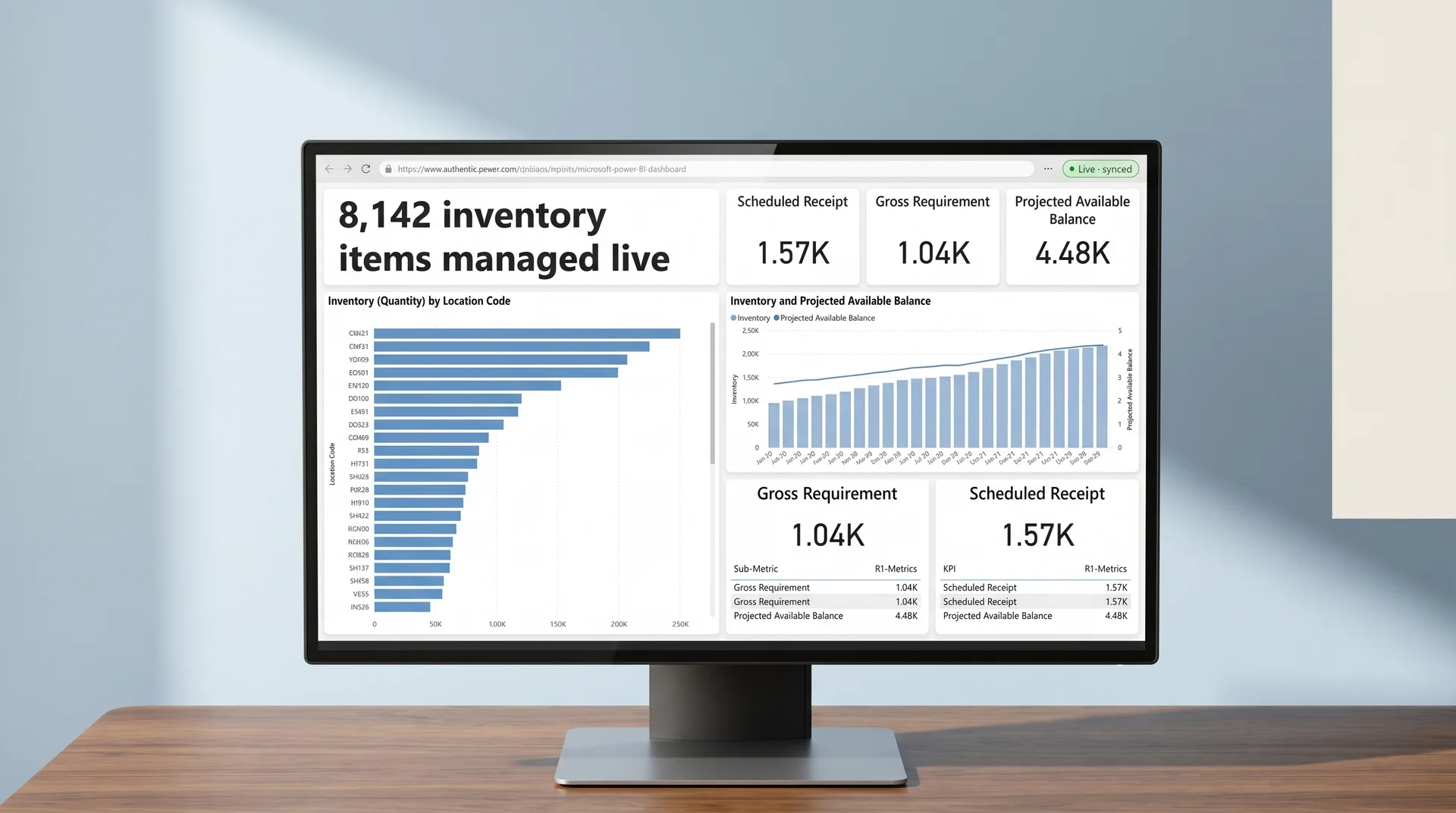
We implemented Microsoft Dynamics NAV to unify core business modules and integrated a customized CRM alongside it. Advanced inventory management, Power BI dashboards, and mobile data capture reduced production delays, lowered raw material costs, and raised customer satisfaction across Pima Controls' operation.
Legacy system integration is not a template project. Every system is different, and every connection requires custom logic.
We start by auditing what your legacy system can expose and what formats it uses. Then we map what your modern systems need. The integration design comes after that audit, not before it.
Legacy system integration approaches we use
- Direct database-level integration using read/write connections to the legacy system's underlying data store
- File-based exchange integration where the legacy system exports data and the integration layer picks it up on schedule or on trigger
- Custom connector development for legacy systems that expose a proprietary connection protocol or older web service
- Middleware orchestration layers that normalize legacy data formats before routing to modern systems
Legacy systems we commonly integrate from
- Microsoft Dynamics NAV and Microsoft Great Plains on-premise ERP environments
- Sage 50, Sage 100, and older accounting platforms with no modern API
- Custom-built legacy warehouse management and inventory systems specific to one business
- On-premise manufacturing execution systems and older production tracking platforms requiring data extraction
A legacy system integration provider that audits before it proposes
Most partners scope a legacy integration project before understanding what the system can expose. We audit data access methods, formats, and constraints first. That audit shapes the scope, the timeline, and the architecture.
Differentiation · Legacy system integration audit, connection layer planning

What most legacy system integration projects miss
- Proposing an API-first architecture before confirming the legacy system even has an API
- Ignoring legacy data quality issues that spread into every modern system the integration touches
- Building a one-way data pipe when the business needs bidirectional sync
- No documentation of the integration layer, creating permanent dependency on the builder
What every Redefine legacy integration delivers
- A pre-scoping audit of the legacy system's data access methods and constraints before any architecture is proposed
- Data validation and cleaning built into the integration layer so legacy data quality issues do not propagate downstream
- Bidirectional sync architecture designed from the start so the legacy system receives updates, not just sends them
- Full documentation, runbooks, and monitoring configuration at handoff so your team owns the integration without depending on us
Questions about legacy system integration services
Legacy system integration connects an older enterprise system to modern cloud platforms, ecommerce systems, or BI tools through a bridge layer. The older system might be an ERP, an on-premise database, or a custom-built application. Instead of replacing the legacy system, we add an API or middleware layer. That layer lets data flow between the old system and the new systems your business is adding.
No. Legacy system integration is specifically designed to avoid a rip-and-replace scenario. The goal is to wrap your existing system in a modern integration layer, typically using API middleware, event-driven connectors, or file-based exchange depending on what the legacy system supports. Your team keeps using the system they know while modern platforms connect to it cleanly. Replacement becomes optional rather than mandatory.
Our legacy system integration consulting covers older ERP platforms such as Microsoft Dynamics NAV, Microsoft Great Plains, Sage 50, and Sage 100, as well as on-premise databases, custom-built systems with no existing API, legacy inventory and warehouse management systems, and older manufacturing execution systems. If the system can expose data through a database connection, a file export, or any API endpoint, integration is possible.
A focused legacy system integration connecting one legacy platform to one or two modern systems typically goes live in five to eight weeks. More complex legacy system integration solutions involving custom middleware, multiple systems, or real-time bidirectional data flows run ten to sixteen weeks. We publish a line-by-line delivery timeline before work begins so your teams can plan around each integration milestone.
Most legacy systems can still be integrated even without a modern API. Common approaches include direct database-level connections where we query or write to the system's database. We also use scheduled file-based exchange where the system exports data and the integration layer picks it up. For systems with no other access method, screen scraping middleware is an option. Custom connector development works for systems with a proprietary protocol. We assess the available access methods during scoping. Then we recommend the approach with the best balance of reliability and cost.
Tell us about your legacy system. We'll scope the integration layer.
Scoped before work starts. Line-by-line pricing. No commitment required to receive a proposal.
Response in 48 hours
A legacy integration specialist reviews every brief
Proposal in 3 days
Line-by-line scope with integration architecture plan
200+ integrations delivered
Including legacy ERP, warehouse, and custom systems
Full code ownership
Your integration layer, your runbooks, no dependency
Brief received
We'll review your legacy system details and send a scoped integration proposal within 3 business days.