Most stores bleed revenue because their design ignores the platform.
Ecommerce design only works when it is built for your specific platform. Shopify, WooCommerce, BigCommerce, or headless, each one has a different checkout flow, cart behavior, and product page structure. Redefine builds designs that match how your platform actually works, so buyers complete their purchase instead of dropping off.

Pick your platform. See exactly what we build for it.
Every ecommerce platform works differently. Select yours below to see the design deliverables, conversion approach, and real examples built for that specific system.
WooCommerce Web Design Services
Your WooCommerce theme determines whether buyers finish checkout or leave. We build custom themes that match your catalog structure, reduce cart friction, and are built to render exactly as designed.
See WooCommerce Design Services and PricingHeadless Ecommerce Design
Headless stores break when designers ignore how the frontend is built. We design component systems for Shopify Hydrogen, Next.js, and custom stacks, with full state documentation your developers can implement without questions.
See Headless Design ServicesAdobe Commerce UX Audit
If your Adobe Commerce store gets traffic but not sales, the problem is somewhere in the user flow. We identify every friction point, every drop-off page, and hand you a prioritized list of fixes ranked by conversion impact.
See the Adobe Commerce UX AuditShopify Web Design Services
Shopify 2.0 design built around section schemas and your product catalog. For DTC brands that want a faster store, lower cart abandonment, and a theme that developers can build without rework.
Launching soon. Join the waitlist.BigCommerce Web Design Services
BigCommerce Stencil and Catalyst design for mid-market and enterprise brands. We handle B2B quote flows, multi-storefront setups, and buyer account design that matches how your team and customers actually use the platform.
Launching soon. Get notified.Webflow Design Services
Webflow design for marketing teams and SaaS companies that want a site they can edit without a developer. We build component systems, CMS collections, and layouts built to publish fast and rank well.
Launching soon. Get notified.More design services you can book now
Generic design ignores how your platform works. You pay for it every day.
Most agencies hand off the same Figma file no matter what platform you run. Shopify checkout works differently than BigCommerce. WooCommerce cart behavior is different from Webflow. A design that ignores those differences quietly kills your conversions.
Figma files that the platform cannot build
The developer gets the design and rebuilds it from scratch. You pay for both the design and the fix.
Checkout designed like a homepage
The hero looks great. The funnel breaks at the exact moment buyers should pay.
A handoff document with no platform knowledge
No component map, no interaction spec, no test plan. Your team owns every problem after sign-off.
After working with Redefine
Design built around your platform's architecture
Every component is scoped to what your platform can build and ship before we design it.
Checkout flow designed for how your buyers behave
Cart, product page, and checkout designed around the specific behavior patterns of buyers on your platform.
Developer handoff spec on every project
Annotated Figma, component map, platform tokens, interaction states. Your dev team starts immediately.
Only 3 to 4 hours per week from your side
Sprint review, async feedback, and a final sign-off. We run everything else.
80+ ecommerce platform builds shipped
What makes Redefine different from a typical ecommerce design agency
Most buyers cannot tell the difference between a good agency and a generic one until the bill arrives. Here is what to look for before you sign.
| What to Look For | Typical Agency | Redefine |
|---|---|---|
| Platform knowledge | Same Figma template on every platform | Designed for your platform's specific architecture |
| Developer handoff spec | Optional add-on, often absent | Included on every project, no extra charge |
| Conversion approach | Pretty visuals, conversion handled later | Conversion requirements in the design brief from day one |
| Scope and pricing clarity | Discovery call, then a vague scope document | Line-by-line proposal before any work begins |
| Mobile design | Desktop first, mobile shrunk to fit after | Mobile designed first, then expanded to desktop |
| Time to first deliverable | 2 to 4 weeks before you see anything | Sprint 1 starts within 1 week of your sign-off |
Every platform build comes with this. Nothing extra.
No add-ons. No scope surprises. Every item below is part of your standard engagement from Sprint 1.

Figma design system built for your platform
Your component library is built around how your platform builds pages, not adapted from a generic template. Shopify sections, BigCommerce widgets, WooCommerce block editor. Each component is designed to build exactly as drawn.
Developer handoff spec
Annotated Figma with interaction notes, spacing tokens, font specs, and component states. Your dev team opens the file and starts building. No calls needed.
Product page and cart design
Every step on the path to purchase: add to cart, quantity selectors, trust badges, upsell placements, and minicart. Each one designed for how buyers on your platform behave.
Mobile-first design on every screen
More than 60% of ecommerce traffic comes from mobile. We design for mobile first, then expand to desktop. Not the other way around.
Accessibility built in from the start
Color contrast, keyboard navigation, and ARIA labels built into every component. You pass your compliance audit without a costly rebuild.
0
ecommerce builds shipped
0 days
to your scoped proposal
Only 0 hours
per week from your team
A Shopify 2.0 redesign that launched with zero downtime.
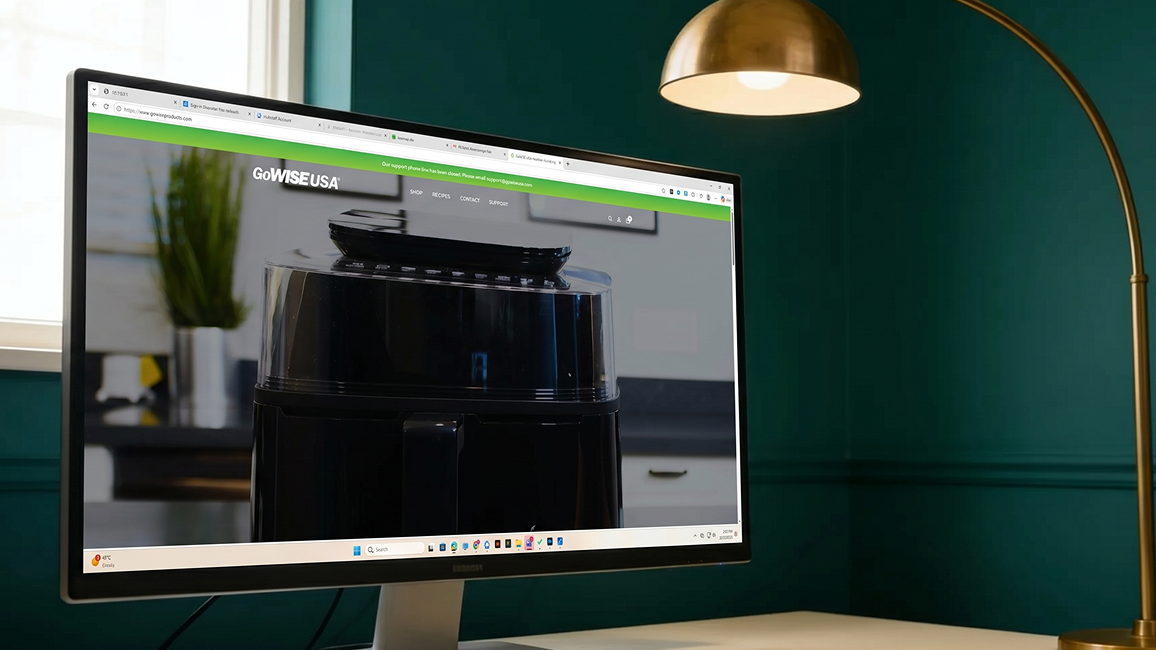
Client
Go Wise USA
Consumer brand. Air fryers, pressure cookers, and healthy cooking appliances.
What Was Broken
The Shopify V1 store was built for an older catalog structure. Product pages had high bounce rates. The team needed a V2 upgrade that preserved all mobile traffic and did not cost a single hour of downtime.
What Changed After Launch
Online sales increased immediately after launch.
The custom Shopify 2.0 theme went live with zero downtime.
Mobile responsiveness improved across all device sizes, bringing more buyers through to checkout.
Design looks different on every platform. Here is what we build for yours.
Every platform has a different architecture. We design to match that architecture exactly, so your developer builds it once and it works.
Shopify 2.0 design: sections, schemas, and checkout
Shopify 2.0 is the most powerful storefront system in ecommerce. Your design has to be built around its section and block architecture from the start, or your developer spends weeks rebuilding a generic Figma file.
- Online Store 2.0 section schemas designed and mapped in Figma
- Metafield-driven product page design with full content type structure
- Shop Pay, accelerated checkout, and cart drawer design
- Collection filter design for Shopify's native search and discovery interface
WooCommerce block editor and Full Site Editing design
WooCommerce's block-based checkout and Full Site Editing themes need a design approach built around block slots and template parts. Classic theme design methods do not transfer.
- Full Site Editing theme design with global styles and reusable block patterns
- WooBlocks checkout design with trust signal placement
- Product archive and filter design for stores with large catalogs
- Custom field and meta field design integrated into the design system
BigCommerce Stencil and Catalyst design
BigCommerce's Stencil theme framework and Catalyst headless storefront have different design constraints. We build for both, including B2B quote flows and multi-storefront setups.
- Stencil component design mapped to your theme's template structure
- Catalyst component library design for Next.js-based storefronts
- B2B Edition: quote flow, net terms, and buyer account design
- Multi-storefront channel design with shared component libraries
Headless design built for your engineering team
Headless stores give you full control of the frontend. That control breaks down when the design system is incomplete. We deliver full component specs with every state documented, so your engineers build it once without guessing.
- Complete component system in Figma with token export for Tailwind or CSS variables
- Interaction states for every component: default, hover, active, disabled, and loading
- Storefront API data-binding design for products, collections, cart, and account
- Core Web Vitals-aware design with layout shift prevention
What buyers ask before they contact us
We design on your existing platform. No migration required. Your current Shopify, WooCommerce, or BigCommerce setup is the starting point. If a migration makes sense for your goals, we flag it during scoping. It is never a condition of working with us.
A full redesign takes 4 to 8 weeks depending on catalog size, template count, and product page complexity. A focused sprint on one section, like a homepage or checkout flow, delivers in 1 to 2 weeks. You see your first Sprint deliverable within 1 week of sign-off.
The handoff spec includes annotated Figma files with spacing, type, and color tokens. It includes interaction documentation for every component state. It includes responsive breakpoint notes and platform-specific build notes. It includes a component inventory with naming conventions. Your dev team starts building on day one with no follow-up calls.
If your platform is outside our core stack (Shopify, WooCommerce, BigCommerce, Webflow, or headless), tell us in your brief. We confirm our platform knowledge before accepting the project. We do not take on platform design work we cannot back up with hands-on experience.
Both. Redefine offers design-only, development-only, and full design-plus-development projects. When you need the full build, we scope design and development together in one proposal. That way nothing falls through the gap between phases.
Every project is scoped before work begins. You get a line-by-line proposal showing exactly what is included, what is out of scope, and the timeline. Pricing depends on the number of templates, platform, and scope depth. Submit your brief and you will have your scoped proposal within 3 business days. No commitment required to receive it.
Tell us what your store is not doing. We will tell you exactly how to fix it.
Fill in your brief below. You will have a scoped proposal in 3 business days. No commitment required to receive it.
- We call you within 48 hours of receiving your brief
- You get a scoped proposal in 3 business days
- Sprint 1 starts within 1 week of your sign-off
- We only need 3 to 4 hours per week from your side
No commitment. No pitch. Just a scoped proposal.

Your store is losing buyers to design that ignores your platform.
Design built for your specific platform. Conversion baked in from the first brief. Your scoped proposal arrives in 3 days and costs you nothing to receive.