"Our inventory is always wrong on at least one channel, and I have no idea which one until a customer complains."
Order Management System
Order Management System
Order Management System
for Every Channel You Sell On
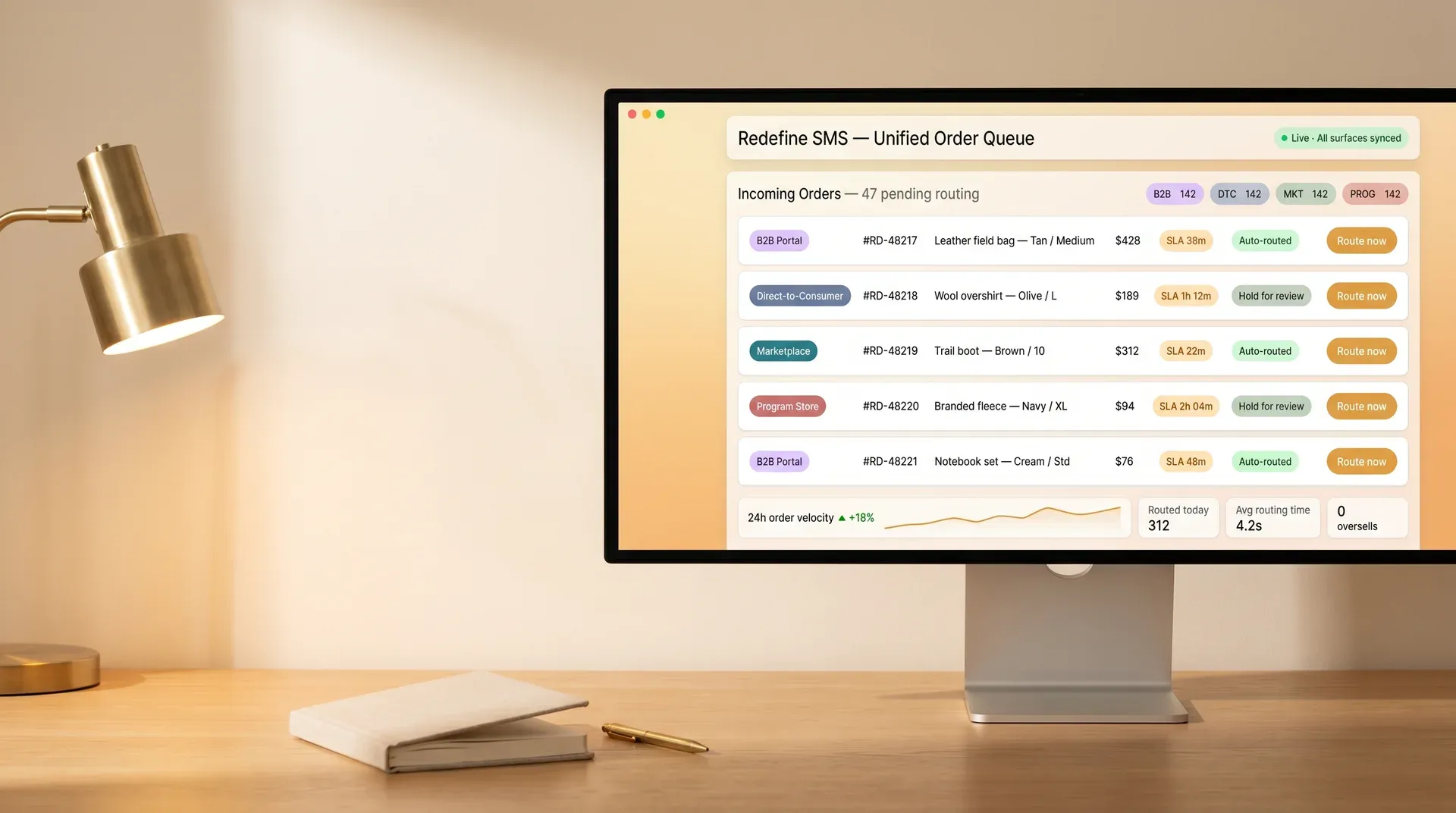
Every business-to-business portal order, direct-to-consumer order, marketplace order, and program store order lands in one queue. Inventory stays accurate on every surface. No sync tools. No manual fixes.
B2B Portal14
DTC StorefrontDirect-to-Consumer Storefront38
Marketplace61
Program Store9
7 Operations Modules
One platform replaces order management, warehouse management, returns, supplier, routing, and inventory tools
Origin-Aware Routing
Different routing logic for B2B, direct-to-consumer, marketplace, and program store orders automatically
Returns Cascade Automatically
One return updates inventory, product information, marketplace listing, and B2B portal with zero manual steps
No Middleware Required
Supplier portal connects directly to product information management and order management. No third-party integration layer needed.
Live Inventory Across 4 Surfaces
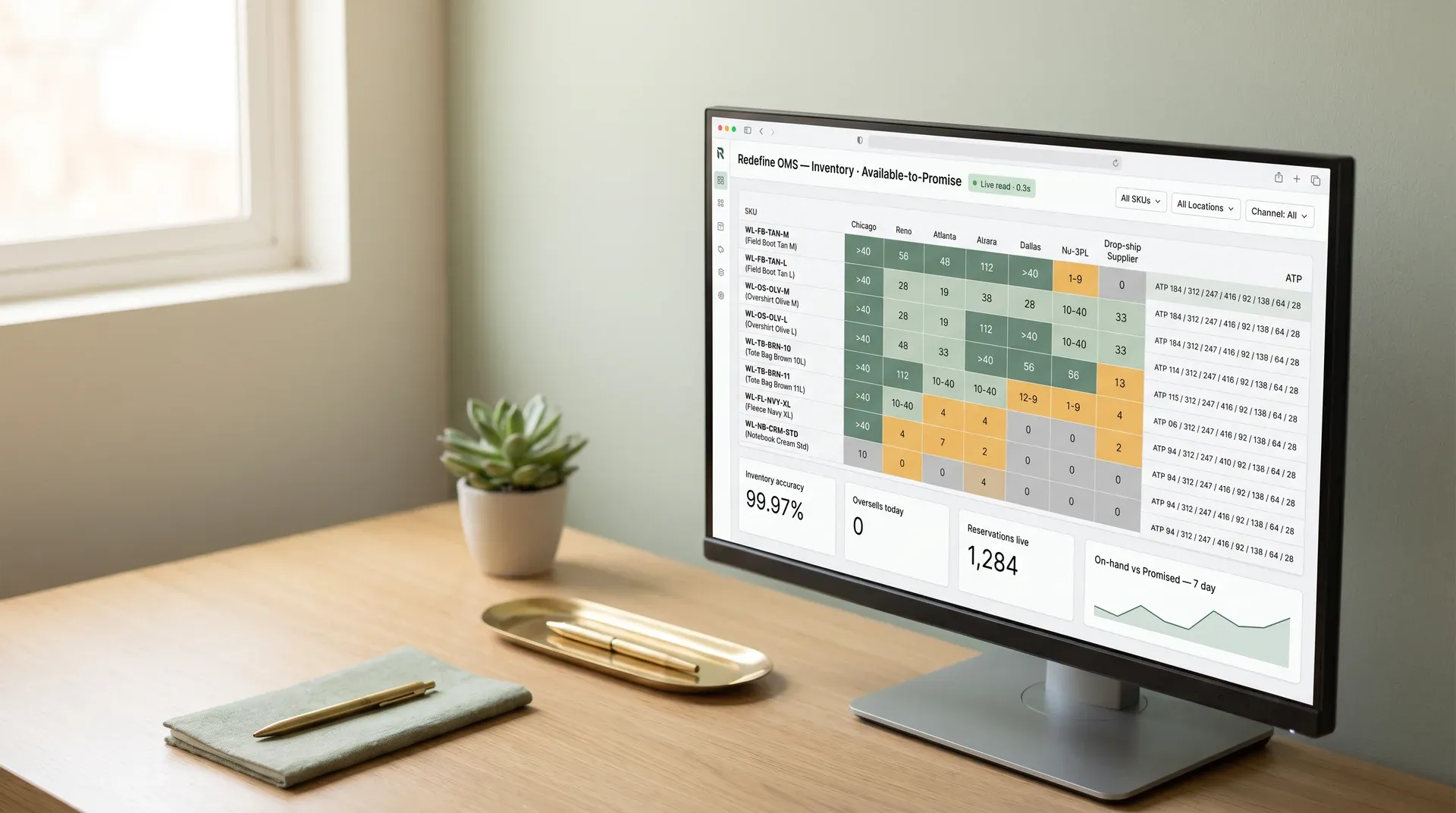
B2B portal, direct-to-consumer storefront, marketplace listings, and program stores all read the same inventory number in real time
The Inventory Discrepancy Tax
Your tools know what shipped. Your channels never agreed.
You pay for four order management tools, two sync layers, and one operations manager whose job is reconciling what the tools got wrong. The margin leak is silent and continuous.
73%
of mid-market brands run 3 or more disconnected operations tools simultaneously
4 hours
lost per day per operations manager manually reconciling inventory discrepancies
"When a return comes in, someone emails the third-party logistics provider, someone updates the listing, someone flags the product information management system, and someone checks the B2B portal. Four people. Four tools. One return."
After Redefine
One queue. Every order. Zero sync tools.
Here is what a Tuesday morning looks like when every surface feeds into one operations layer.
Before Redefine
Log into Shopify, Amazon Seller Central, and your marketplace portals separately to count overnight orders
Cross-reference inventory levels manually to check for oversells from the night
B2B portal orders are in a separate queue you check last, usually an hour later
Takes 45 to 90 minutes before your team starts routing and fulfilling
After Redefine
One queue shows all 47 overnight orders: 12 from the B2B portal, 23 from direct-to-consumer, 8 from Amazon, 4 from your program store
Inventory was live-read per surface as each order landed. No overnight drift. No oversells.
40 of the 47 orders were routed automatically overnight based on your origin rules
Your team starts fulfilling at 9:02 AM. Seven exceptions sit in the hold queue waiting for a decision, not buried in a spreadsheet.
Before Redefine
Returns team processes the return in your return merchandise authorization tool
Someone manually adjusts inventory in your warehouse management system or spreadsheet
Product information management team updates the product condition attribute, if they remember
Marketplace listing still shows "new" condition. B2B portal is still dark. Emails get sent.
After Redefine
Your team clicks "Process Return" in the Redefine return queue
Inventory increments at the right warehouse. Product information management condition updates to "Like New" automatically.
eBay listing condition field updates. B2B portal availability turns green.
Four actions. 12 seconds. Zero manual steps. No emails sent.
Before Redefine
Supplier emails a PDF with updated catalog pricing and lead times
Operations team manually imports changes into your product information management system, your enterprise resource planning system, and your order management system one by one
Lead time changes take 3 days to reach your order routing rules
Meanwhile, drop-ship orders go to the wrong supplier or miss a service level agreement
After Redefine
Supplier logs into the Redefine supplier portal and submits updated catalog data directly
Product information management attribute updates and order management routing rules update from the same submission. No middleware.
Lead time changes are live in routing rules before the next order arrives
Your operations manager approved the update in a single review screen. No import file. No email chain.
Submit your brief → call within 48 hours → scoped proposal in 3 days
Operations Command Center
Process your orders. Watch the platform work.
This is your order management queue. Four orders. Four origins. Follow the guide on each card to see how origin-aware routing works.
Incoming Orders: 4 pending routing
All surfaces live
Step 4 of 4Click "Disconnected Mode" above to see the alternative
All four orders share one inventory number. Route one direct-to-consumer order and every surface updates simultaneously.
Seven Operations Modules
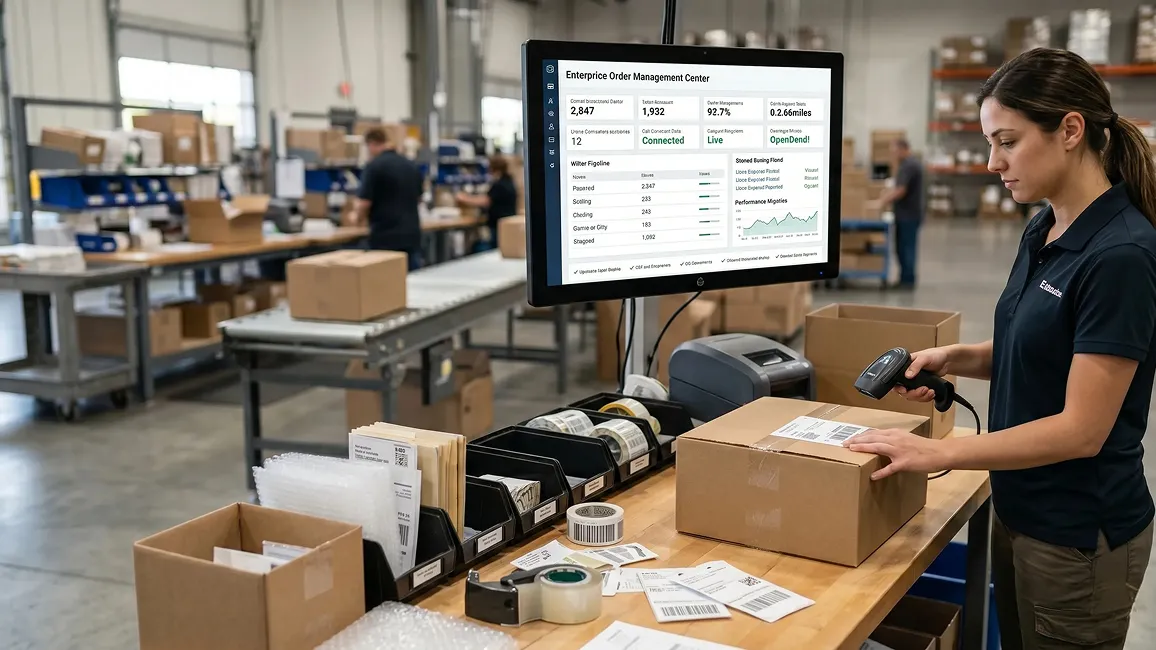
Every operations capability. One platform. No integrations required.
Click any module to see what it does inside Redefine. Each one shares data with every other. No data bridges needed between them.
Order Management System
- Single queue for B2B, direct-to-consumer, marketplace, and program store orders
- Origin-aware routing: different logic per commerce surface
- Backorder, pre-order, and split-order handling built in
Inventory Visibility Software
- Live-read by B2B portal, direct-to-consumer, marketplace, and program store simultaneously
- Real-time levels across all warehouse locations and third-party logistics providers
- Low-stock alerts and automated reorder triggers
Order Routing Engine
- Rules understand order origin and apply logic accordingly
- Route by warehouse, region, carrier, cost, or service level agreement
- Drop-ship, third-party logistics, cross-dock, and in-house warehouse routing
Supplier Operations
- Supplier portal connects directly to product information management and order management, no middleware
- Purchase order creation, tracking, and supplier acknowledgment in one flow
- Drop-ship automation with real-time feed sync
Fulfillment Operations
- Pick, pack, and ship workflows with barcode scanning
- Carrier integration with real-time rate shopping
- Fulfillment status updates marketplace listing and B2B portal automatically
Returns and Exception Management
- Returns cascade automatically to inventory, product information management, and marketplace channel
- Return merchandise authorization workflow, condition grading, and exchange processing
- Exception queue for holds, fraud flags, and routing errors
Multi-Location Inventory Control
- Track stock across warehouses, bins, third-party logistics providers, and Fulfillment by Amazon locations
- Location-based availability and Available to Promise
- Stock transfers and multi-warehouse configuration
The Cascade Simulator
Watch one return action update four systems.
Click "Process Return" below. Every step that fires is something your team would have done manually. Count how many times you would have touched a keyboard.
Return Pending
RMA-0091 / ORD-4819
Industrial Filter Kit, Standard, Quantity: 1
Inventory increments at Warehouse A
Stock level: 141 units 142 units (+1)
Product information management condition attribute updates automatically
Product condition: New Like New
Amazon listing condition refreshes
Listing condition: New (unverified) Like New
B2B portal availability turns green
Portal status: Not available In Stock (142 units)
4
systems updated
0
manual steps
12s
total time
Across 4 disconnected tools, this takes 4 people and up to 3 days.
The Architecture Difference
Every competitor routes orders. Only Redefine routes orders that know where they came from.
4
commerce surfaces reading the same inventory number in real time: B2B portal, direct-to-consumer storefront, marketplace, and program store
0
middleware layers required between your supplier portal, product information management, and order management. The connection is native.
Other routing tools can route an order to the right warehouse. None of them know whether that order came from a B2B account, a direct-to-consumer checkout, a marketplace, or a program store. Redefine does. That difference changes what your routing rules can actually do.
Routing Configurator
Set the rules once. Let the platform decide.
Select an order origin below. See how Redefine routes it. Change the origin and watch the logic change with it. The conditional approval step only appears for B2B orders, because only B2B orders need it.
Your routing rule
Require credit-term approval?
Only available for B2B account orders
Routing decisions saved this week
312
manual routing decisions automated by this rule set
Routing decision
Platform gap
Proof Block
Order management built for complexity.
When standard workflows could not handle the operational requirements, Redefine built a system that could.
Company
CollectPCS
Headless eCommerce, Collectibles Retail, B2B and B2C
Problem
Standard ecommerce order workflows could not support pre-orders, limited inventory releases, flexible payment plans, and mixed fulfillment models. High-value collectibles required precise inventory control and multi-model fulfillment that the existing system could not manage without constant manual intervention.
Solution
Redefine built a custom order and inventory management system with admin-controlled inventory release, flexible full and partial payment options, and a fulfillment architecture that supported both domestic partners and manufacturer-direct international shipping with real-time order logic per route.
Result
100%operational foundation rebuilt for scale. Pre-orders, payment plans, and multi-model fulfillment now run without manual steps. CollectPCS can handle increasing catalog size and order volume without adding operational friction.

Platform Comparison
Every competitor routes orders. Only Redefine knows where they came from.
Hover any row to see the specific gap that Redefine solves that others do not.
Redefine
This platformSingle order management queue for B2B portal, direct-to-consumer, marketplace, and program store orders. Inventory live-read per surface. Returns cascade to product information management, marketplace, and inventory. Supplier portal native to product information management and order management.
Full coverage
Routing tools with strong drop-ship and supplier management
Strong order routing with highly configurable rules and good supplier and catalog feed management. Most effective for drop-ship-heavy operations. Does not have a native B2B portal concept, so routing rules cannot see whether an order came from a B2B account versus a direct-to-consumer checkout.
Multichannel inventory and order management tools
Strong multichannel inventory sync with automation. Real customer results with named statistics. Over 100 marketplace integrations. No B2B portal awareness, no product information management, no program store. Inventory syncs to channels but is not live-read per surface simultaneously.
Inventory tracking and order management platforms
Broadest feature set including manufacturing bill of materials, demand forecasting, and over 700 integrations. Strong for product sellers with manufacturing workflows. Inventory is isolated from channel and commerce data. No program store, no origin-aware routing, no native supplier-to-product-information-management connection.
Third-party logistics focused platforms
Automation concept is distinctive for direct-to-consumer brands. Good for multi-warehouse and third-party logistics operations. No B2B portal, no product information management, no content management system. Primarily third-party logistics focused. Cannot connect supplier updates to routing rules natively.
Marketplace-centric multi-channel seller platforms
Most complete multi-channel seller stack for Amazon and Walmart sellers. Strong listing management, purchasing, and order management in one system. Marketplace-centric frame. No B2B portal, no content management system, no program store. No origin-aware routing for non-marketplace orders.
Frequently Asked Questions
Questions about order management and inventory operations
An order management system centralizes orders from every channel you sell on, routes them to the right fulfillment location, and keeps your inventory accurate as orders are processed. For a multi-channel brand running B2B, direct-to-consumer, and marketplace sales simultaneously, a modern order management system should also understand where each order originated and apply different routing and approval logic per origin. Redefine's order management system receives orders from B2B portals, direct-to-consumer storefronts, marketplace channels, and program stores into one queue, with routing rules that respond to order origin natively.
Redefine's routing engine tags every order with its origin at the point of entry. A B2B portal order enters the queue labeled as a B2B account order, which triggers a different rule set than a direct-to-consumer checkout order or a marketplace order. B2B orders can require credit-term approval before routing. Direct-to-consumer orders can auto-route to the nearest warehouse. Marketplace orders can route to a third-party logistics provider by service level agreement. All four order types share the same queue, but the routing logic applied to each one is origin-specific. No mixing occurs because the origin tag is part of the routing rule, not an afterthought.
Redefine does not sync inventory the way external tools do. Instead, every channel, B2B portal, direct-to-consumer storefront, marketplace listing, and program store reads inventory directly from the same live source. When an order comes in from any surface, the inventory number available to every other surface updates immediately. There is no sync job to wait for and no sync interval that creates a window for overselling. This is the architectural difference between a platform where inventory is native versus a platform where inventory is replicated across integrations.
In Redefine, processing a return triggers a cascade of four automated actions: inventory increments at the correct warehouse, the product information management condition attribute updates, the marketplace listing condition refreshes, and the B2B portal availability updates. All four happen in under 15 seconds with no manual steps. In a disconnected setup with separate returns, inventory, product information management, and marketplace tools, each of those four actions requires a separate person or a separate workflow step. Redefine collapses that into one action from one interface.
Yes. Redefine covers the core capabilities of order routing, supplier feeds, channel sync, multichannel inventory, order management, warehouse operations, inventory tracking, and purchase orders, and adds the capabilities none of them have: B2B portal-native order management, origin-aware routing, native supplier-to-product-information-management connection, and cascade returns. Redefine also includes guided migration support. See the product and architecture pages for a detailed capability-by-capability breakdown.
Is Redefine Right For You?
Who this platform is built for and who it is not
We would rather help the right team than sell to the wrong one.
Good fit for
- You sell the same products across B2B portal, direct-to-consumer, marketplace, and program store simultaneously and manage inventory in multiple places.
- B2B orders need different routing logic than direct-to-consumer orders, and your current system applies the same rules to both.
- Returns currently require four people touching four tools before the correct inventory, listing, and portal state is restored.
- Your supplier sends updated catalog data and pricing that takes days to flow through to your routing rules.
- You run 3 or more disconnected operations tools and one person spends meaningful time reconciling what they got wrong.
Not a fit if
- You sell on a single channel only and have no plans to expand to B2B or marketplace.
- Your order volume is low enough that a single person manages fulfillment manually without recurring errors.
- You need a lightweight standalone order tool with no inventory, supplier, or product data requirements.
- You need to go live within two weeks with no onboarding or implementation support.
Not sure? Tell us your situation and we will be straight with you.
Start Here
Tell us what your team is managing manually
Scoped before work starts. Line-by-line detail. No commitment to receive a proposal.
Form
Brief received.
We will review your workflow and send a scoped proposal within 3 business days.
Response within 48 hours
Scoped proposal in 3 days
180 projects completed
Full code ownership on handoff
Ready to See It Working
One queue. Every channel. Inventory that never lies.
See how Redefine routes orders from your B2B portal, direct-to-consumer store, marketplaces, and program stores in one live operations walkthrough.
Part of the Redefine platform.