

In-house · people who stay
Your own team
They know your business, and they keep the skills when the project ends. But hiring takes time, and you pay all year for a skill you may need for one phase.
- Lasting skills
- Clear ownership
- Slower to start
Build in-house, hire consultants, or mix both. Redefine Innovations helps you choose, then our engineers can do the work. 550+ projects.
Get a written Resourcing Recommendation for your project.
In-house, consultants or a mix. No obligation.
What we have built
The team that gives the advice can build the fix. See our Big 4 consulting alternative.
Projects
550+
Projects delivered
25+ years
In business since 2001
11/11
Manual touchpoints automated at JWE Inc
1
Source of truth at JWE Inc, down from 3
Developers, ERP engineers, marketers
One named owner per result
Source: JWE Inc case study and redefineinnovations.com
Short answer
Updated
An in-house team builds lasting skills and ownership, but hiring takes time. Consultants, or outsourcing, bring skills fast for one task or phase. Co-sourcing mixes both, with a plan to hand skills to your team. Redefine Innovations gives CEOs, COOs and CFOs a written recommendation on the right model for their project. Its engineering team can then do the work.
Most teams pick a model out of habit. They hire when a skill is needed for only one phase, or they hire outside help and lose what it knew when it leaves.
So we start with the work. We list each skill the project needs and how long it is needed. Then the model is clear.
Pick by the work, not by habit
What we look at first
Not sure how work runs today? Start with a process audit, or see all consulting services.
Inside and outside
Each option has real strengths. The right one depends on the work, not on habit.
In-house · people who stay
They know your business, and they keep the skills when the project ends. But hiring takes time, and you pay all year for a skill you may need for one phase.

Consultants · skills for one phase
They bring deep skills fast, for a set task or phase. But what they know can walk out the door with them, unless there is a plan to hand it over to your team first.
The mix
Outside experts work beside your staff. Each outside role has a plan to pass its skills to a named person on your team, so you keep what you paid for.
Pair
Work side by side
Write
Runbooks and notes
Hand over
Planned sessions
Own
Your team runs it
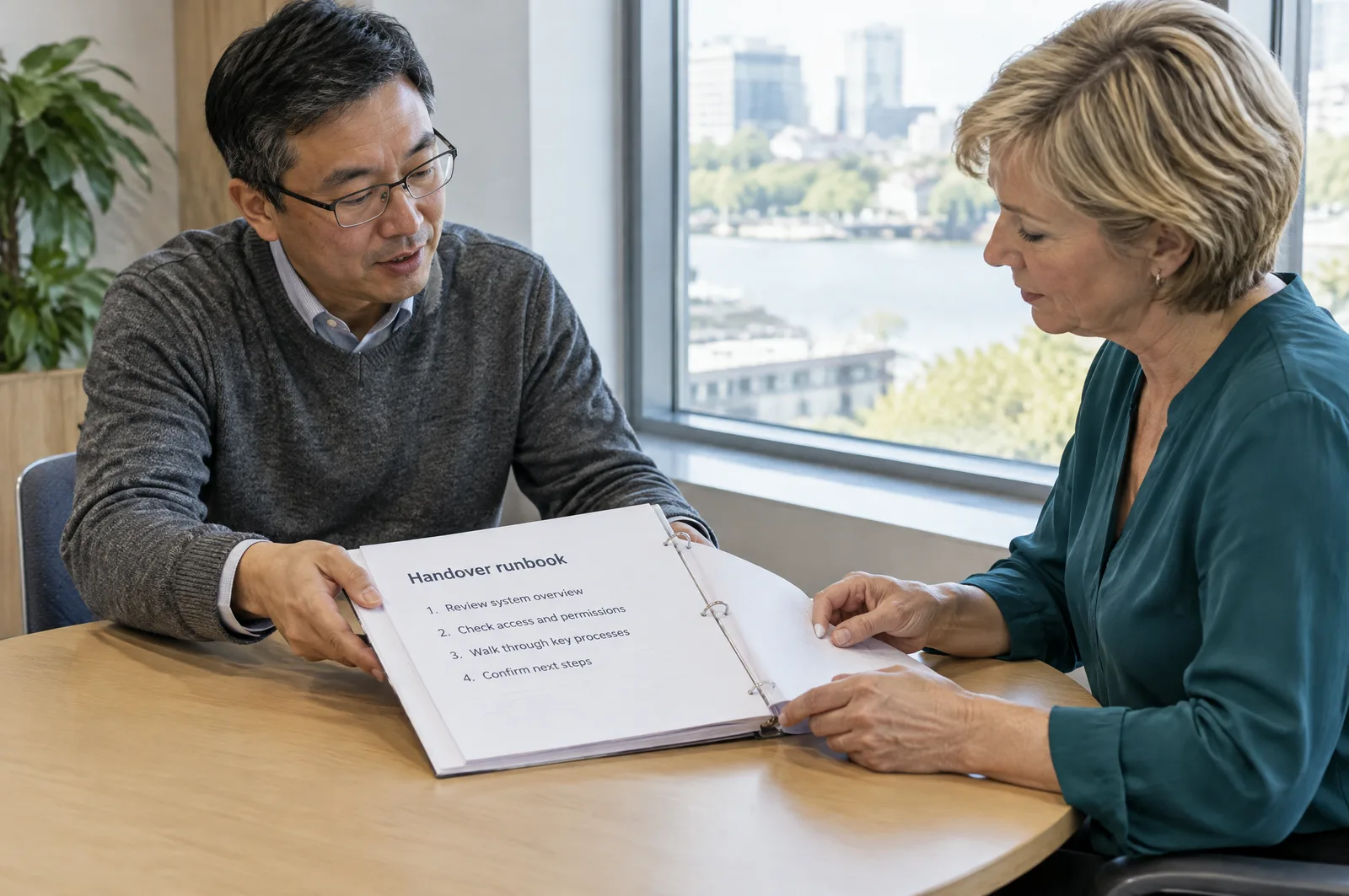
Every outside role comes with a plan for knowledge transfer. The work is done when your team can run it on its own. Need people to join your team for a while? See our staff augmentation services.
Your own staff, hired for the work.
SalariesPlus hiring, tools and training
Get my resourcing recommendationTime to start
After the hire is made
What you get
Outside experts for a set task or phase.
Project feesFor the work in scope only
Get my resourcing recommendationTime to start
Once the scope is agreed
What you get
Outside experts beside your own staff.
BothFees now, fewer outside roles later
Get my resourcing recommendationTime to start
Outside roles first, hires later
What you get
Costs depend on your project. Your recommendation shows the cost structure of each option before you commit.
Resourcing mix
Pick the model from the work, not the org chart. Some skills should stay. Some are needed for one phase only.
Plan it in a strategy roadmap workshop
One team
Four vendors: a strategy firm that leaves the build to others, a systems integrator, a software developer and an ERP or data partner, each one waiting on another.
A large firm does not fit the budget? See our Big 4 alternative.
Problem 1 of 4
Roles take too long to fill.
The project spans strategy and operations, and hiring takes longer than it can wait. See business consulting.

Problem 2 of 4
A skill needed for one phase.
A skill is needed for one phase of an operations change, not all year. See staff augmentation services.

Problem 3 of 4
Skills leave with outside people.
Knowledge leaves when outside people leave. Start with a process audit.
Problem 4 of 4
No one owns the result.
No one agrees who owns the result or what comes first. See strategy roadmap workshop.

Cost of the current process
Find out how much the status quo costs your business. Set the manual work your team does today.
Your numbers
Estimate: tasks x minutes per task / 60 x hourly cost. The result is an estimate from your own numbers. Not a quote.
Cost a month
Staff time spent on work that a better process, or the right people, could take off their desk.
Hours a month
Your year
Your numbers
An engineering mindset for business change
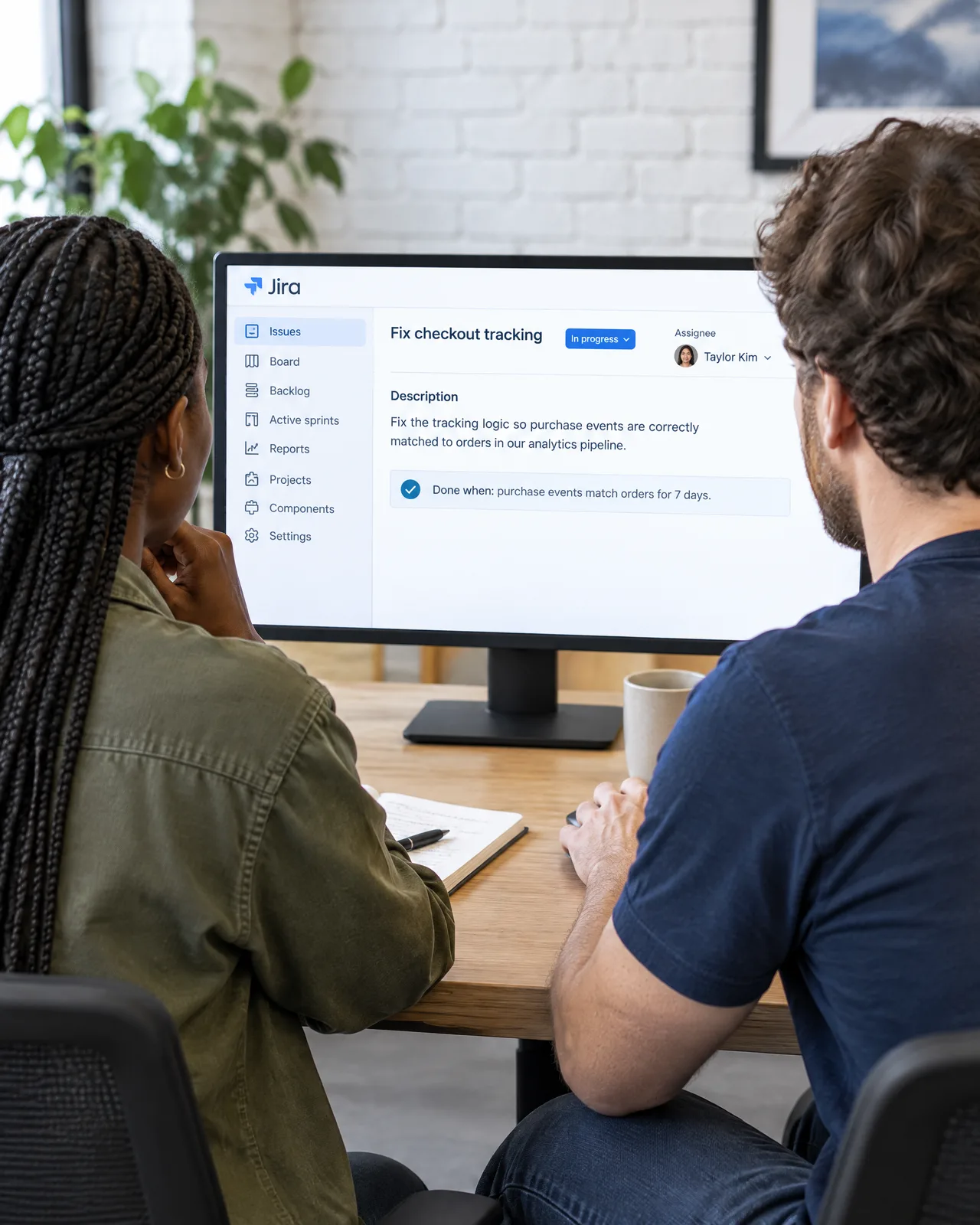
Redefine Innovations is an engineering company that does consulting. Developers, ERP engineers and marketers work on one team, so advice can reach your systems and data, not just a slide.
NotAdvice on slides
NotLeave after the report
Each stepDone-when lineEach stepNamed ownerEach stepNext step
NotWait for the next review
Get a recommendation for your project. No obligation.
How Redefine works
How Redefine helps you decide who should do the work.
Each option has real strengths, and the right one depends on the work. We would not start a long hiring search before the work and the skills are clear.
You get a written Resourcing Recommendation for your project.
Why this approach matters
Start here
We map the work, the skills it needs and how long each skill is needed, and check if a short-term role costs less.
You receive A clear skills map
Choose what matters
We rank the phases and skills that matter first, and agree who will own each result.
You receive A ranked list of phases
Do the work
We staff the work with the chosen model: in-house, consultants or a mix. Every outside role has a knowledge transfer plan.
You receive A staffed, running project
Check the result
We check results against the goals, each with a done-when line and a named owner.
You receive Checked work, named owner
Keep improving
We move tasks in-house where it makes sense and watch the risks of each move.
You receive Stronger in-house operations
A skills assessment, priority actions, knowledge transfer plans and clear outcome reviews.
Client proof
ERP and ecommerce
Sells through Shopify and Uniform Market stores, and ships through SEKO Warehouse.

JWE Inc needed one system for its Shopify store, Uniform Market stores and SEKO Warehouse. It could hire several specialists, or work with one outside team.
One Redefine team made Microsoft Dynamics 365 Business Central the single record, and synced data across every platform.
Who should do the work matters most on complex projects like ERP, data flows and ecommerce. Service: ERP consulting.
Your deliverable
This is what you receive: a written answer on in-house, consultants or a mix for your project, with the reasons behind it.
After it, Redefine walks you through it. You choose in-house, Redefine or a mix.
Recommended model
Your mix
Options compared
3
Questions
See the differences and decide what suits your needs.
Costs depend on how complex your project is and the model you choose.
In-house teams bring salaries and hiring costs. Consultants bring project fees. A mix has some of each, and your recommendation shows them side by side.
It depends on the scope of your project and what it needs.
We look at the work first, then set a plan with dates you can see. See the process audit
The REDEFINE Method is Redefine Innovations' business-first framework for identifying business constraints, prioritizing improvements, delivering appropriate solutions, verifying outcomes, and sustaining improvements.
It has five stages: Diagnose, Prioritize, Deliver, Prove and Improve. Here it guides the choice of in-house staff, consultants or a mix. Read the REDEFINE Method
Mixing consultants with your staff keeps key skills inside your company. A co-sourcing plan gives each outside role a named owner and a knowledge transfer plan.
We write things down, work beside your team and plan handover meetings.
It is done when your team can run the work with confidence. See staff augmentation services
One Redefine team of developers, ERP engineers and marketers. Roles are set from the start, and one owner keeps the work on track.
You choose: your own staff, Redefine, or a mix.
There is no obligation to follow any path. See the Big 4 consulting alternative
Start here
Get ready for your next project phase with a clear Resourcing Recommendation from Redefine Innovations. Tell us about the work, and we send a written answer.

Tell us about your project and what you need help with.