









Amazon Integration Services

Discover which Amazon data syncs with your systems first.

Redefine Innovations connects Amazon Seller Central and Vendor Central with your store, ERP and warehouse, with developers, ERP engineers and marketers on one team.

Eyeglasses123: 98.6% stock accuracy on every channel. Read the case study. Only need FBA? See Amazon FBA integration.

  1. A seller reviews new Unshipped orders on the Amazon Seller Central Manage Orders page

    01Amazon order

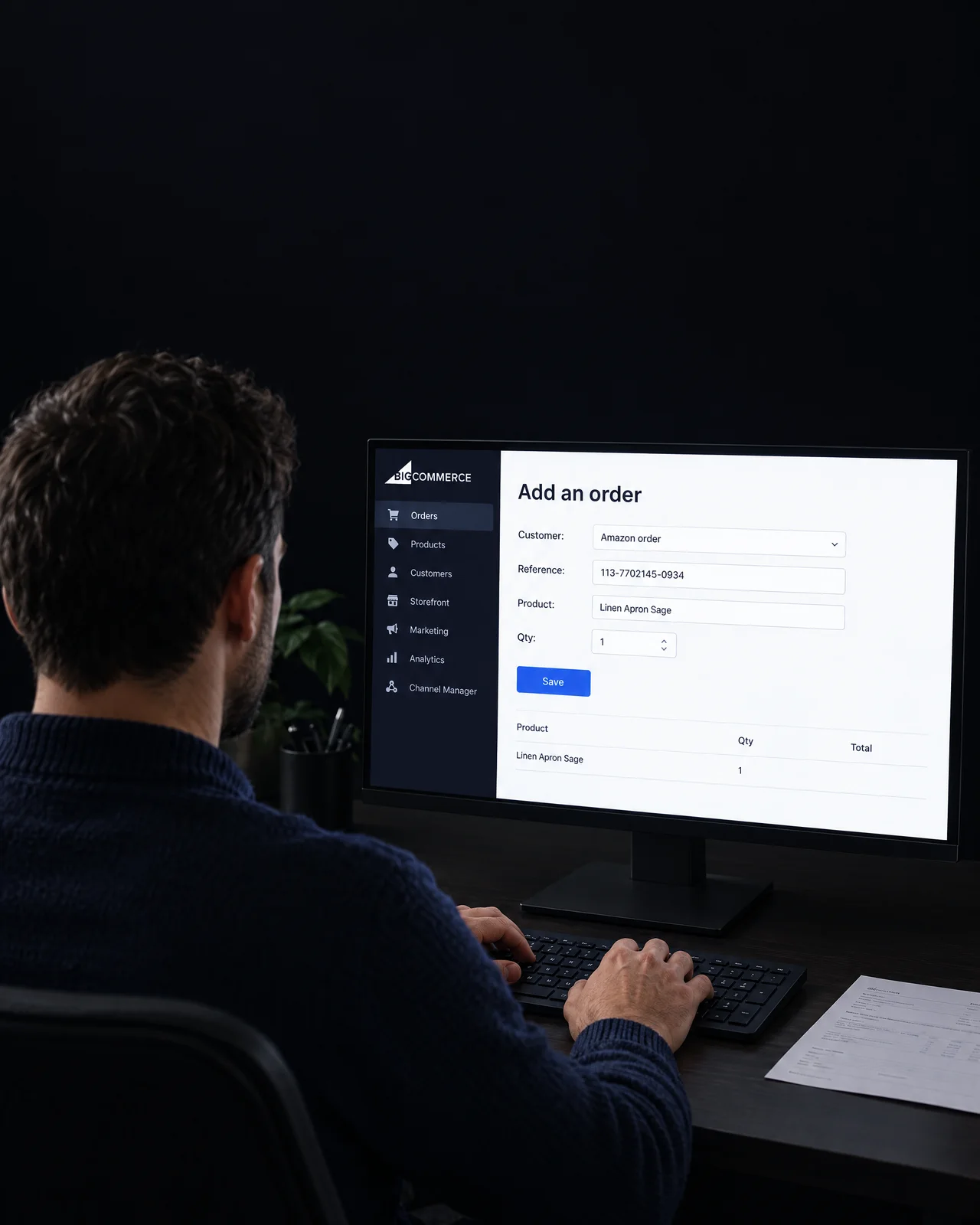
  2. An ecommerce lead sees an Amazon order imported on the Shopify admin Orders page

    02In your store

  3. A finance lead checks an Amazon order inside an Oracle NetSuite sales order record

    03In your ERP

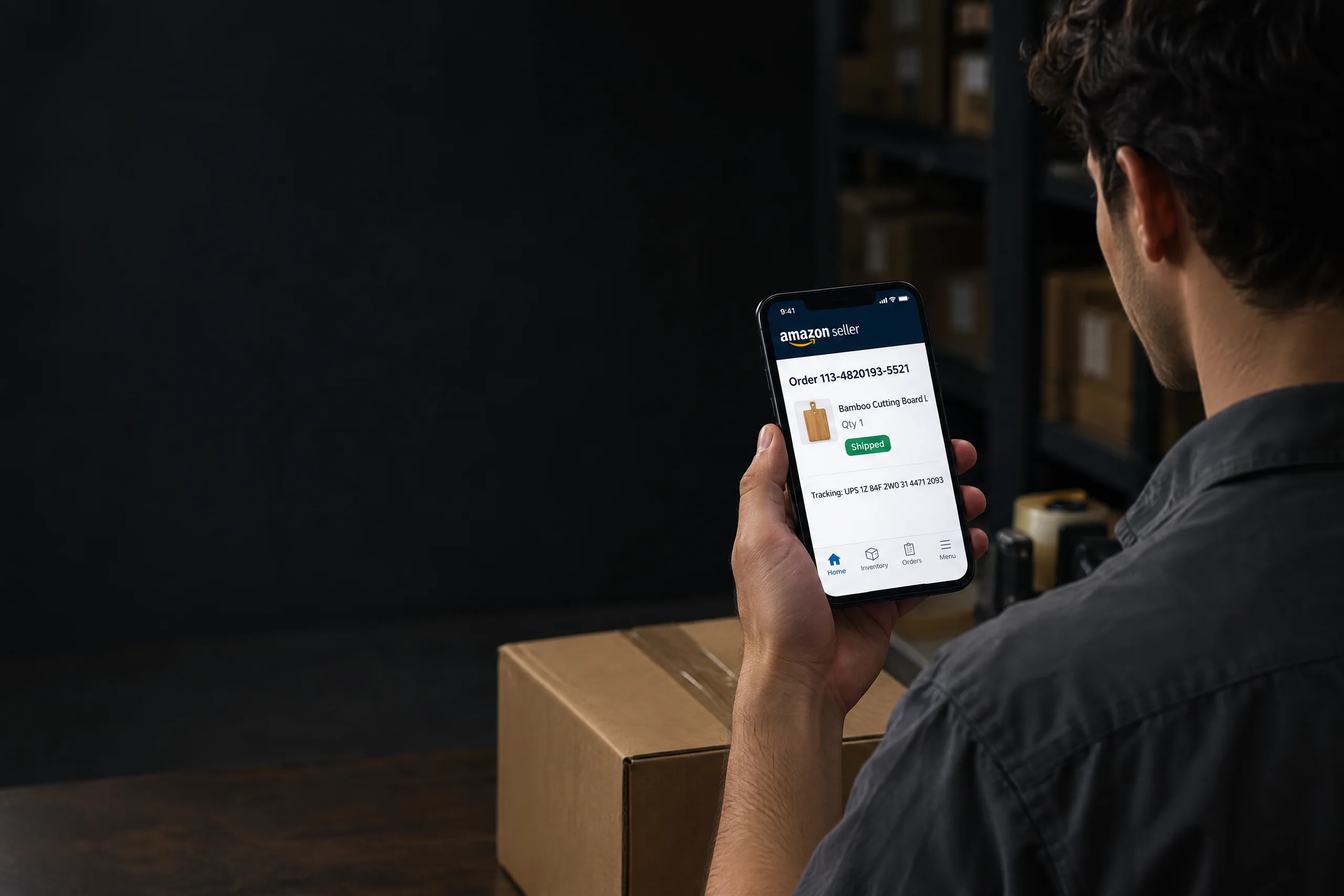
  4. A packer sees the order marked Shipped with UPS tracking in the Amazon Seller app

    04Tracking back to Amazon

Results

Stock, orders and listings in step.

Results from brands that sell on Amazon and other channels.

  • Eyeglasses123
    98.6%
    Stock accuracy on every channel, up from 86%.
  • Eyeglasses123
    -71%
    Fewer oversells and stockouts once stock synced.
  • MAXIMUM
    -80%
    Less typing by hand. Amazon and Wayfair listings come from one feed.

Sources: the Eyeglasses123 case study (orders, stock and returns across its channels) and the MAXIMUM case study (Amazon and Wayfair listings from one feed).

Get a plan to connect Amazon with your systems.

No obligation. The shop gets a written plan.

Get my integration plan

Short answer

What is Amazon integration?

Updated

Amazon integration links Amazon Seller Central or Vendor Central with your store, ERP and warehouse. Redefine Innovations builds these links so products, prices, stock, orders, tracking and returns move between them. Data syncs on a set schedule, not in real time. Leaders see one set of numbers and spend less time typing data by hand.

For Amazon integration, the usual break is the field map. Stock without a buffer, or a SKU that does not match, oversells the item and loses the order.

Each Amazon field is mapped, and every flow is tested, before the sync goes live.

Three ways to connect Amazon

The plan says which fits

WayBest whenWhat you getWatch for
ConnectorA common store with standard fieldsField maps that are already set, for a quick startBundles and custom fields
MiddlewareAn ERP or warehouse sits in the middleRules, retries and logs share one placeThe tool's fee, billed each month
Custom buildThe rules do not match a packaged toolEvery field stays under full controlRefreshes after an API change

What gets read before the build

  • [1] Products and prices
  • [2] FBA counts and stock
  • [3] Returns, orders and tracking
  • [4] ERP and warehouse fields

Selling on Vendor Central? See Amazon Vendor Central management. Product data in a mess? See Amazon catalog management, or browse all Amazon services.

Connect Amazon to your store, ERP and systems.

Simpler work, with the same numbers in every system.

An operations manager sees the same stock count in Shopify admin Inventory and Amazon Seller Central

One team

One team replaces four vendors.

Four vendors often lead to costly errors, because no one owns the data flows.

Get my integration plan

Before

An agency runs ads, a contractor edits listings, a tool moves data and an ERP partner links the back end. Nobody owns the sync.

  • Amazon agency

    Runs ads, skips order sync

  • Listing help

    Edits listings, not stock

  • Feed tool

    Moves data, not shipping

  • ERP partner

    Links the back end only

After

One Redefine team: developers, ERP engineers and marketers own every Amazon data flow.

Redefine Innovations

One team

  • Store
  • Amazon
  • ERP
  • Warehouse

Integration calculator

Calculate your revenue gap with Amazon integration

Enter your numbers to see what stock gaps and out-of-step listings may cost each month.

Your numbers

Monthly

35,000
1.4%
$190
1.9%

Monthly revenue

Your estimate

Current
$93K
Potential
$126K

Estimated revenue impact

$33Kper month

$399K across a year, on unchanged traffic.

Get my integration plan

The plan names the paths to repair early.

Sessions times the synced-rate gain times order value. This is a guide from the figures you enter, not a forecast. For a full account check, see Amazon account audit services.

Sync problems that slow down Amazon.

An engineering mindset for Amazon integration

Release plan for Amazon integration.

Redefine Innovations is an engineering company that does marketing. Developers, ERP engineers and marketers work on one team, so a fix reaches the store code and the Amazon data flows, not just the ad account.

  1. Two teammates read an order sync test spreadsheet where all 50 test orders match

    01 Our way: How we work

    Success for Amazon integration means moving the Amazon offer.

    A Amazon integration sync counts as done only when the Amazon offer matches the number set first.

    Old way: Rather than the usual agency habit

    Amazon integration used to go live on opinion rather than the Amazon offer.

    Marking Amazon integration as sent used to be enough, even when the Amazon offer never moved.

  2. A developer edits an Amazon order field map in a code editor while a sync test passes

    02 Our way: How we work

    Developers fix the store and the data flows.

    Feeds, order sync, tracking and ERP data get fixed where they start.

    Old way: Rather than the usual agency habit

    The old habit stopped Amazon integration before anyone touched the system of record.

    Those sync errors return.

  3. A team member reads a sync alert email on a phone saying 3 Amazon orders did not post

    03 Our way: How we work

    If the Amazon offer slips during Amazon integration, an alert goes out that same week.

    A sync error or a stock gap raises an alert, with a planned response and one owner.

    Old way: Rather than the usual agency habit

    The Amazon offer used to sit for a month before anyone reviewed Amazon integration.

    Orders are already lost by that point.

How Redefine works

TheREDEFINEMethod

Path to reliable Amazon integration.

The REDEFINE Method is how Redefine plans, builds and checks your Amazon integration, one data flow at a time. A full custom build never comes first when a connector covers the main flows.

Get my integration plan

A written Amazon integration plan for your store and systems.

Why this approach matters

  • Less manual entry saves time and cuts errors.
  • Fewer stock and order errors mean fewer refunds and support tickets.
  • One team answers for the data flows, so you know who to ask.
  1. Start here

    Step 1: Diagnose

    We map products, prices, stock, orders, tracking and returns across Seller Central or Vendor Central, the store, the ERP and the warehouse, and find where errors start.

    You receive A data gap report

  2. Choose what matters

    Step 2: Prioritize

    Stock and orders come before ad data, because errors there cost the most. A connector comes first when it covers the main flows.

    You receive A ranked build list

  3. Do the work

    Step 3: Deliver

    We build each flow with error handling and alerts. Data moves on a set schedule, and failed records go to a named person to fix.

    You receive Working data flows with alerts

  4. Check the result

    Step 4: Prove

    We check stock levels, order counts and return data against your source to confirm the numbers match.

    You receive A check report

  5. Keep improving

    Step 5: Improve

    We watch sync errors, refine the setup as needs change and check the flows against Amazon terms when Amazon updates its rules.

    You receive An improvement plan

What you receive

A systems and data flow map, a ranked build list, working data flows with alerts and a check report.

Case study / Orders, stock and returns

Eyeglasses123

Eyeglasses123 sells branded sunglasses and eyeglasses on its Shopify store, Amazon and other channels.

An inventory planner checks available and inbound stock on the Amazon Seller Central Manage FBA Inventory page
  1. 01

    Problem

    Orders and stock had to move between Shopify, Amazon and other channels without typing them in by hand.

  2. 02

    Diagnosis

    Each channel kept its own stock count, so oversells and stockouts kept coming back.

  3. 03

    Solution and result

    Redefine built a connected order, stock and returns system that keeps data moving between its channels.

Stock accuracy, up from 86%
98.6%
Oversells and stockouts after sync
-71%
Overhead per order with automation
-26%

Eyeglasses123 grew to $6 million a year on the new order and stock systems. The same team plans and builds Amazon integrations.

Read the Eyeglasses123 case study

Your integration plan

See what your Amazon integration plan covers.

The plan is written for your store and systems. We walk through it together, then you decide whether to build with Redefine.

Sections
5
First fix
1
Parts covered
6
Get my integration plan

Redefine

Confidential

Prepared for: your store

Amazon Integration Plan

Contents

  1. 01Systems map: Seller Central or Vendor Central, store, ERP and warehouse3
  2. 02Data flows, sources and direction7
  3. 03Sync timing for each flow12
  4. 04A custom build, middleware, or a connector18
  5. 05Error handling, alerts and build order22

Amazon Integration Plan

Your store

01 / 05

First fix

Orders

Products and prices reach Amazon, but Amazon orders are typed into your store by hand, so the order sync comes first.

How far along each path is today

Start with

Orders

Priority

High

Build order

Orders Stock Returns

How your Amazon Integration Plan is laid out: the cover and the first fix.

How much does Amazon integration cost?

Cost depends on the systems involved, the number of data flows, and whether a connector or a custom build fits.

Your integration plan gives an estimate for your own setup.

How long will the integration take?

It depends on your systems and how clean your data is.

Your plan sets the build order and the timeline for your setup.

What is the difference between a connector, middleware and a custom build?

A connector handles standard data flows between common stores and Amazon. Middleware fits when data moves between several systems, like an ERP and a warehouse. A custom build fits rules no tool covers.

They can be mixed, and your plan says which fits each flow. See Amazon for BigCommerce brands

Does inventory sync in real time?

No. Stock syncs on a set schedule.

Alerts and stock buffers lower the risk of overselling, but they do not remove it.

Can you connect Amazon Vendor Central to our ERP?

Yes. Orders, purchase orders, invoices and returns from Seller Central or Vendor Central can flow into your ERP.

What can move depends on Amazon's current terms, which we check in your plan. See Amazon Vendor Central management

Which people do the integration work?

Developers, ERP engineers and marketers work on it as one Redefine Innovations team.

Each data flow has one named owner, and you can reach that owner when an alert fires.

The REDEFINE Method, explained

For Amazon integration, Redefine reads the system of record before any edit, then ranks by the Amazon offer, ships it, and proves the Amazon offer held.

Read the system of record, rank by the Amazon offer, deliver Amazon integration, prove it, then improve it. For Amazon integration, it maps the data flows, builds stock and orders first and checks the numbers. Read the REDEFINE Method

Start here

Discover the data flow between Amazon and your systems

Our plan shows which data to move, how often, and what to do first. Tell us about your store and systems. No obligation.

Two people read a printed Amazon Integration Plan with a data map and build order
  • The written plan stays with you
  • Stock, orders and returns covered
  • 25+ years in ecommerce
  • 550+ projects delivered

Your Amazon integration plan

Tell us where Amazon integration is stuck.

  1. 1We review your details
  2. 2A Redefine team member contacts you
  3. 3We deliver the written plan
  4. 4The first build is your decision