
Power BI audit services
Logic buried in views only database staff know
Document the logic clearly.
Oracle integration services
IT and finance leaders, bring your Oracle data into Power BI. Redefine maps it, checks it twice, and hands over a clear model.

Your team checks old and new reports side by side. You get the model and the workspace at handover.
Parsons Kellogg: manual reporting time fell 58% after reports went live in Power BI. See the case study.
Connecting more tools? See our Power BI integrations.
Proof
See success through numbers. Two are our track record; one is a client result.
Redefine is a Microsoft Solutions Partner. Source for 58%: Parsons Kellogg case study.
Ready to bring your Oracle data into Power BI?
A quick call sets the project direction.
Short answer
Updated
Oracle integration brings your Oracle data into Power BI. IT and finance leaders use it to see Oracle tables next to business numbers. Your team sets the data rules and gets one governed model. Redefine Innovations maps, joins and checks it all in Power BI, then hands over the model and workspace.
Many teams reach Oracle data through views and extracts that only a few people know. Each team counts in its own way. One Power BI model puts the logic in one place, so every page counts the same way.
Mapping comes first. We list the Oracle tables, views and extracts you use. Your team checks old and new reports side by side before you rely on them.
Pick by what your team needs
What we list first
Connecting more tools? See our Power BI integrations.
We check each Oracle table against its Power BI report, so every number agrees.
Oracle extract upkeep calculator
Use your own numbers to see what is in scope. See what upkeep costs when more Oracle extracts run on their own.
Upkeep cost saved
Your estimate
Upkeep cost saved
$12Kper month
$140K a year from the same extracts.
Your call shows where it hides.
Estimate: extracts x (share after minus share today) x upkeep cost per extract. Not a forecast. Your real data gives the real cost.
Your Oracle data
Each part holds a piece of the story. Nobody sees the whole. Redefine brings them into one Power BI model.
Book a Discovery CallResult: one clear Power BI model holds all four.
Redefine maps them into one place.
Joined in the Power BI model.
Written down and built into the model.
Mapped to your refresh plan.
Common Oracle issues, with clear steps.
Power BI audit services
Document the logic clearly.




An engineering mindset for reporting
Careful maps and checks keep the data in order. Your reports work well and alert you when needed.
Book a Discovery Call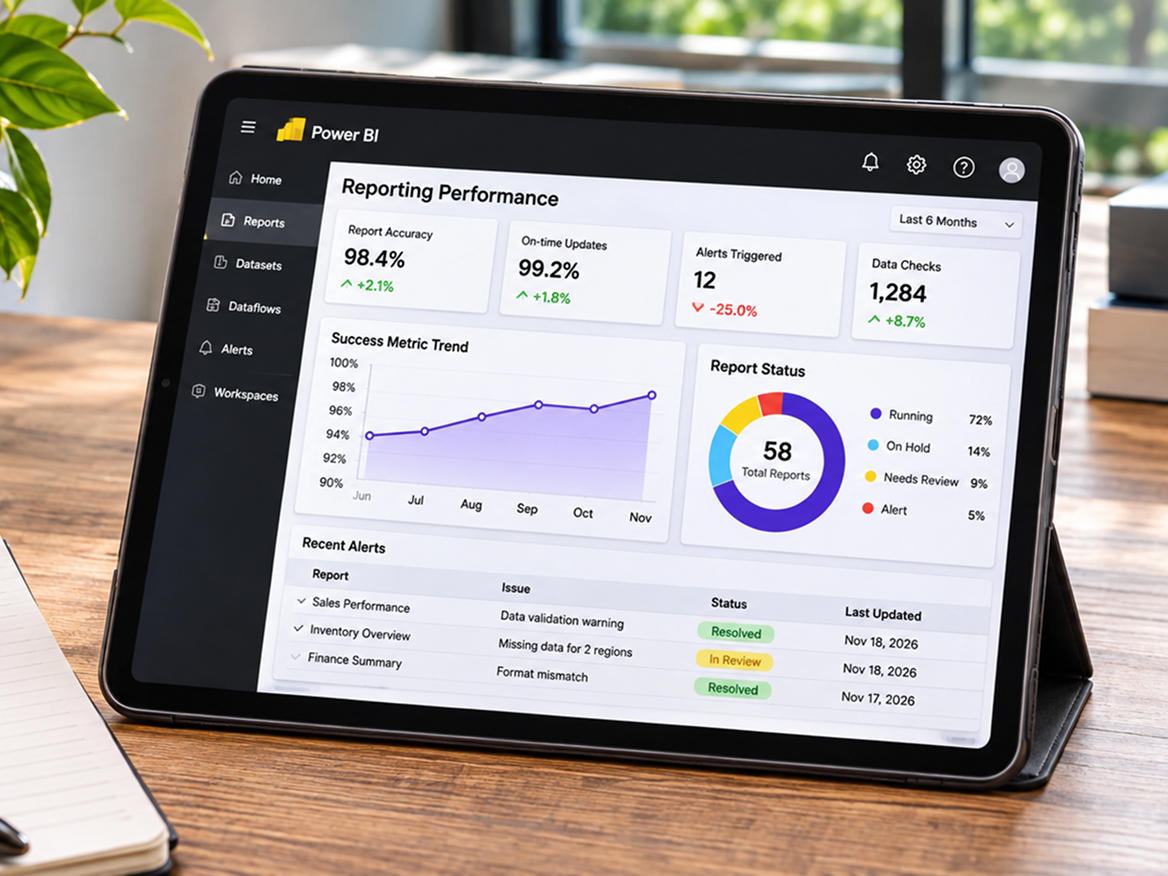
01 Our way: How we work
Every change is tested against a success number.
You see what each change is worth.
Old way: Instead of the usual agency habit
Changes ship on opinion.
Nobody can say what is true.
02 Our way: How we work
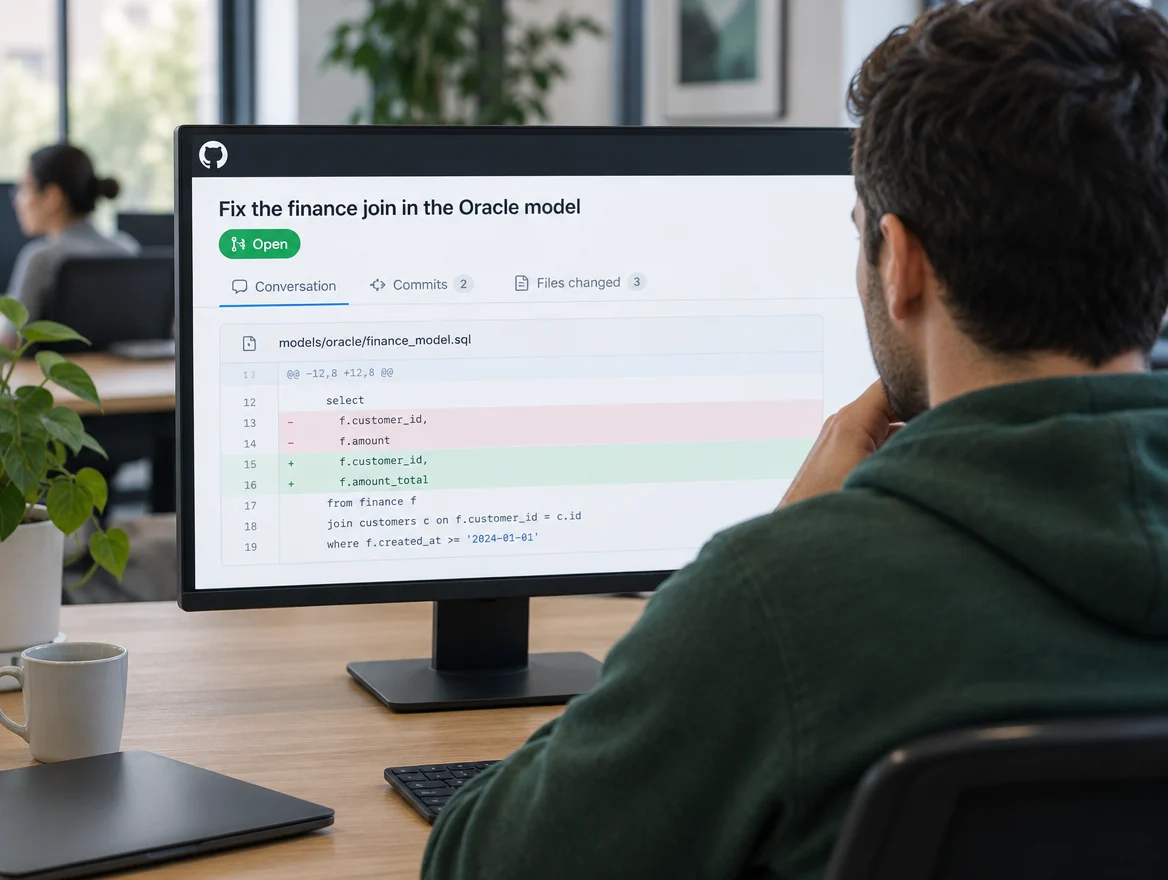
Engineers fix the data model, refresh and security.
The fix reaches the data, not only the chart.
Old way: Instead of the usual agency habit
Fixes stop at the visual.
The numbers underneath stay wrong.

03 Our way: How we work
Every task has a done-when line.
You know when each task is finished.
Old way: Instead of the usual agency habit
Done when sent.
Nobody checks if it worked.

04 Our way: How we work
Alerts fire when a number drifts.
Each alert has a planned response and one owner.
Old way: Instead of the usual agency habit
Problems appear in the monthly review.
By then, the chance is gone.
How Redefine works
See how Redefine works through your Oracle needs.
Redefine maps your Oracle tables into one Power BI model, in clear steps. Your team checks the result before you rely on it.
A quick call sets the project direction.
Why this approach matters
Start here
Start here. We inventory the key Oracle pieces.
You receive A verified list
Choose what matters
Choose what matters. We focus on your key tables.
You receive Clear priorities
Do the work
Do the work. We bring the data into Power BI.
You receive Your working model
Check the result
Check the result. We check reports against old data.
You receive Side-by-side checks
Keep improving
Keep improving. We review and plan.
You receive A written list of next steps
A clean model, unified data and a role access plan.
Starting with a clear map avoids lost time. We do not jump into development before we know your priorities.
Case study / Proven reporting path
Sells promotional products and corporate apparel. Runs on Microsoft Dynamics 365.

Reports took many hours to make by hand.
Diagnosis
The team needed reports on live data they could trust, from stock to the warehouse.
Reports went live in Power BI. Manual work fell and the warehouse moved faster.
The same steps shape the handover of your Oracle model.
Your integration report
What you see in your reports. Five parts take you from table list to team handover.
Redefine
Confidential
Prepared for: your team
Integration Report
Contents
Integration Report
Your company
What you have
Table inventory
Every Oracle table and view you use is listed, so nothing is missed.
Items used by area
Items listed
33
Map first
Tables
Check in this order
Tables Views Extracts
Questions
Clear answers before you book your call.
The REDEFINE Method is Redefine Innovations' business-first framework for identifying business constraints, prioritizing improvements, delivering appropriate solutions, verifying outcomes, and sustaining improvements.
It has five stages: Diagnose, Prioritize, Deliver, Prove and Improve. Read the REDEFINE Method
Oracle integration connects Oracle data to Power BI for easier reporting.
Your team gets Oracle tables and views in one governed Power BI model.
Redefine logs them and sets next steps with your team.
Each issue is written down with your team, so none are lost. See operations services
Access is set with your team and confirmed on the call.
Roles are set for each group, so people see only their own data. See Row-Level Security coverage
Source changes are planned with your team and confirmed on the call.
Your model takes new sources in planned steps, so reports keep working. See Power BI integrations
Side-by-side checks show the differences so your team can review them.
We run old and new together until the numbers agree. Alerts tell you when a number drifts. See the refresh watchdog
Your discovery call
Share your details and what feels stuck. We read your answers before the call, so the time goes to your data.

Tell us what feels stuck. A person reads every request.